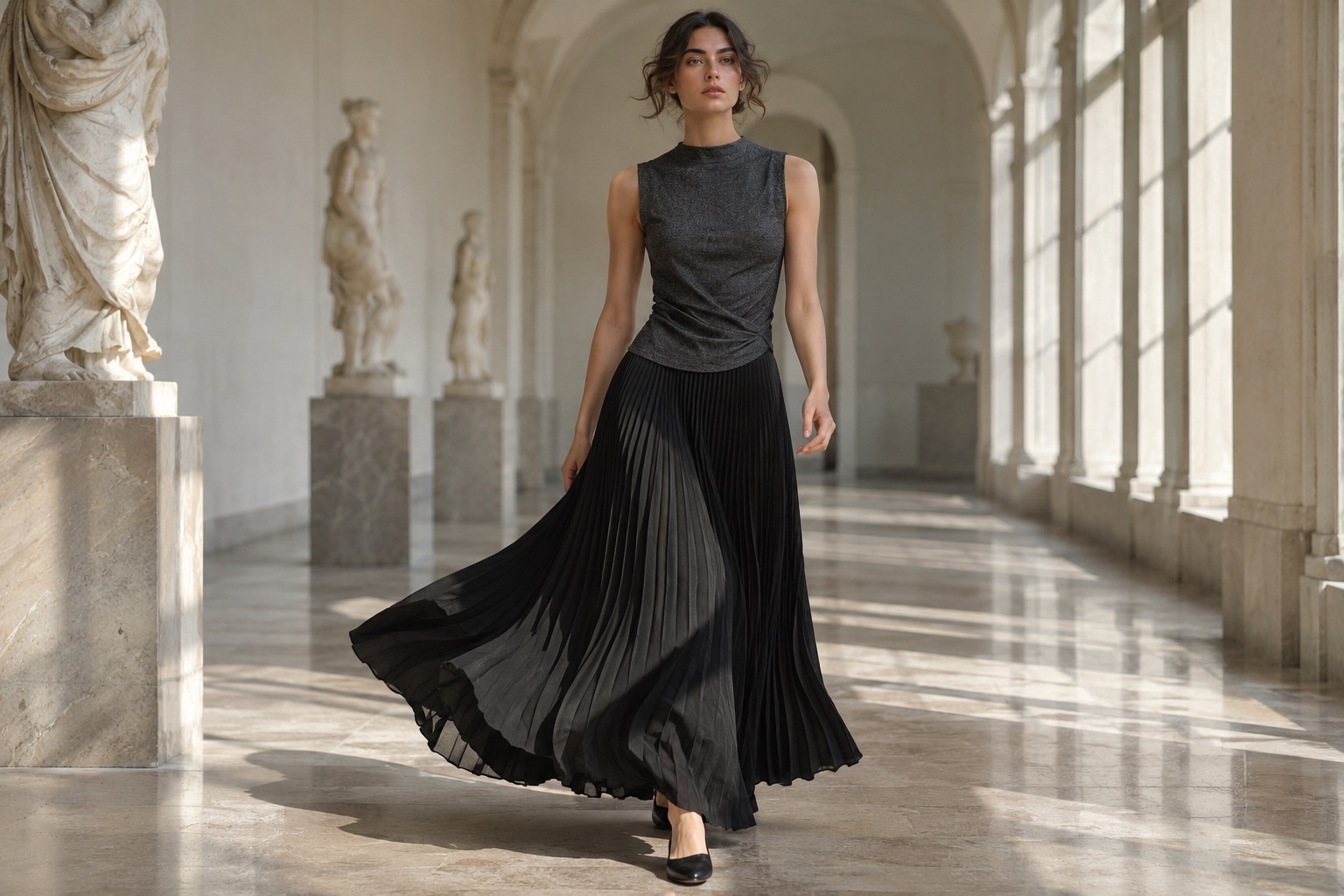
At the top of a museum stair, a black skirt looks almost straight. Then its wearer takes a step and a row of folds fans out. The cloth catches the light. Each ridge briefly gains a bright edge. Fashion pleats make this change possible because they hold fabric in reserve. Where a designer puts that reserve matters as much as how it looks. A Scottish kilt, a Fortuny Delphos gown, and Issey Miyake’s Pleats Please offer three different answers. Each asks the cloth to open in its own way. Together they make the case for judging a garment in motion.
What Fashion Pleats Hold in Reserve
A fold takes cloth out of its flat plane and puts it somewhere useful. Pin one at the top. Leave its lower edge free. You now have a surface that changes as the fabric takes up space. The process is easy to see with a piece of paper. In cloth, gravity, weight and the body complicate the demonstration. For example, a crease may fall into shadow or rise into relief.
Pleats often appear in photographs as the signature detail of a garment. A still picture can show their rhythm or the depth of each line. It has trouble showing what opens when someone walks. For instance, a pair of pressed wool trousers may carry most of its extra room near the hips. Meanwhile, a finely pleated skirt spreads that room along the whole hem. Both will register differently when the wearer sits down.
Historically, these choices also made different kinds of labor visible. A carefully aligned pattern takes a maker’s time. Fine pleating calls for a different way of handling the cloth. Before looking for a single invention behind the folds, it helps to ask how each garment was built. A pleat can make the end of a working day easier. It can also give a garment its formal beauty.
There is also a reason to look from the side. A front view can make the profile seem fixed. Shift slightly and the near edges overlap. Then the available depth becomes clearer. This is especially useful when looking at collection photographs. A side view may tell you more about the construction than the main image.
Look for the point where the cloth opens. That tells you more about the garment than the folds alone.
The Kilt Puts the Fullness at the Back
The kilt offers a clear example of placing extra cloth where it can do useful work. Its front reads as a flatter expanse. The back carries the folds. The modern form has stitched back pleats. The Metropolitan Museum of Art describes this in its history of the kilt. It developed from the lower portion of the belted plaid. The museum records competing explanations for that change.
Compare the front and back in your mind. In front, follow the check. At the back, the pattern breaks into fragments. Therefore, the cloth does two jobs without changing its basic material. It offers a field for the pattern and a different experience as the wearer moves. The result depends partly on which part of the body each surface follows.
The kilt’s association with military and national dress adds another layer to the pattern. Its construction has a technical logic, while its use carries social meaning. In particular, a garment worn as part of a group can still move with an individual body. The little space behind a pleat makes that possible. At rest, the wool shows its gentle thickness. In motion, the cloth reveals how much of the pattern was waiting out of sight.
Fortuny Distributes the Movement Through Silk
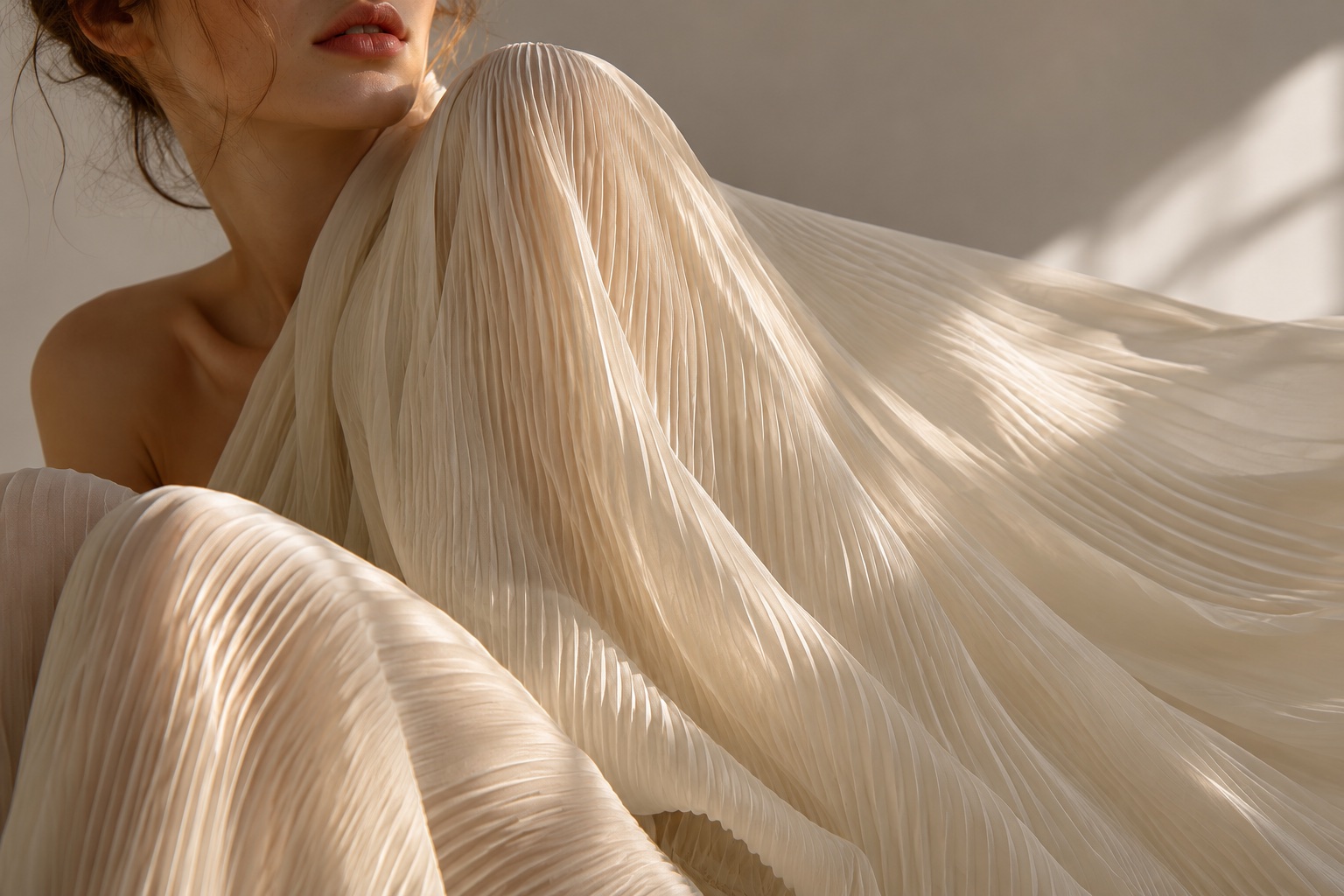
The Delphos spreads that reserve across the surface. In the Metropolitan Museum of Art’s Fortuny holdings, the long gowns show narrow, closely spaced folds in silk. Small ridges change the light passing over the dress. Looking down the fabric, you can see a succession of shallow highlights. The silhouette depends on how fine these lines are and how they behave together.
A heavy wool fold can read as a distinct volume from across a room. The Delphos gives the eye a different task. Stand back and the vertical lines gather into a single impression. Then move closer. Their irregularity becomes part of the surface. For example, a small change of angle can make a strip of silk look brighter beside a darker strip. The folds allow the light to travel in uneven bands.
That difference matters because fine pleating alters the relationship between cloth and skin. A simple sketch of the outline tells you little about how the material drops. The surface follows the body in places and makes space around it elsewhere. In this respect, the Delphos puts construction on view. In particular, the folds make its design legible. Our guide to outfit proportions takes a related view of how fabric changes the outline.
Pleats Please Begins With the Sewn Garment
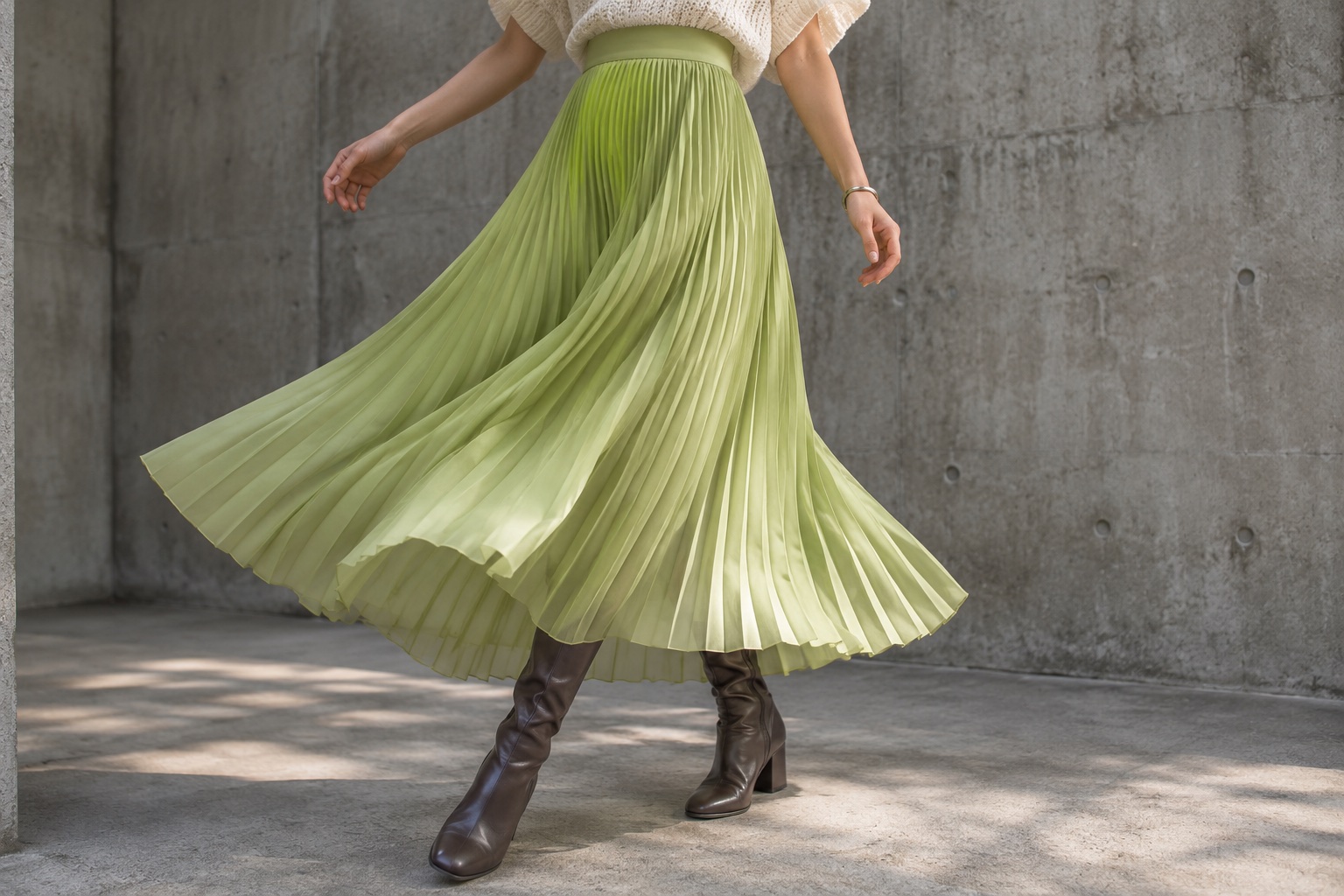
Issey Miyake’s Pleats Please changes the order of work. The company describes its process as sewing the garment first and pleating it afterward. The folds arrive on an already assembled piece. That detail shifts how we look at seams. The seams become part of the pleated form. Their role changes along with the sequence.
Its independent first collection covered the spring and summer 1994 season, according to the company. The approach had roots in earlier work by Miyake. In particular, the familiar activity of getting dressed remains part of the design brief. The brand describes lightness and ease of wear as goals. A garment like this can look compact when still. Its outlines change when an arm lifts or a leg moves forward.
The intriguing thing about this example is the distance between the idea and the finished experience. Turning the sequence around sounds like a technical change. Put the garment on and that choice has visible consequences. For instance, small folds can open at a seam without breaking the rhythm of the surrounding surface. The viewer sees a larger shape assemble out of a series of small movements. A close view rewards attention to the join.
A pleat only tells its whole story when the cloth has somewhere to go.
Three Ways to Read the Same Fold
Seen together, the three cases put fullness in different places. The kilt concentrates it. Fortuny spreads it through very fine silk. Pleats Please starts with the shape of a sewn garment and gives the surface its movement afterward. Each approach makes sense within its own material and purpose. They also explain why the word pleated tells us so little about how a garment will feel.
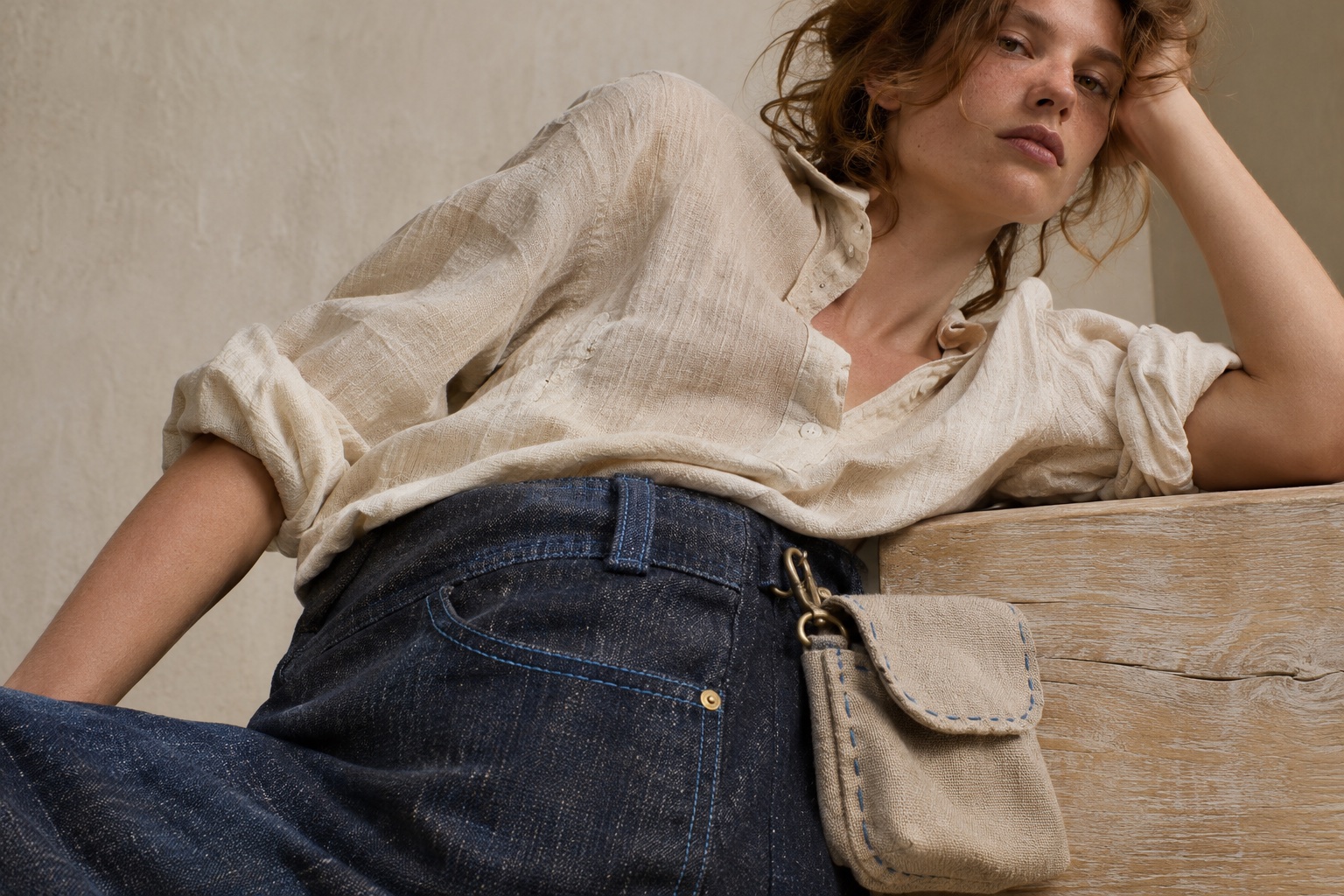
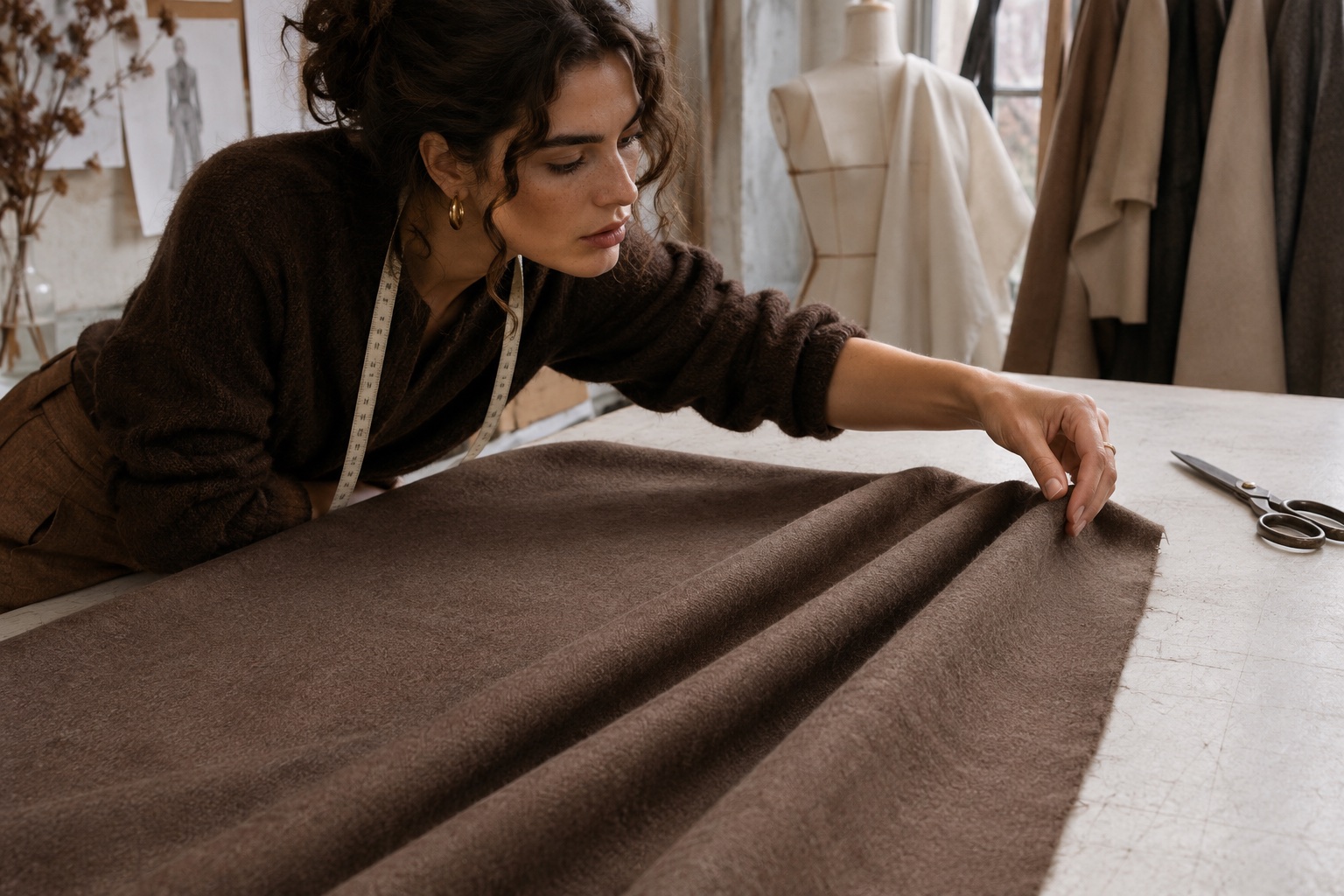
The lesson becomes clearer on a cutting table. Fold a small strip of paper and hold one edge fixed. Open the other edge. The gaps tell you where the cloth could move. However, a textile has a different kind of resistance. Loose weaves can shift softly across a fold. A denser twill holds its edge for longer. In an outfit with quiet color, those textures provide much of the depth. Our tonal dressing guide offers a practical way to see that relationship.
The same principle explains why some pleated garments change more dramatically between a hanger and a body. Their shape takes time to read. Find where the folds start before you decide how a skirt works. It may be at a free edge or under a row of stitches. You can learn a great deal from watching one crease meet a seam. The sample may look plain until you move it.
- Find where the sewn part ends.
- Notice what opens when the body moves.
- Use the fabric’s weight and surface to read the result.
Bring Movement Back Into the Fitting Room
Next time you look at fashion pleats, give the garment one ordinary movement. Take a few steps. Turn toward a window. Then stop and watch which folds settle first. A skirt that opens at the hem may be exactly what you wanted. A pair of trousers that gives extra space at the hip offers a quieter version of the same generosity. You can learn more from that brief sequence than from tugging at one crease on a hanger. The kilt, the Delphos, and Pleats Please make the point in cloth. Each reserves room for a body in a different way. Each also gives you something to notice after the first impression wears off. When you next try a pleated piece, would you prefer movement you can see or room you can feel?