The bus doors open, and the heater blows warm air at your ankles. You loosen your scarf before you find a seat. At the office, the sweater that felt right outdoors will have to last until lunch. That is where winter layering for a city commute should begin. Build around the outfit you can wear at your desk. Add warmth you can undo on the move, then choose outerwear for the longest stretch outside. The same plan works for a brisk walk, a damp bus stop, and a cold platform. Each route calls for a different coat.
Start Winter Layering With the Outfit You Keep On
Picture the coat on a hook and the bag under your chair. What remains is the outfit your colleagues see. A thin oatmeal knit can look finished against pressed gray trousers. In a cooler room, a fine cardigan adds a soft edge to the collar. Both work indoors. Still, the difference shows up at your desk. A cuff that feels quiet outdoors can scratch after an hour of typing.
Set out the indoor outfit first. Sit in it. Bend your arms and reach across the desk. If a base layer rides up, change its length before adding a coat. Next, trace your route by where you walk and where you stand. For instance, a brisk walk and an exposed platform can call for different outerwear that morning.
Dress for the place where you spend the day. Let the pieces you can take off handle the journey.
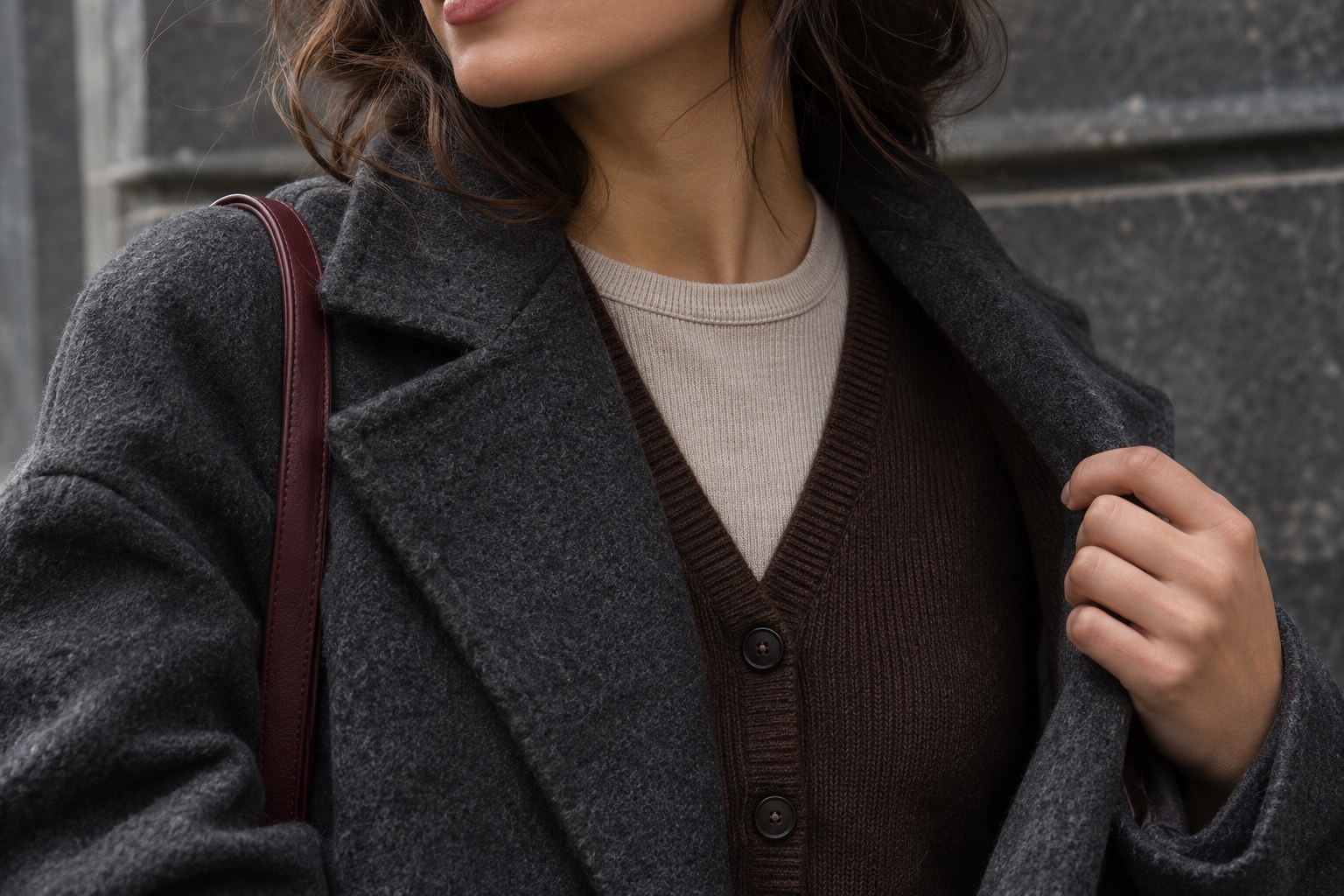
At your desk, even small finishes change the way the outfit reads. Check your neckline. Then take off your bag. A plain crewneck helps. Let the ribbed edge lie flat under your open cardigan. If you wear a work badge, make sure its clip sits against fabric you are happy to show.
Some commutes change halfway through. For example, a damp walk ends in a dry office. An open platform leads to a crowded carriage. Those shifts explain why a coat with an easy closure earns its place. You can make a small adjustment quickly, even with a tote on your shoulder.
How the Three Parts of Winter Layering Work
The base sets the tone indoors. A smooth wool blend can sit flat under a lined sleeve. A fine rib feels more textured where it touches your wrist. On an active route, a quick-drying top is worth trying. Start with the sleeve and roll it down to check the seams. It should lie flat under the middle layer.
A fine cardigan, zip knit, or light overshirt adds warmth you can adjust. A brushed knit feels soft against bare skin. However, its surface may drag under a narrow coat sleeve. Try the two together and flex your elbows with the coat fully closed. Then check how easily you can undo the middle layer.
A commute outfit should be easy to adjust with one hand.
The outer layer answers to the weather. Wool can suit a short, dry walk, while a rain shell helps on wet streets. An insulated coat suits a longer cold wait. At a warm stop, open what you can reach first. In fact, the CDC recommends removable layers for winter activity. That principle is useful on a commute with large temperature shifts.
The warmth you need at work is its own decision. Take a drafty office. In that case, a waistcoat leaves your arms free. It can sit neatly over the fine top you already wore on the way in. If the cuffs of a cardigan catch on your desk, try a sleeveless layer indoors.
Three Complete Outfits for Winter Layering
A Dry Walk
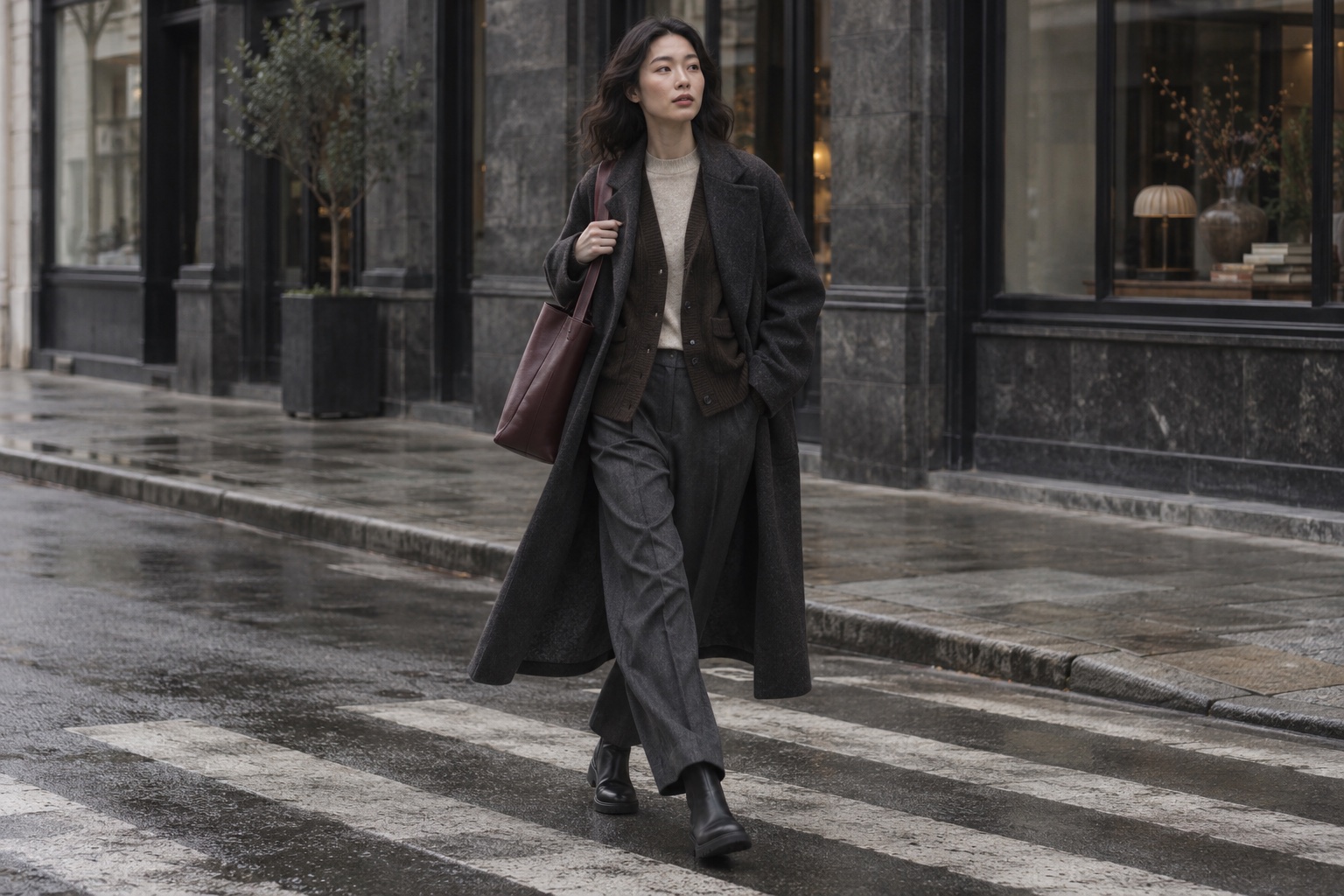
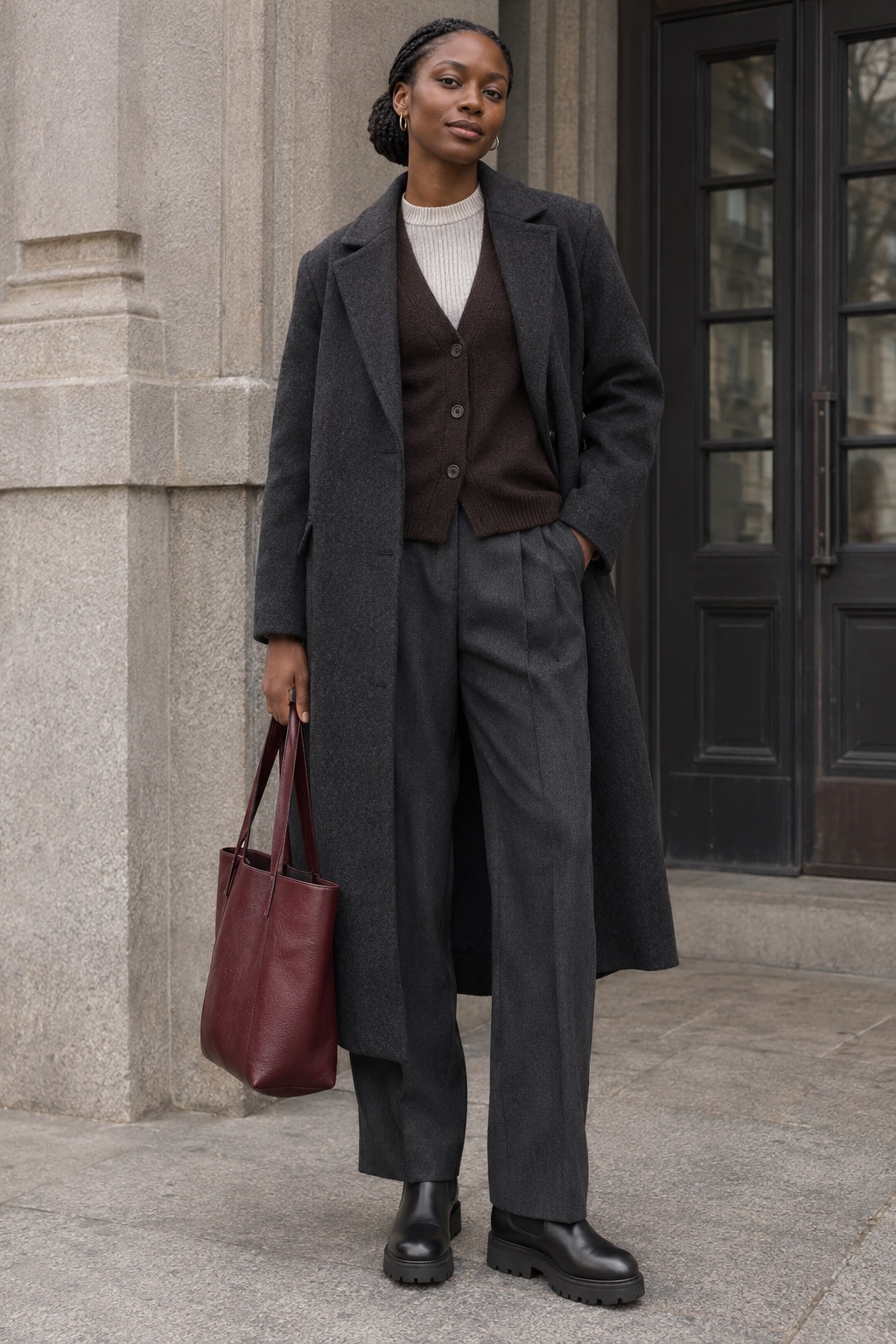
Start with an oatmeal crewneck and espresso cardigan. Add a charcoal wool coat, pleated gray trousers, and black Chelsea boots. Carry a burgundy tote. The knit sits close at the wrist. The brown knit picks up the coat’s warmer flecks, while the ribbed collar catches the light.
Leave the neckline visible. Also, let the trousers skim the boots. Once inside, hang up the coat and keep the cardigan on. Undo a button if the room runs warm. For more ideas on combining close shades, see our guide to tonal dressing.
A Damp Bus Stop
Layer an ivory tee, gray zip knit, and olive rain shell. Add navy straight trousers, low black rain boots, and a small crossbody bag. Beads collect on the matte shell. Keep the bag inside the shell. The pale neckline remains visible in the flat light.
Check the trouser hem. Keep it clear of puddles. Once under cover, loosen the hood so it does not catch on your bag. Once aboard, open the shell first. The gray knit can stay zipped until you reach your desk.

A Cold Platform
Wear a thin black mock neck under a raisin cardigan. Add a slate insulated coat, straight black trousers, brown ankle boots, and a wool scarf. The raised collar sits close. The scarf softens the coat collar. The low sheen of the coat lets the knit show through.
Close the coat before the wait. Tuck in the scarf ends. Inside, take both off and open the cardigan. The black base works on its own if the room runs warm. Choose boots and gloves for your actual route.

What to Shop for After Testing Your Layers
For winter layering, the first investment may be a cardigan or a coat alteration. The answer lives in your weekday routine. Notice which piece you take off first. That tells you where the outfit feels too warm. If you keep pulling down your cuffs, look for a smoother or shorter sleeve. Start by checking what you already own with our capsule wardrobe guide.
For a cardigan, look for flat buttons and a front edge that lies smooth. Put it on under your coat before reaching forward with both arms. Then do up the coat with your usual bag on. Fine merino and smooth cotton blends are useful options here. Run your fingers over the cuffs and button edge. Loose loops can snag on a zipper.
For outerwear, take your work layers to the fitting room. Close the coat and sit down. Then step up and make sure the hem clears each tread. If you shop secondhand, inspect the lining under each arm. Check the closure while wearing gloves. For boots, bring your winter socks and leave the store with enough room to move your toes.
Start with fit and finish. Test both before spending more for a particular fiber. Check the inside. Then feel the lining. For example, a smooth lining can make a secondhand wool coat easier to pull over a knit. If rain is your main problem, read the maker’s weather guidance and try the hood with your hair up.
- Test the base and middle indoors before you choose a coat.
- Bring your work layers, bag, and winter socks when you shop.
- Buy for the difficulty you notice on repeated trips.
Common Winter Layering Problems and the Fix for Each
The sleeves bunch. Hold the base cuff while you put on the knit. Let go and bend your elbows. If a seam still pinches, change the base or try a smoother lining. Next, test that combination with the coat closed so you can feel where the friction starts.
The hems bunch together. Two layers can form a ridge because their hems meet as you walk. Try a shorter cardigan or tuck in the base. Sit down again. Adjust until the top stays put. If the outline still feels crowded, use our guide to outfit proportions to check where each hem falls.
The bus is warmer than expected. Give the scarf a pocket. Loosen it before you sit. Once you have room, open the coat and check how you feel. Keep gloves together near the top of the bag. That way, you can put them back on before the doors open.
Your bag keeps snagging the knit. A buckle can catch on an open cardigan. Move the fastening away from the knit or wear the strap over your closed coat. Take the bag off before the coat. Then unzip the outer layer so the buckle stays clear of the cardigan.
Make One Change on Your Next Commute
Tomorrow, start with the indoor outfit and choose the coat last. Think about where you wait. Then decide which layer you will open first on the ride. Try the same plan for a few mornings. In particular, notice the cuffs and hems. A damp trouser hem may tell you more than a forecast. A scratchy cuff can make a good coat sit untouched in the closet. If you notice the same problem twice, fix that part first. Hang up the shell where it can dry, for example, or shorten a hem that drags. The most useful winter layering comes from pieces you can adjust where you actually spend your day. Once the journey and the office both feel better, you know what belongs in the rotation. Which needs changing first on your route, your layer for the ride or the one for work?