Slip a hand toward a coat seam. A pocket appears when your fingers find the opening. The rest of the cloth can look almost flat. The small discovery captures why fashion pockets deserve a closer look. They determine what the wearer can reach, how a garment hangs, and which objects must travel separately. A tie-on pocket, a pair of riveted jeans, and the Chanel 2.55 bag tell three parts of that story. Taken together, they show why carrying something is part of fashion design. It changes how a person moves through a room and what stays visible along the way.
Fashion Pockets Began as Objects in Their Own Right
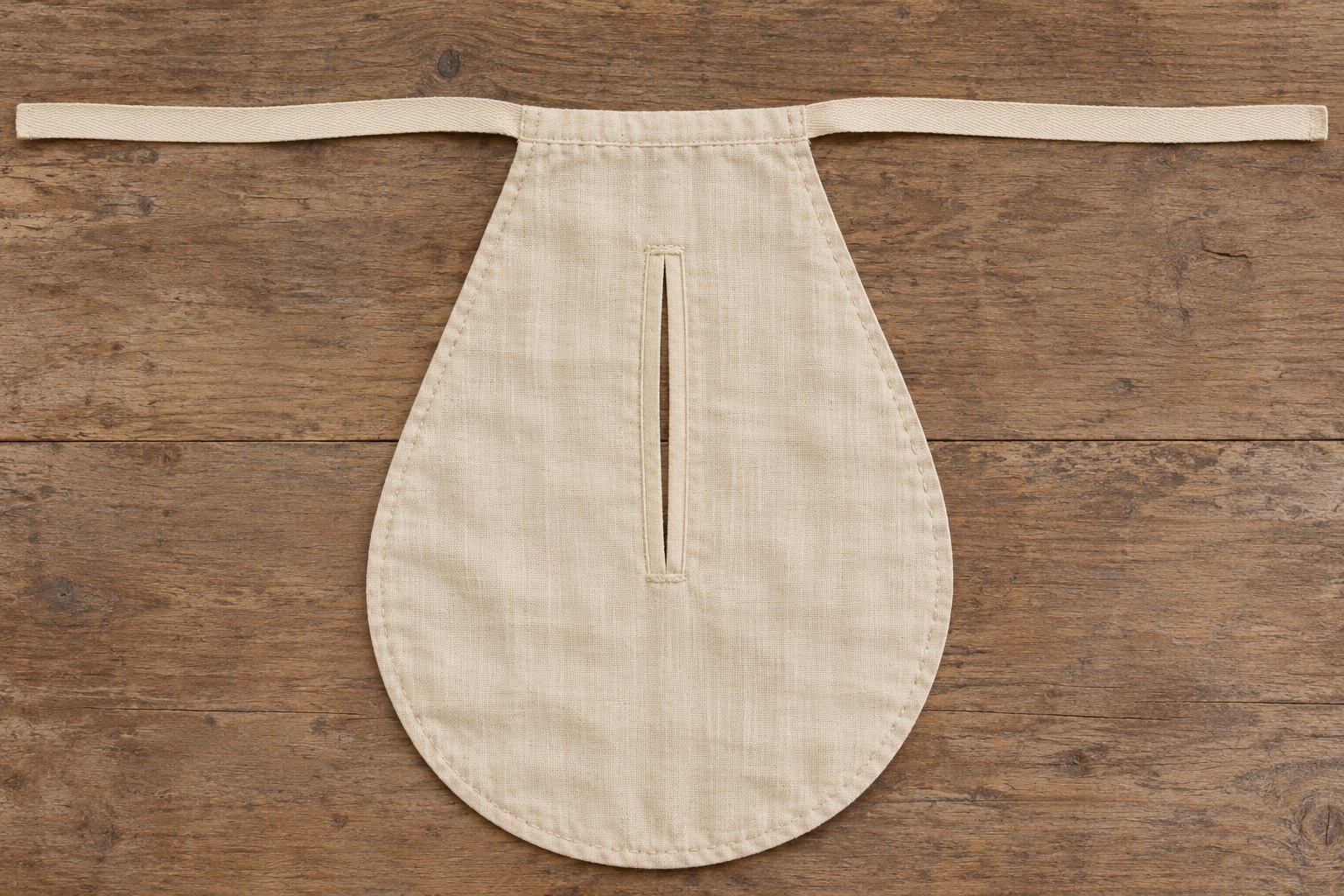
The first of these objects is separate from the outfit. In the V&A’s account of women’s tie-on pockets, many wearers attached a pocket around the waist. They could reach it through openings in the clothes above. Lift a layer and the system makes sense. The pocket could move with its owner between garments. As a result, storage could have a life of its own.
For example, the cloth could carry tools. The museum describes small tools, including needles and pens, among the objects people kept close. Sometimes the pocket itself was decorated. Imagine the surface of a fabric hiding a careful line of embroidery or the worn edge of an opening. A small object could amount to both a useful tool and something worth making well. The value depended on the person who used it.
A detachable pocket also changes how we think about access. It can hold something close to the body without asking to be seen. The path to it goes through another garment. Meanwhile, the outer layers keep a quieter line. That worked within a particular set of clothes. Changes in silhouette helped make tie-on pockets less practical over time. The history is a reminder that useful details belong to the outfits around them.
Look at the opening, the space behind it, and what has to move for a hand to reach it.
The textile offered privacy in a very physical way. A person could close the gap between two layers with a simple movement. Someone looking at the outfit might hardly see it. The opening became a route available to the wearer. However, it was a place that could wear through. A binding or a neat edge around the slit told a practical story about repeated use.
What Rivets Changed About Fashion Pockets
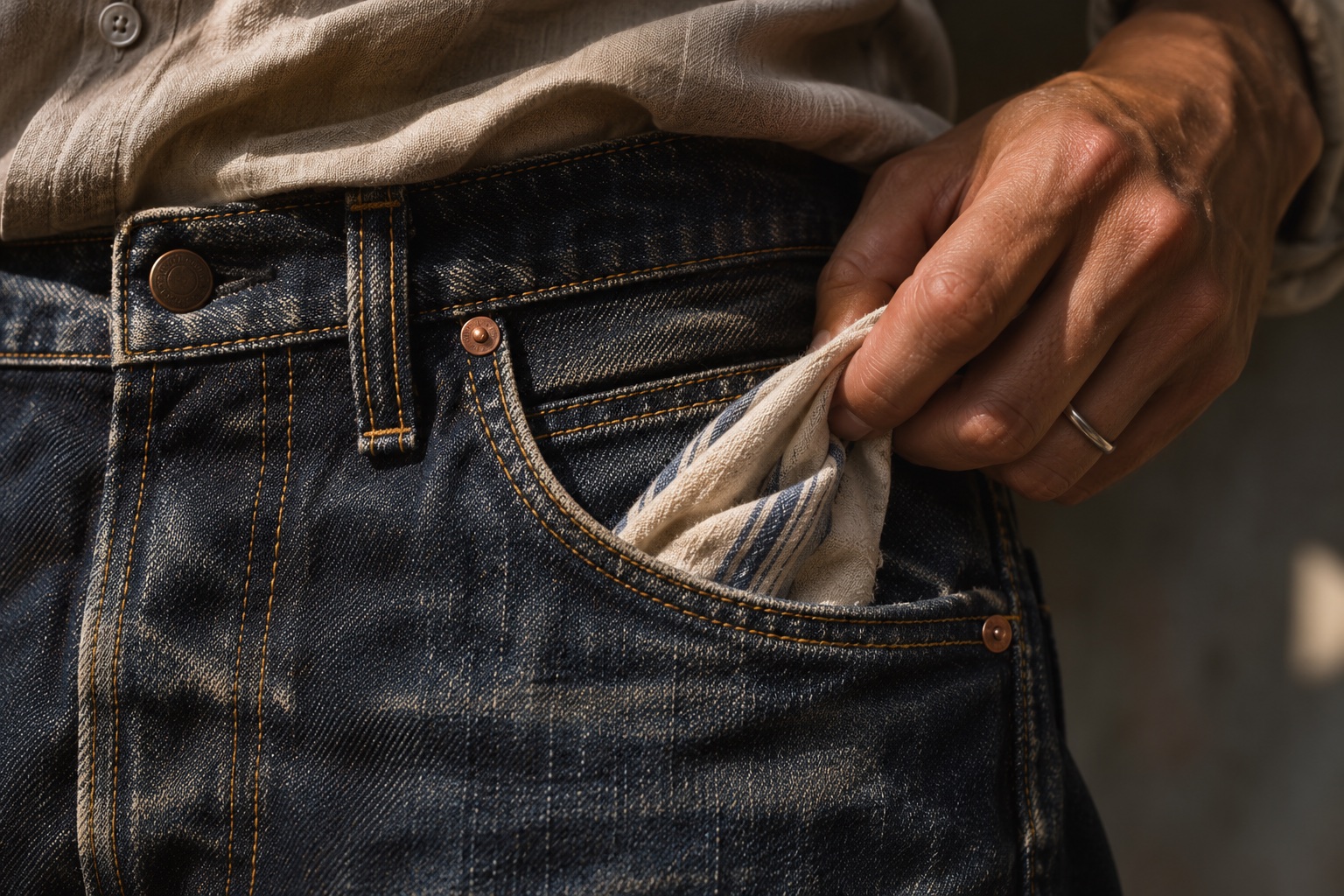
Riveted denim puts the pocket directly into the garment. Levi Strauss & Co. traces its history to an 1873 patent for using rivets to reinforce points of strain. For instance, a pocket opening takes repeated pulling. The edge moves each time a hand goes in. As a result, a small metal point can give that motion somewhere to stop.
Look at a used pair of jeans. The indigo may be paler near the edge of the front pocket. At the same time, the stitching traces the boundary of the space. The hardware sits where fabric pieces meet. These features give the design a visual character because they express how it is assembled. The hard surface of the rivet makes a distinct spot next to the soft grain of worn denim.
There is a tradeoff in putting storage on the trouser itself. An object can push against the outline. A larger pocket may need to reach across more of the hip. On a loose pair, that changes the cloth in one way. On a fitted pair, it can look quite different. For example, a stiff phone changes the angle of a side seam. Details that look minor on a hanger become visible after you get dressed.
The house traces the small pocket to a watch. That is also a clue to its original scale. That history is a reminder that storage has a scale. Look at the depth beside the object itself. A watch, a key and a phone each ask for different proportions. If the object has changed, the original pocket can still keep its place in the design.
A Shoulder Bag Moves the Weight Away From the Garment
The Chanel 2.55 offers a third solution. Chanel dates the bag to February 1955. Its shoulder chain moves the support for small belongings to a separate accessory. The quilted surface creates a different kind of visible rectangle. It also makes the carrier part of the look. Here, the bag can sit beside different coats, suits, or dresses. The clothing does not need a pocket large enough to carry everything.
That move can leave the fabric of a dress or jacket free to fall differently. It also creates a new point of contact. Meanwhile, a strap presses on the shoulder. The bag may swing when you walk. If you sit down in a tight space, it has to go somewhere. In that sense, carrying a bag gives the outfit another line to manage. The smooth leather and the metal chain feel different from wool or cotton.
Interior pockets change how you access the bag. Without a divider, small objects can sink to the bottom. Divide it and a key can stay near the opening. So a useful division can stay out of sight. Our guide to accessories offers a different way to think about this relationship between an accessory and its wearer.
The material of a bag shapes access as well. A firm edge gives your hand a clear opening. A soft edge can fold inward. Neither quality decides the capacity by itself. The relationship between opening and interior is what makes a small bag usable. Notice what happens to the lining when you add something stiff. Then imagine carrying that weight for a whole day.
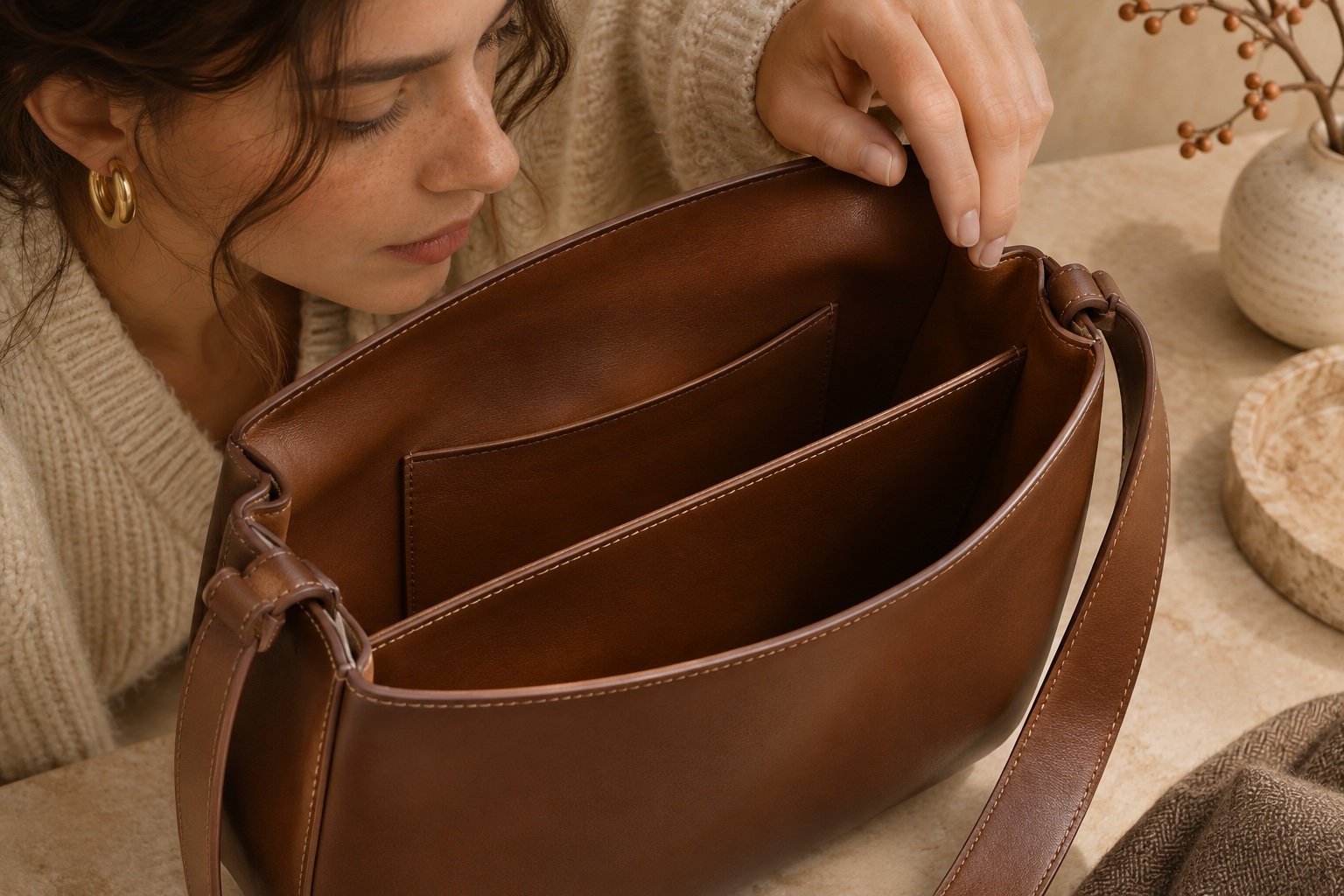
A pocket changes the route between a thing and the person who needs it.
What the Three Designs Ask of the Wearer
First of all, notice where each case puts storage. The tie-on pocket sits beneath a layer and can leave it with the wearer. Riveted jeans put the space into a garment and reinforce the area that gets pulled. At the same time, a shoulder bag takes the weight off the garment. In all three, the position shapes the act of reaching. The same key takes a different path to the hand.
Those choices have a social side. Pocket openings can invite a person to stand with their hands close to their body. Similarly, a conspicuous bag can draw another person’s eye. A pocket beneath a skirt can sit quietly out of sight. It is worth keeping these meanings separate from the actual capacity of the objects. An accessory that looks large may still handle a phone awkwardly.
It also helps to notice how bodies and fabrics share space. When a pocket holds a bulky object, the outline changes around it. The change may be welcome on a roomy jacket. It may upset the neat line of a slim trouser. See our outfit proportions guide for a related look at how details affect the whole outline.
A pocket is also a quiet place to observe workmanship. Then open one and look for the edges. A seam must continue past the point where a hand pulls. The cloth inside may feel smoother than the surface of the garment. That change is almost invisible until you use it. It belongs to the person getting dressed as much as to the observer looking at the clothes.
- Notice where the opening sits.
- Check where the weight goes.
- Imagine the garment in motion with its pocket full.
Pay Attention to the Next Pocket You Use
Try the test with an object you carry every day. Put it in a coat pocket. Then put it in a trouser pocket or in the bag you usually take outside. Walk a little, stop, and reach for it again. Then see what part of the outfit has to move. A coat pocket may be easy to reach while your arm swings. Fashion pockets can stay quiet when their work fits the material around them. They can also give a garment the character you remember. The three cases show different ways of living with the same small problem. Each keeps something near the body in its own fashion. Looking at that decision can make a familiar garment feel more deliberate. When you go out tomorrow, what would you prefer to carry in a pocket instead of a bag?