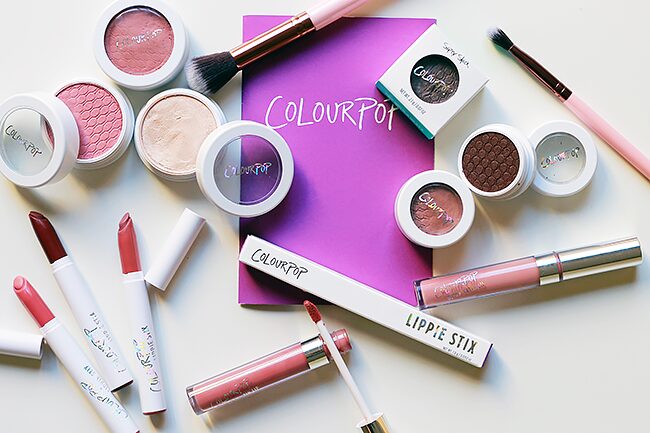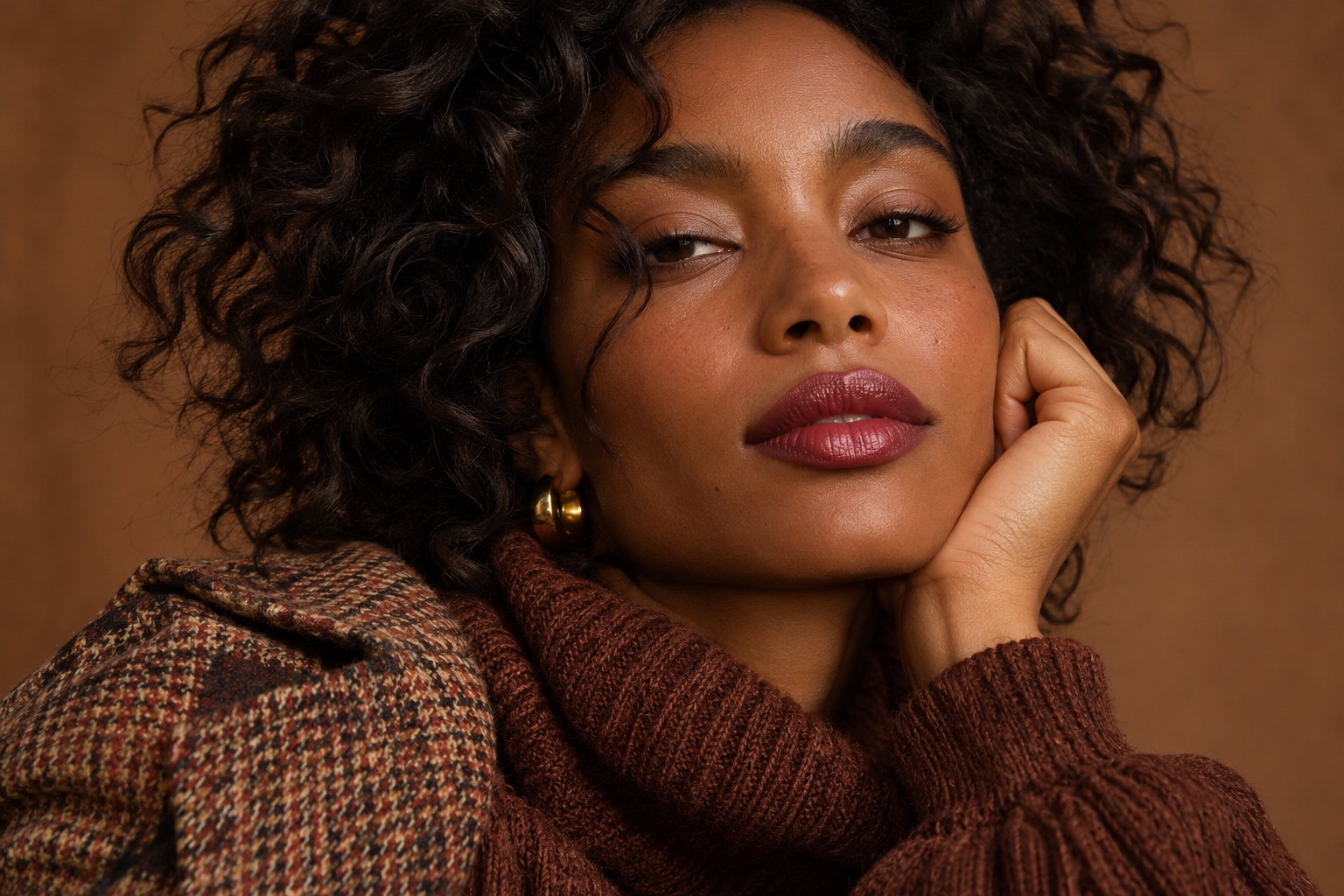
At the window of a late afternoon cafe, a berry lip catches a thin strip of light. The shade looks deeper away from the glass. This is where fall lip finishes become useful. Satin puts a small highlight on the surface. Matte gives the color a quieter outline. Gloss brings the reflection forward. Start with the effect you want in the room where you will spend the evening. Then see how the finish sits on the lips you have that day. A familiar color can feel different with a lighter application, even before you change the shade.
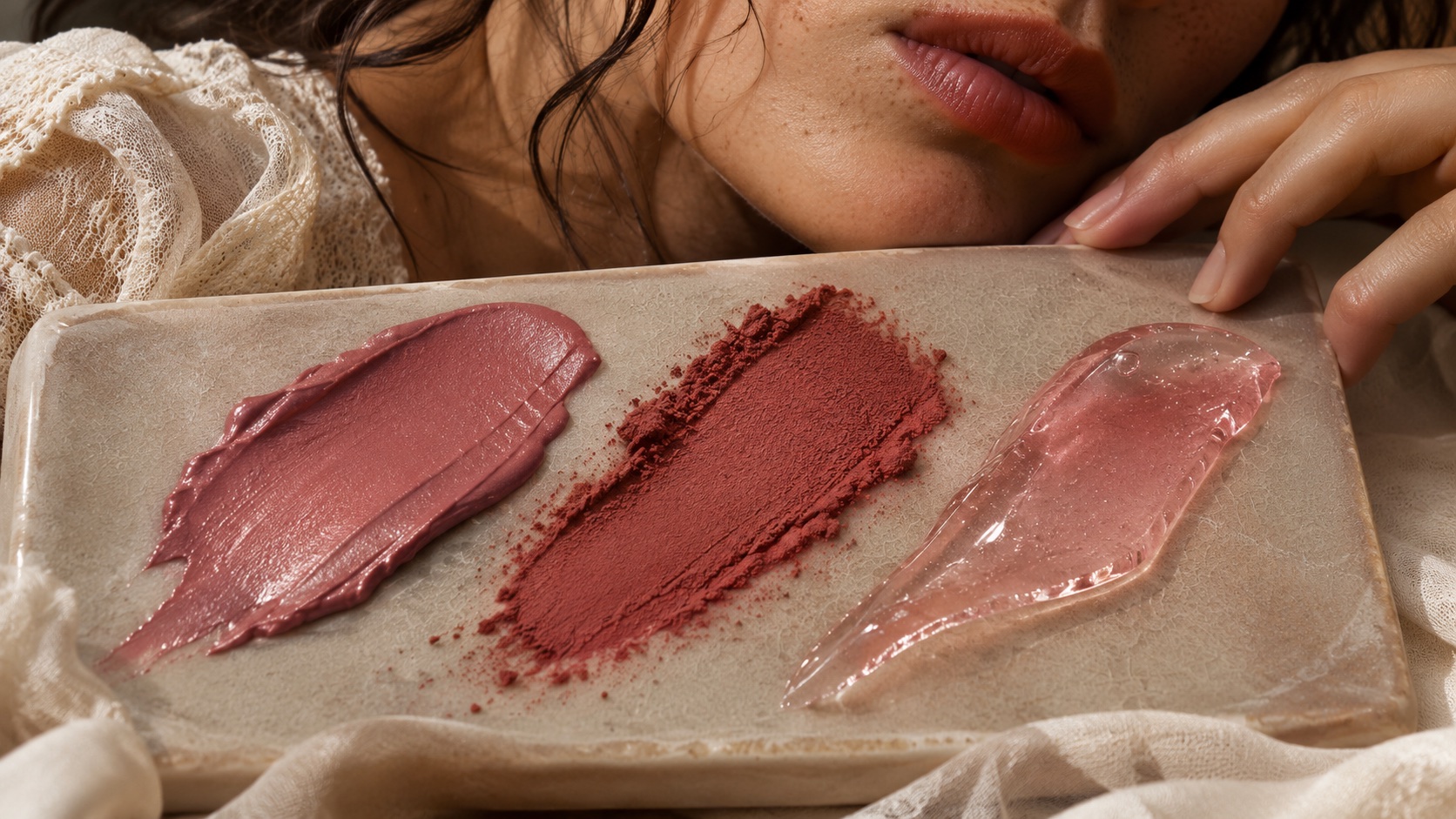
What Fall Lip Finishes Do to the Same Color
A lip color has a surface that you can see as easily as its shade. There can be a thin shine at the centre. There can be a surface with very little reflection. How much pigment you put on adds another difference. For example, a light pass of berry may show some natural color beneath it. A heavier coat can give the outline more contrast against the skin.
The room can change which part you notice. A bright window makes gloss easier to see. A warm lamp can bring out the depth of a red. Take a step back. Look from the side. You may like a finish more when it belongs to the face around it. Our piece on texture in beauty has a related way to think about different surfaces.
Let the surface of the lips show through. Small creases will still be there. Decide how much texture you want to see. If the answer changes that day, let it guide the amount. A very thin layer can carry a color with a lighter edge. The same finish feels different when you give it more space.
Choose a finish in daylight, then decide how much color you need to get the effect.
Tilt the swatch. Look at the back of your hand. Some finishes show a narrow highlight. Others spread it across a wider area. That change helps explain why one shade can look quite different between the store and home. No single view will tell you how the product looks on your face.
Satin for a Soft Edge
Satin gives a colored lip a small amount of light. Pick a formula you can apply lightly. Press it on from the center. Then stop before the outline is fully filled. A lighter edge can look softer beside a berry or rose tone. If you want a firm shape for an evening look, add a little definition afterward. Give the first layer a chance to settle.
For a lip that looks dry at the edges, check how the product sits before adding more. Use a thin coat. Look for small darker patches where the color collects. Then tap the edge with a clean fingertip. If the lip feels comfortable, you can keep the color there. A different satin may have more slip, so test the formula you actually use.
Compare the look from two distances. Close up, you may notice where one shade sits inside a small crease. At conversation distance, the color reads as a softer surface. If you like that effect, leave some of the darker tone near the middle. A clean edge on a close mirror is only one way to assess a lip. The finish has to work in ordinary light too.
Matte Fall Lip Finishes With a Lighter Hand
A soft matte brings the color forward with less visible shine. Choose muted brick if you want a warm edge to an autumn look. Start at the center and tap it outward. A clean fingertip can give the edges less definition than a full swipe. If you prefer a crisp line, use a matching liner on just the spots that need it. Look at the result before filling more.
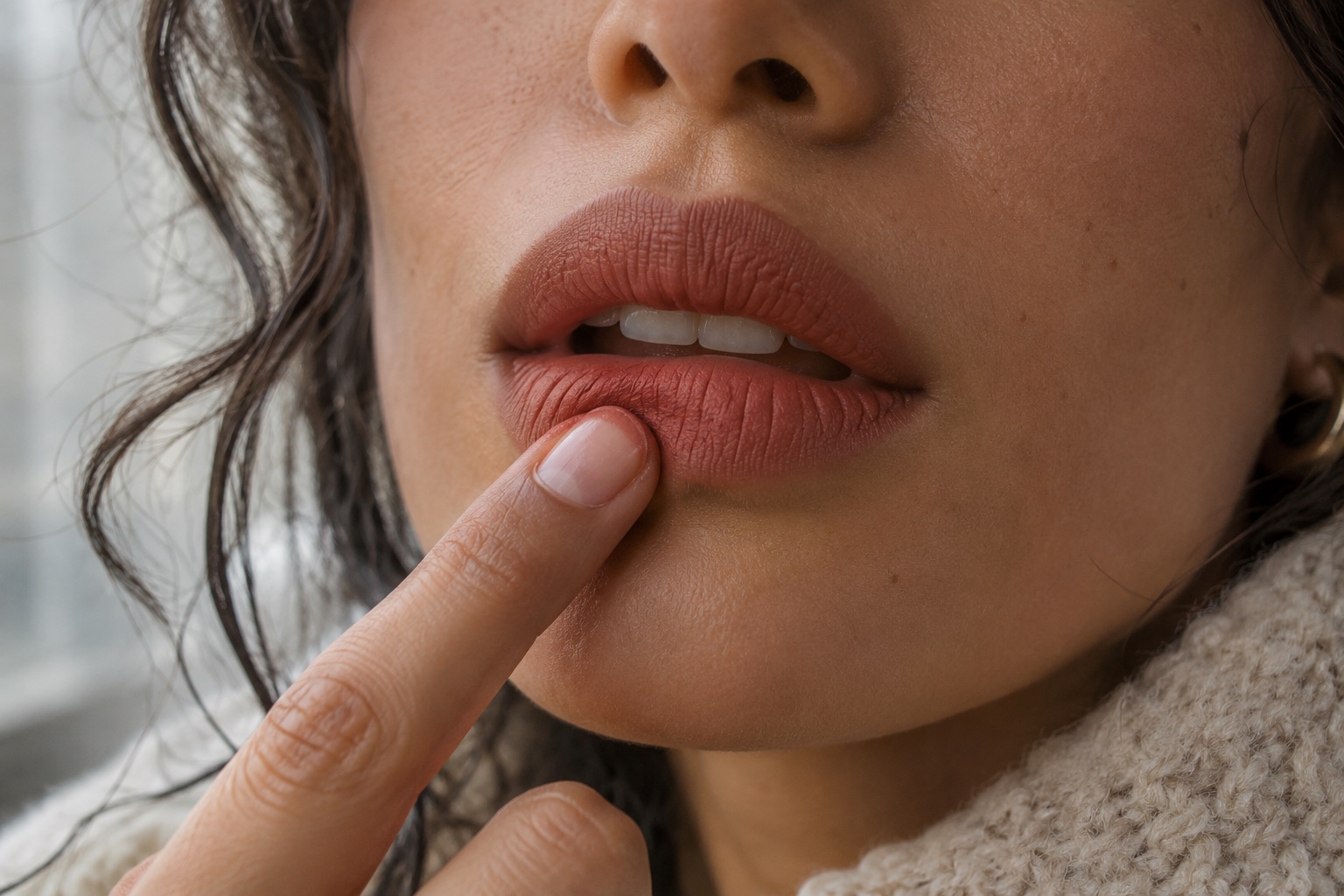
Pay attention if the lips feel tight. Choose a comfortable formula and use less. Stop if the first pass shows enough color. A little shine from a care product can change the finish. Check the directions on both products and let the base settle when needed. If you want a matte impression and a soft feel, the amount can matter as much as the label.
Think about what you already wear in fall. Soft gray brings warmth out of brick red. Black near the face can make a muted red look especially clear. Try a shade with a shirt you already wear in fall. Then see how much it adds at a table or in a mirror. You might find the lighter version is enough.
A fall lip only needs as much finish as you want to see in the room.
Gloss Where You Want the Light to Land
A gloss puts more reflection at the surface. Try it at the center before you cover the whole lip. Look at the line from the side. A high point can make the shade feel clearer without a heavier layer at the edges. If you want more depth, begin with a sheer rose color. Add a little gloss from a clean applicator. Then wait before adding anything else.

For lips with a textured outline, you can keep gloss away from that outer area. This gives you more freedom to place the shine. If the surface already feels slippery, apply less and check it again after a few minutes. Also think about the weather near your face. A loose strand of hair can catch on a sticky finish. Test it with your hair as you will wear it.
Brands may describe a finish with many names. Use the product’s own description to decide what to expect. The MAC lip collection is one reference for the range of formats. A label can help you start, while the swatch is what you actually see. Look for movement as well as color. A product may apply differently from a photograph of a single still surface.
Give the gloss some room. Choose one other place for reflection. Leave a soft sheen at the cheek. Keep the area around the lips quieter. If the reflection looks too sharp, check the amount on the center of the lip before adding another product.
Make Small Adjustments Before Adding More Product
Check where the lip color sits after a normal part of the day. Use a clean mirror. If one side has faded, add a little color only to that side. If the gloss has spread, remove the extra with a clean tissue. Keep the rest of the color in place. Often a small adjustment leaves a more even impression than a whole fresh coat over what is already there.
If you buy a new formula, look at the finish on its own first. Then see it beside a shade you already own. A satin and a gloss can offer different options even in the same color family. You may prefer a low-shine look. Our piece on soft matte beauty gives more ways to choose how much reflection to keep.
Try the formula before the special evening. Do not change three things at once. Keep the shade familiar. Decide what the finish adds. If you prefer a fresh sheen at the center, you can keep a little gloss for that job. If you want a quieter surface, use a lighter layer of the matte you already have.
- Check the surface in two kinds of light.
- Match the application to how your lips feel.
- Add shine where you want it to show.
Note which surface looks most like what you wanted after a little time. Some glosses spread farther as you speak. Some satin colors lose their first highlight. Check the center and corners again. The way a finish changes can matter as much as how it looks at first.
Choose the Finish You Want to See Tomorrow
Set out one shade you already like. Give it a light application and look at the surface near a window. Then think about the room where you will wear it. A dinner table may make a berry satin look softer. A quiet afternoon may suit a muted matte. If you want the smallest possible change, add a touch of gloss at the center. The best fall lip finishes for your routine are the ones you can adjust without starting over. How the lips feel deserves a place in that decision. So does the light in which you will see the result. Keep the amount that feels comfortable and gives you a color you want to wear. Which finish would you reach for first, a quiet matte, a soft satin, or a small flash of gloss?