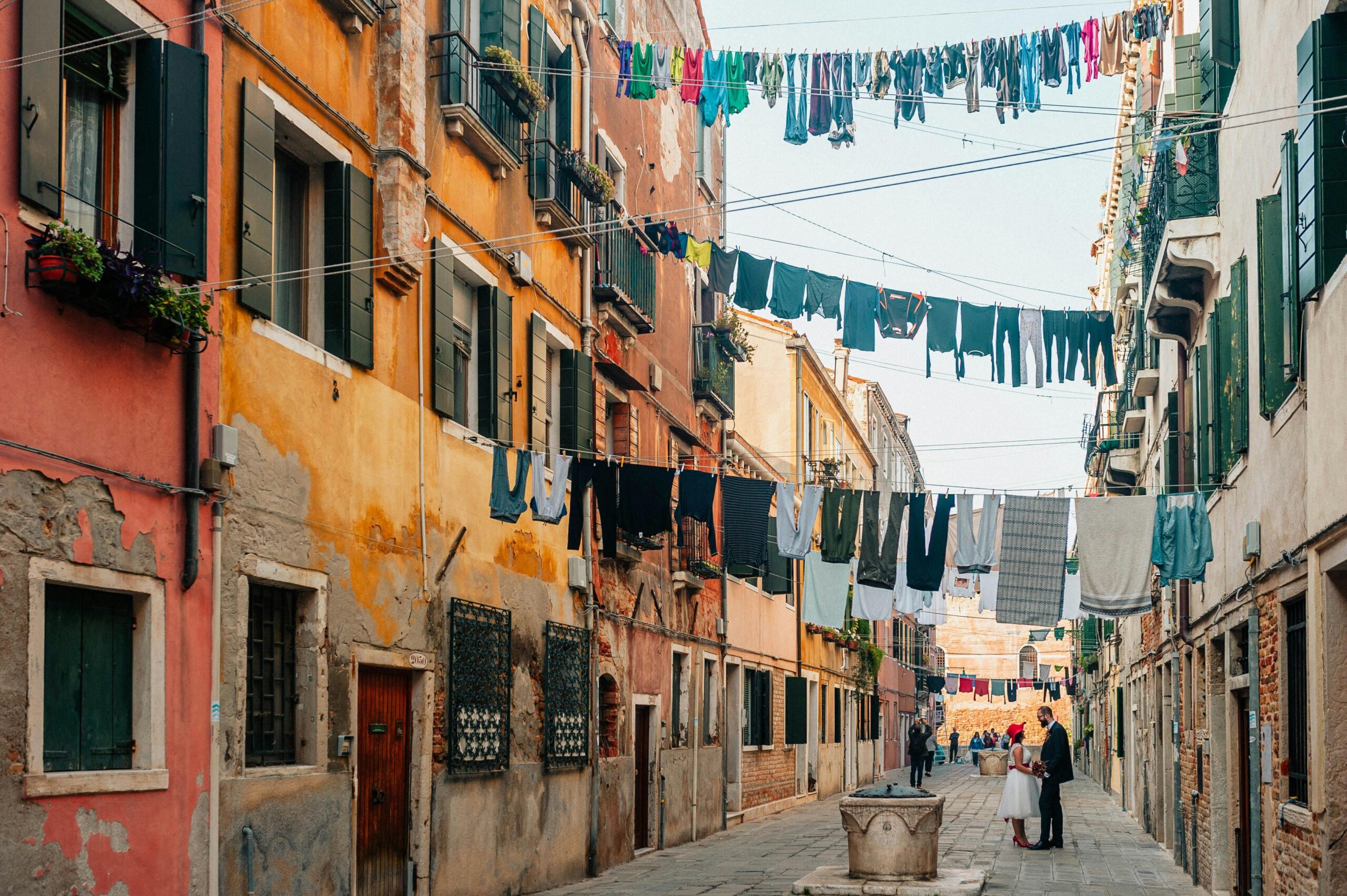
In 1965, when Luciano Benetton first glimpsed his sister Giuliana’s hand-knitted rainbow sweaters drying on their family’s clothesline in Ponzano Veneto, he couldn’t have imagined he was witnessing fashion’s future. Those vibrant woolen garments, dancing in the Venetian breeze, would spark a revolution that transformed not just how we dress, but how fashion brands communicate with the world.
Today, as fashion grapples with authenticity and social responsibility, Benetton’s legacy feels more relevant than ever. This Italian powerhouse proved that commercial success and social consciousness aren’t mutually exclusive—they’re essential partners in creating lasting cultural impact.
The Treviso Miracle
Benetton’s origin story reads like Italian neorealism cinema. Four siblings—Luciano, Giuliana, Gilberto, and Carlo—transforming their family’s modest circumstances through sheer creativity and determination. In post-war Italy, when rationing still limited color choices, Giuliana Benetton’s decision to unravel existing garments and re-knit them in bold, optimistic hues was both practical innovation and artistic rebellion.
The brand’s revolutionary approach began with technical innovation. While competitors relied on pre-dyed yarn, Benetton developed a process of dyeing finished white garments. This breakthrough allowed rapid response to color trends and dramatically reduced inventory risk. Fashion could finally be both spontaneous and systematic.
Luciano’s genius lay in recognizing that their small-town Italian operation could think globally. By 1968, just three years after founding, Benetton opened their first international store in Paris. The message was clear: Italian creativity, universal appeal.
The Color Vocabulary
Benetton didn’t just use color—they created an entirely new chromatic language for fashion. Their palette rejected the muted, “sophisticated” tones that dominated 1960s European fashion. Instead, they embraced electric blues, sunshine yellows, grass greens, and cherry reds with an intensity that felt almost aggressive in its optimism.
This wasn’t accidental. Post-war Europe craved vibrancy after years of destruction and deprivation. Benetton’s colors carried psychological weight—they represented renewal, energy, and hope. Wearing Benetton became an act of emotional declaration.
Advertising as Art and Activism
If Benetton’s products established their market presence, their advertising campaigns cemented their cultural legacy. Partnering with photographer Oliviero Toscani in 1982 launched what many consider fashion’s most provocative advertising era.
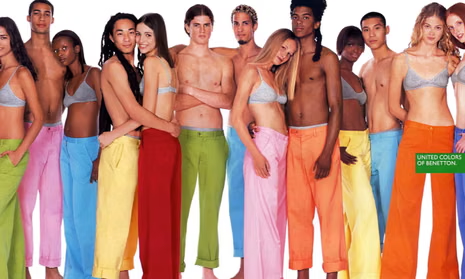
The “United Colors of Benetton” campaign transcended traditional fashion advertising. Instead of showcasing products, these images addressed racism, war, AIDS, capital punishment, and environmental destruction. A priest kissing a nun. A newborn baby still covered in vernix. Three human hearts labeled “White,” “Black,” and “Yellow.”
These weren’t marketing gimmicks—they were artistic manifestos. Toscani and Benetton understood that fashion occupies cultural space, and cultural space carries responsibility. Their campaigns sparked international controversies, boycotts, and debates that extended far beyond fashion circles.
The Italian Design Philosophy
Benetton embodies distinctly Italian approaches to design and business. Their aesthetic balances sophistication with accessibility—luxury’s democratic cousin. Italian design traditionally emphasizes joy, functionality, and human connection over cold minimalism or intimidating exclusivity.
This philosophy manifested in their retail environments. Benetton stores felt welcoming rather than precious. Clothes were displayed like candy in a confectionery—colorful, abundant, touchable. The shopping experience invited exploration rather than reverent observation.
Their Italian identity also shaped their business model. The franchise system they pioneered allowed local entrepreneurs worldwide to participate in the Benetton story while maintaining brand consistency. This approach reflected Italian family business values scaled globally.
Manufacturing Excellence
Behind the colorful facade lay serious manufacturing innovation. Benetton’s integrated production system, centered in Treviso, represented Italian industrial design at its finest. Automated cutting, computerized inventory management, and just-in-time manufacturing kept costs low while maintaining quality.
Their supply chain efficiency allowed rapid response to fashion trends. While competitors required months to introduce new colors, Benetton could shift production in weeks. This agility became their competitive advantage in an increasingly fast-moving fashion landscape.
Benetton’s Italian Innovation Timeline
- 🔹 1965: Founded in Ponzano Veneto by the Benetton siblings
- 🔹 1968: First international store opens in Paris
- 🔹 1972: Garment-dyeing technology patented
- 🔹 1982: “United Colors” campaign launches
- 🔹 1986: Listed on Milan Stock Exchange
Cultural Impact Beyond Fashion
Benetton’s influence extended far beyond clothing racks. Their Fabrica research center, established in 1994, became a breeding ground for young artists, designers, and communicators. This institution embodied Benetton’s belief that commercial brands could nurture cultural development.
The center’s projects addressed global issues through creative collaboration. Young talents from worldwide backgrounds worked on projects ranging from AIDS awareness to environmental conservation. Fabrica proved that fashion brands could function as cultural institutions, not just commercial entities.
Their magazine “Colors,” launched in 1991, explored global issues through striking visual journalism. Each issue tackled a single theme—work, travel, shopping, survival—with unflinching honesty and artistic sophistication. “Colors” demonstrated that fashion-adjacent media could engage seriously with complex social topics.
The Sports and Performance Evolution
Benetton’s expansion into Formula One racing (1986-2001) represented their natural evolution toward performance and precision. Their racing team, with its distinctive colorful liveries, brought Benetton aesthetics to motorsport’s highest level.
The F1 connection wasn’t just marketing—it influenced their technical textile development. Racing demands for lightweight, durable, high-performance fabrics filtered into consumer products. Benetton’s sporty casual wear benefited from genuine technical innovation derived from competitive racing.
Their sports involvement also reinforced brand values around international cooperation and excellence. Formula One’s global reach aligned perfectly with Benetton’s multicultural messaging, while technical demands pushed their manufacturing capabilities forward.
Technical Innovation Legacy
Modern activewear owes debts to Benetton’s textile innovations. Their early adoption of synthetic blends, moisture-wicking technologies, and stretch fabrics anticipated today’s performance fashion trends. Athletic leisure wear’s current dominance traces roots to Benetton’s 1980s sports-influenced collections.
Their color-fastness technologies, developed for vibrant knitwear, enabled today’s bold athletic apparel. When contemporary brands create electric yoga pants or neon running shoes, they build on foundations Benetton established decades earlier.
Contemporary Relevance and Revival
Today’s fashion landscape makes Benetton’s approach feel prophetic. As brands struggle with authenticity and social responsibility, Benetton’s legacy offers valuable lessons. They proved that commercial success and cultural leadership could coexist when executed with genuine conviction.
Recent collaborations with contemporary designers demonstrate Benetton’s ongoing relevance. Their partnership with emerging Italian talents brings fresh perspectives to classic Benetton codes. These collaborations maintain brand DNA while appealing to new generations seeking both style and substance.
The rise of sustainable fashion also validates Benetton’s historical approaches. Their emphasis on quality basics, timeless silhouettes, and responsible manufacturing aligns with contemporary values around conscious consumption.
The Digital Age Adaptation
Benetton’s current digital strategy honors their revolutionary heritage while embracing contemporary platforms. Their social media presence maintains the provocative spirit of classic campaigns while addressing current global issues through fashion-forward content.
E-commerce platforms showcase their Italian craftsmanship and color innovation for global audiences. Virtual styling tools help customers explore Benetton’s chromatic possibilities, while sustainability tracking allows conscious consumers to understand product origins and impact.
Their digital storytelling emphasizes Italian heritage and family values, connecting emotionally with consumers seeking authenticity in an increasingly impersonal retail landscape.
Global Franchise Renaissance
The franchise model that made Benetton a global phenomenon is experiencing renaissance. Independent entrepreneurs appreciate the balance between brand support and local autonomy that Benetton pioneered.
Current franchise partners span from established European markets to emerging economies in Africa and Asia. Each location adapts Benetton’s core values to local contexts while maintaining recognizable brand elements.
This approach allows rapid expansion while preserving the personal touch that distinguishes Benetton from corporate fashion chains. Local ownership creates genuine community connections that purely corporate structures cannot replicate.
The Future of United Colors
As fashion grapples with diversity, sustainability, and social responsibility, Benetton’s DNA contains solutions to contemporary challenges. Their historical commitment to multiculturalism, environmental consciousness, and artistic collaboration positions them perfectly for fashion’s evolving demands.
The brand’s future likely involves deeper integration of technology with human creativity, expanded collaboration with global artists and activists, and continued evolution of their manufacturing processes toward complete sustainability.
Benetton’s greatest asset remains their willingness to take risks in service of larger cultural conversations. In an era when many brands retreat from controversial topics, Benetton’s legacy suggests that courage and commerce can coexist profitably.
The four siblings from Treviso created more than a fashion brand—they established a template for how creative businesses can engage meaningfully with the world’s complexities. Their united colors continue painting fashion’s future with bold, optimistic strokes.
Shop Now: Benetton’s
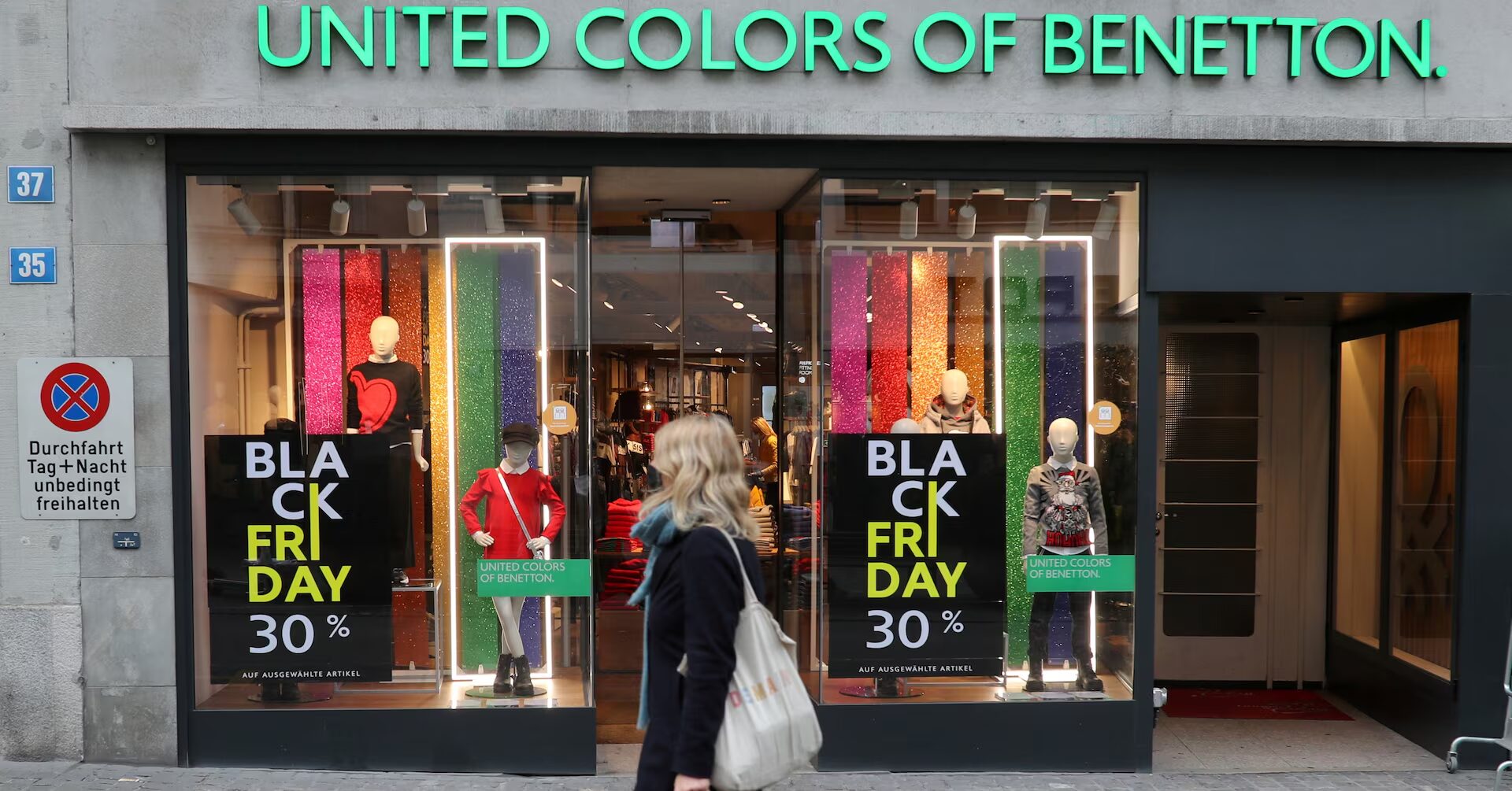
The next time you see a rainbow of colors in any store window, remember: you’re looking at Benetton’s lasting influence on how fashion communicates hope, unity, and human potential through the simple power of color.