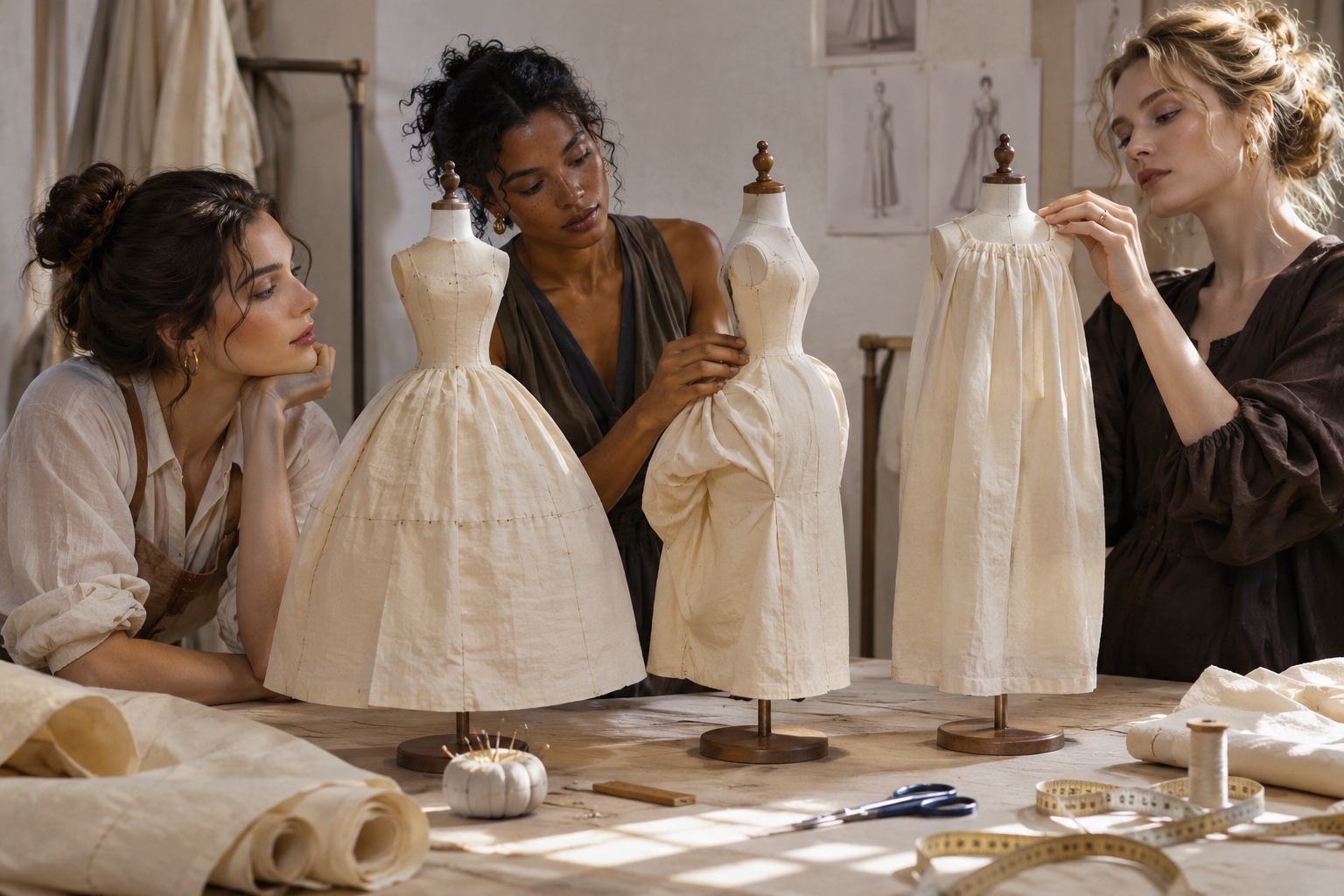
On a cutting table, three small dress forms stand side by side. One skirt opens into a bell. Another bends outward behind the hips. The third hangs freely from the shoulder. These fashion silhouettes ask a question that a front photograph can easily miss. Where does the cloth have room to go? A nineteenth-century cage crinoline, an early bustle, and Balenciaga’s sack dress each put that space somewhere different. They also change how a person turns or sits. Looking at the structures beneath those shapes makes the outside easier to understand. It gives us a way to read garments we see today.
Fashion Silhouettes Begin With the Space Under the Cloth
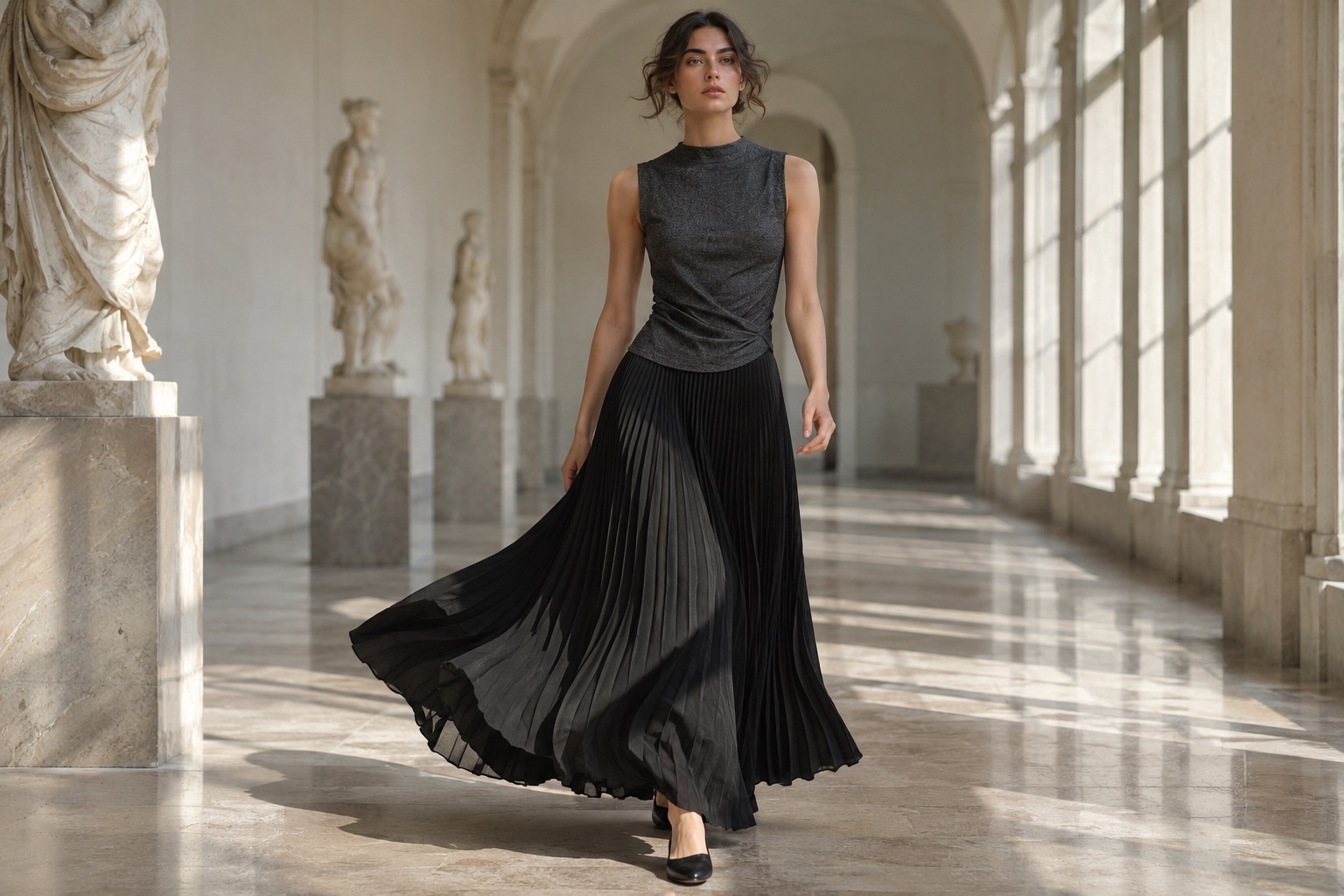
The outline in a photograph is a record of one position. A person is standing still. The light has come from a particular side. A skirt with a broad hem might be full of layers. It might also rest on an open frame. The empty space beneath it changes how the fabric moves, even if the outside shape looks similar.
Then turn the garment around and look again. From the front, the line might appear nearly straight. At the side, cloth can sit farther away from the hips. From the back, a fold may disguise a change in direction. For that reason, each view gives different information. That is why a gallery display can feel quite different from opening a single image in a book.
Where the Fabric Finds Support
There is also the sense of weight. Cloth can pool, rest on a structure, or hang free from a seam. At the same time, the support can move. For example, a hoop may shift with the skirt. A shaped piece behind the hips can make the fabric settle on a different angle. A garment that hangs from the shoulders offers yet another point of contact.
The aim is to understand the shape through how it is made. Geometry is only a beginning. For example, a cotton tape or a loose shoulder seam can explain where the cloth finds support. For instance, notice where a smooth outer surface first bends under its own weight. The change often tells you where it has found support.
Compare the front, side, and back. Look for the place where the fabric first changes direction.
Air occupies the distance between the body and the fabric. In a photograph, the space appears only as a curve. At the worktable, it has a clear beginning and end. That practical distinction helps explain why a support can matter even when no one sees it.
The Cage Crinoline Builds an Open Frame
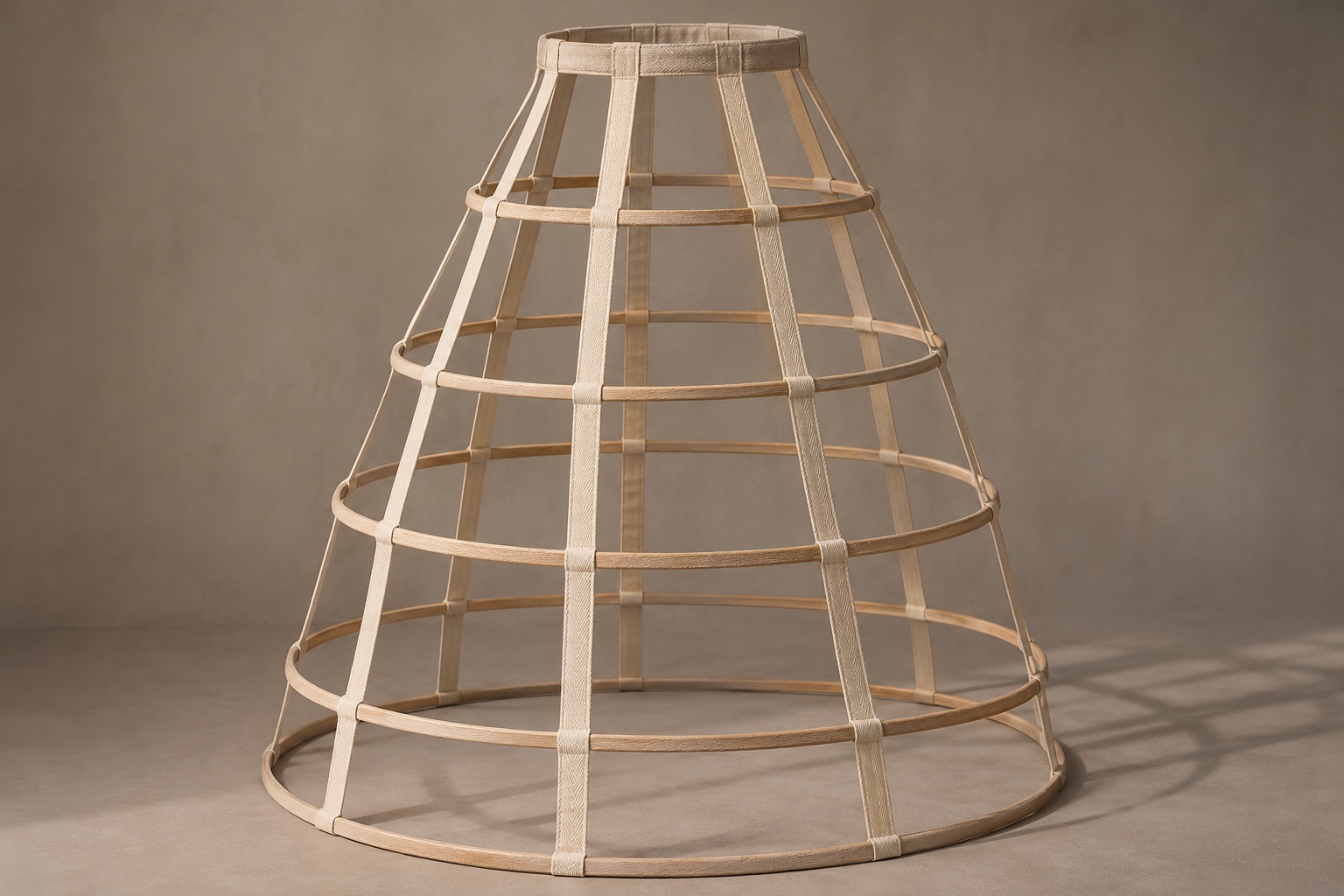
The Metropolitan Museum of Art’s essay on nineteenth-century dress support explains how the cage crinoline shaped the skirt. The cage used hoops to hold out the fabric. In turn, fabric tapes helped fix their positions. A full form could therefore contain a great deal of empty space. It could also support a broad skirt without filling that space with cloth.
How the Rings Set the Slope
Imagine a small version on the worktable. A narrow ring sits at the top. Broader ones hang underneath. As a result, each step changes the slope of the fabric above. Bring a hand near the frame. See how little material occupies the middle. Then cover it with a skirt. The surface becomes a continuous curve.
The shape changes who can stand close. There is more space at the hem, even where the shoulders stay relatively near the body. At a doorway, that difference becomes clear. The skirt also needs room at the doorway. Clothes can change such ordinary actions as entering a room or turning beside a chair.
Also notice the role of light. Across a wide skirt, one piece of fabric can present several different angles at once. A sheen may grow brighter where cloth curves toward the window. It can disappear near the side. The frame makes those changes visible. The outside shape can look calm while the cloth rests on a series of separate supports.
The Bustle Moves Volume Behind the Hips
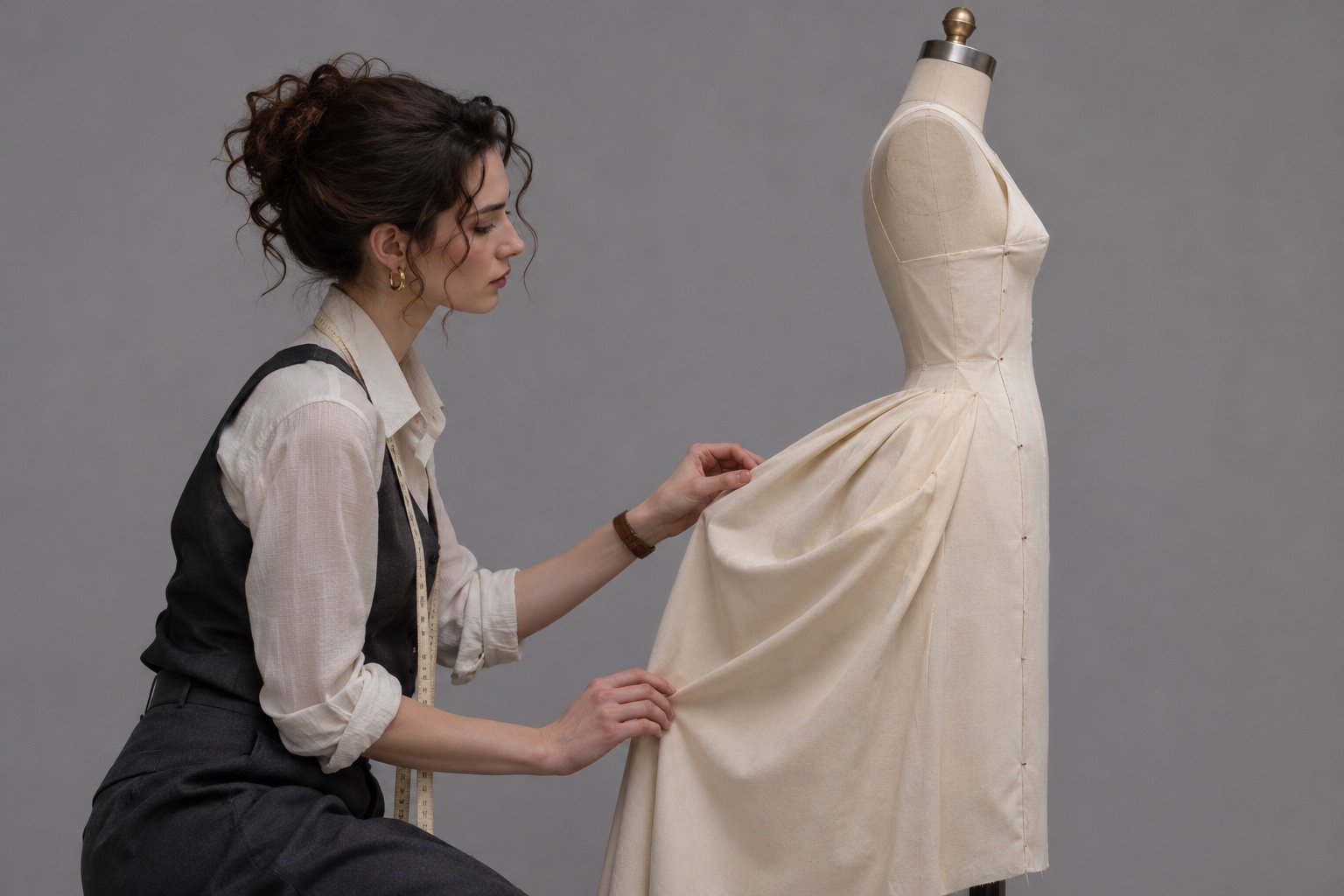
An early bustle in The Met’s collection uses flexible steel rings covered in fabric. The museum describes a structure capable of supporting draped skirts. In this case, it sits chiefly behind the body. From the side, that position changes the profile. There can be a flatter line in front and a fuller curve behind the hips. The distinction is particularly clear on a dress form viewed at eye level.
In this case, the support organizes the folds. The back of the skirt can gather around a smaller area of structure. The front can feel more controlled to the eye. Cloth still has weight. When a dense fabric drapes over a ledge, it makes a shadow immediately beneath it. As a result, the light and dark areas show roughly where the direction changes.
Room to Sit
The Met also discusses early designs that considered sitting. However, the outside outline gives little indication of it. An object has to work for a body at rest as well as one standing in a display. Think about the distance between the edge of a chair and the back of the skirt. It becomes a practical variable in the shape.
Our guide to outfit proportions looks at a similar question in everyday dressing. For example, turn in a jacket with a fuller back. The lesson carries over to a loose jacket. Check the side. A detail that barely reads in front might carry most of the volume.
The Sack Dress Lets Cloth Fall From the Shoulder
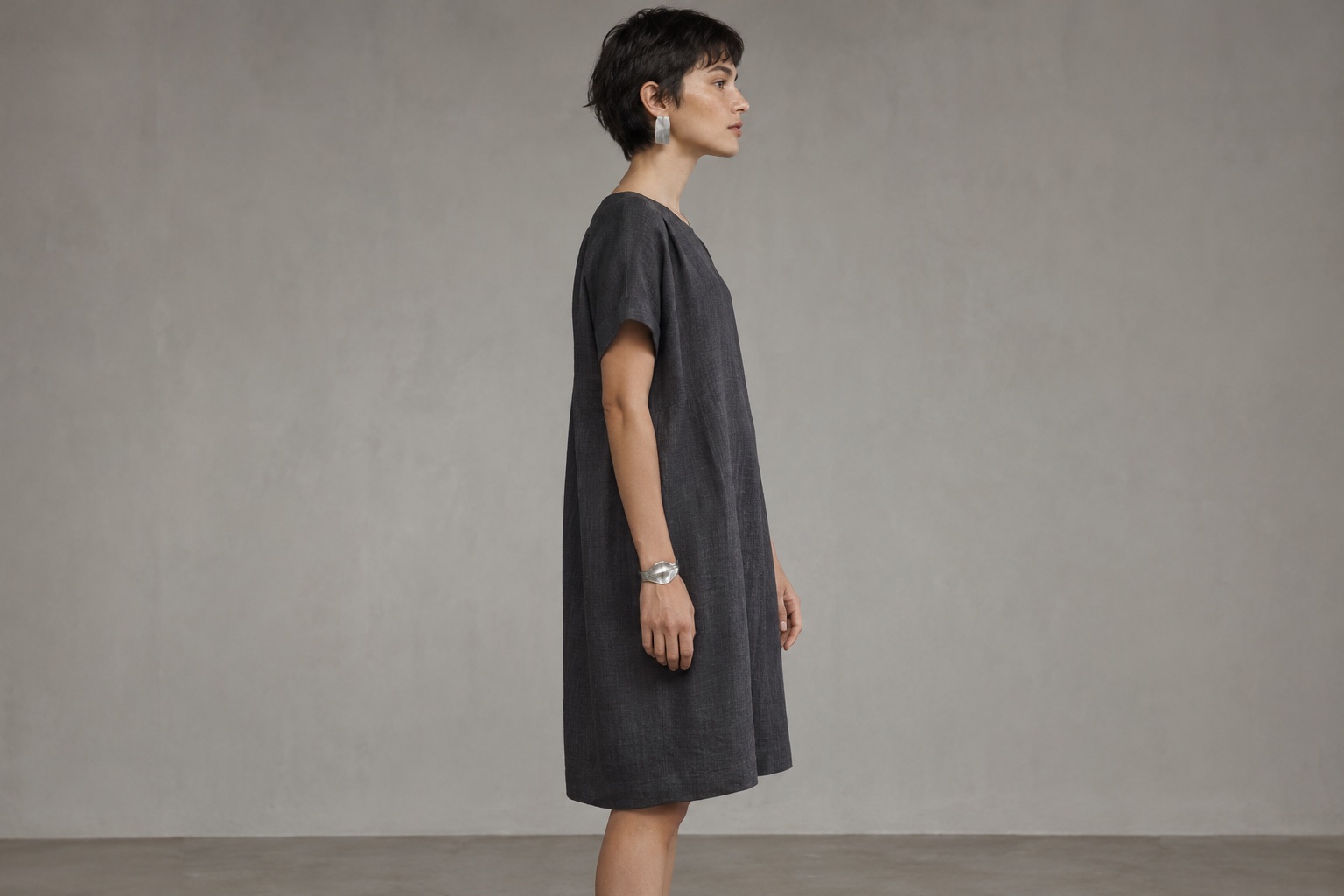
Cristóbal Balenciaga’s sack dress appeared in 1957. It put space around the torso in a different place. Its outline offered room at the waist without an obvious belt or close-fitting seam. The weight of the clothing could still be felt at the shoulders. Below that point, the cloth followed its own line. The change is easiest to see in profile.
A shoulder can act as a starting edge. From there, a garment may lean away from the back or swing near the knee. The surface may look smooth. Then raise an arm. As a result, more of its shape comes into view. Then you can see how much the shape depends on a close fit.
How the Shoulder Carries the Line
Compare the dress with the hoop and bustle. Its shape has a different kind of control. Much of the apparent volume comes from the relationship between cut and cloth. For instance, stronger cloth can hold an edge outward. A softer one can fall closer. Two garments with a similar sketch may therefore feel entirely different when you wear them.
That difference makes plain color useful in a study. Turn toward the light. A slight angle at the back becomes visible. A quiet fabric can give the seam room to show. Our tonal dressing guide gives you a way to notice that effect in a simpler outfit.
Follow the fabric until you see where it leaves the body.
Small studies like these can help distinguish a rule from a choice. Cloth moves under its own weight. A maker can decide how to support it. One dress might follow the body closely at the shoulder and fall away through the waist. Another might start its change just behind the hips. Those decisions still belong to contemporary tailoring.
Notice how little a small form tells you about comfort. Its scale makes a shape easy to compare. It cannot show what the material weighs on the wearer. A record of the garment in motion, or a good side view, can give that missing information a place.
Three Fashion Silhouettes and a Way to Look Again
The cage, the bustle, and the loose dress make space through different decisions. One places it beneath the full width of a skirt. Another moves it toward the back of the hips. The third lets the cloth fall from above with room around the middle. Look again at the next garment you see from the side. Find the spot where the fabric changes direction. Then ask where the rest of its weight goes when the wearer takes a step. Fashion silhouettes become easier to understand once you can imagine that motion. The materials, seams, and gaps come into view together. You can see that even in your own closet. Which garment would you turn sideways first to find out what it does with space?
- Look at a garment from more than one side.
- Find the point where it is supported.
- Imagine how its shape changes when someone sits or steps forward.