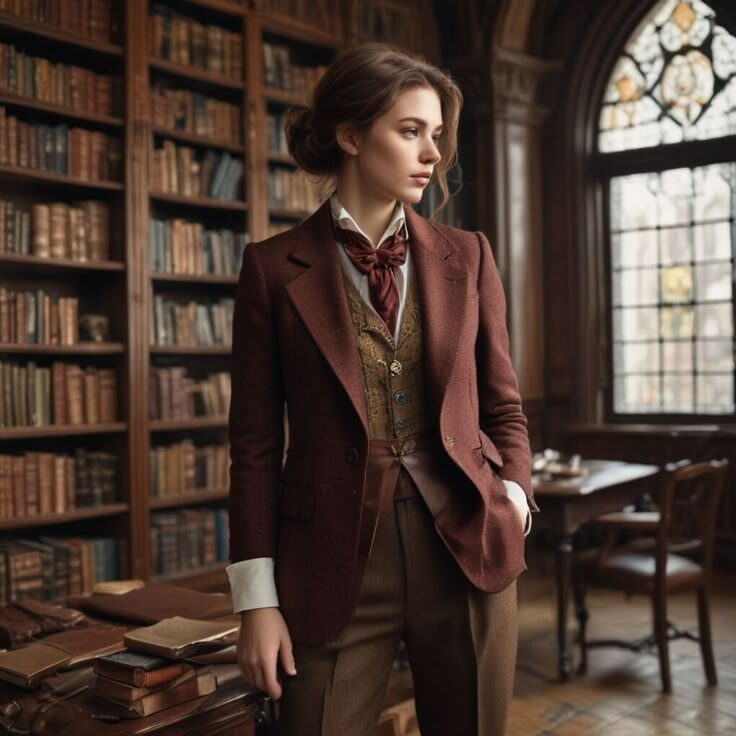
The college library closes at midnight. You remain, surrounded by leather-bound volumes and the amber glow of antique desk lamps. Your wool trousers are slightly wrinkled from hours of sitting. The sleeves of your cable-knit sweater are pushed carelessly to your elbows. A forgotten cup of black coffee grows cold beside your annotations of Byron’s poetry. Outside, October rain streaks the Gothic windows. This moment—atmospheric, intellectual, slightly melancholic—captures what millions chase through dark academia fashion.
But here’s the uncomfortable truth October 2025 reveals: most people appropriating dark academia aesthetic have never spent hours lost in philosophical texts, never felt the particular satisfaction of marginalia conversations with dead authors, never experienced the genuine lifestyle this fashion supposedly represents.
Dark academia fashion divorced from actual intellectual curiosity becomes costume—beautiful, certainly, but hollow. The aesthetic works only when clothing reflects authentic interests rather than manufactured persona.
The Origins: More Than Pinterest Mood Boards
Dark academia emerged from genuine academic subcultures—Oxford students in worn tweed, American ivy league traditions, European scholarly bohemianism. These weren’t conscious aesthetic choices but natural outcomes of intellectual lifestyles lived in historic institutions.
The aesthetic romanticizes this scholarly existence, particularly its visual elements: Gothic architecture, classical literature, vintage clothing, candlelit study sessions, autumn perpetually. It celebrates learning for learning’s sake, appreciates dead languages, and finds beauty in melancholy contemplation.
The Literary Foundation:
Dark academia draws heavily from specific literary traditions—The Secret History by Donna Tartt, The Picture of Dorian Gray, Dead Poets Society, Kill Your Darlings. These works romanticize elite education, forbidden knowledge, and intellectual obsession. They’re also overwhelmingly white, wealthy, and male-dominated—problematic aspects the fashion aesthetic often overlooks.
The Pandemic Acceleration
COVID-19 lockdowns catalyzed dark academia’s explosion. Trapped inside, people romanticized the academic life they couldn’t access—libraries, lectures, campus walks. The aesthetic provided escapism and structure when both felt desperately needed.
TikTok and Pinterest amplified this dramatically. #DarkAcademia accumulated billions of views. The algorithm favored moody, atmospheric content—candlelit studying, vintage fashion, autumn aesthetics. What began as genuine subculture became mainstream trend.
By 2022, fast fashion brands mass-produced “dark academia collections.” Urban Outfitters, Zara, H&M—all capitalized on the aesthetic. This commercialization simultaneously democratized access and diluted authenticity.
The Color Philosophy: Beyond Just Wearing Brown
Dark academia’s palette isn’t arbitrary—it reflects historical academic dress codes and the natural aging of quality materials.
Primary Colors (60-70% of wardrobe):
Deep Brown – From chocolate to espresso, brown anchors the aesthetic. Historically, brown wool and tweed proved practical for academics—durable, hides wear, works across seasons.
Charcoal & Black – Provide contrast and formality. Black trousers, charcoal blazers, onyx accessories create sophisticated base.
Forest Green – The one jewel tone dark academia embraces fully. It references British academic regalia and pairs beautifully with browns.
Secondary Colors (20-30%):
Burgundy/Oxblood – Rich, deep reds add warmth without brightness. Perfect for sweaters, scarves, accent pieces.
Navy – Classic prep school associations. Navy blazers are quintessential academic uniform elements.
Cream/Ivory – The only light neutral that works. Provides necessary contrast for layering and collar details.
What’s Conspicuously Absent:
Pastels, neons, bright primary colors, most blues lighter than navy, anything that “pops” in modern fashion parlance. Dark academia deliberately rejects visual excitement in favor of sophisticated restraint.
“Dark academia isn’t about looking smart—it’s about dressing for a life of contemplation, where comfort meets formality, where you’re always semi-prepared for an impromptu lecture on Romantic poetry or a walk through autumn woods discussing Nietzsche.”
— The philosophy, if not the execution
The Essential Pieces: Building Authentic Academic Style
Dark academia fashion requires specific silhouettes and materials that reference historical academic dress.
The Foundation Layer: Shirts & Blouses
Oxford Button-Downs – The non-negotiable base. White or cream Oxford cloth shirts work under everything—sweaters, vests, blazers. The collar provides necessary structure.
Styling Detail: Never crisp and fresh. Oxford shirts should look slightly lived-in—collar softened, sleeves naturally wrinkled from rolling. The goal is “I’ve been wearing this all day in the library,” not “I just pressed this”.
High-Neck Blouses – For feminine presentations, Victorian-inspired blouses with high collars, poet sleeves, or subtle ruffles. These reference 19th-century academic dress when women first entered universities.
The Intellectual Layer: Knitwear
Cable-Knit Sweaters – Chunky, textured, preferably in wool or wool blend. V-neck works over collared shirts; crewneck stands alone. Color: brown, forest green, burgundy, charcoal.
Fit Philosophy: Slightly oversized but not sloppy. Should look like you borrowed it from someone larger and decided it felt right. Sleeves pushed to elbows create that “absorbed in work” aesthetic.
Sweater Vests – The ultimate dark academia signature. Worn over Oxford shirts, sweater vests channel 1940s prep school vibes perfectly. Choose subtle patterns—argyle, small Fair Isle designs, or solid knits.
Cardigans – Long, oversized cardigans in neutral knits. These layer over everything and provide cozy academic atmosphere. Button three-quarters of the way up, never fully fastened.
The Structure Layer: Blazers & Coats
Tweed Blazer – If you own one academic piece, make it this. Authentic tweed in brown, grey, or mixed earth tones. Elbow patches optional but authentic.
Investment Note: Vintage tweed blazers from thrift stores often outperform new fast-fashion versions. Look for Harris Tweed labels, substantial weight, genuine wool content.
Wool Overcoat – Long, structured coat in charcoal, camel, or black. Should be slightly oversized, falling mid-calf. This references traditional academic dress and British scholarly style.
Trench Coat – For transitional weather, a classic trench in khaki or black. Must be belted and worn slightly undone—too polished defeats the aesthetic.

The Bottom Half: Trousers, Skirts & Details
High-Waisted Wool Trousers – Tailored but not tight, in charcoal, brown, or black. Pressed crease down the front, slightly cropped to show ankles and interesting shoes.
Styling Secret: Trousers should look like they’ve been worn to multiple lectures—slight creasing behind knees, not freshly pressed. This lived-in quality matters enormously.
Pleated Skirts – For feminine presentations, midi-length pleated skirts in plaid, solid wool, or corduroy. Worn with tights and loafers or boots.
Length Matters: Mini skirts feel too trendy and modern. The midi length (mid-calf) references historical academic dress and feels more sophisticated.
Corduroy Trousers – Wide-wale corduroy in brown, forest green, or burgundy provides texture variety. More casual than wool but still appropriately academic.
Footwear: The Scholarly Foundation
Leather Loafers – Penny loafers or tassel loafers in brown or burgundy leather. Should look worn and comfortable, not pristine.
Oxford Shoes – Classic lace-up Oxfords or brogues. These reference traditional prep school uniforms and British academic dress.
Chelsea Boots – Sleek leather Chelsea boots in black or brown work for all genders. Provide necessary edge while maintaining sophistication.
Mary Janes – For feminine presentations, classic Mary Jane shoes in patent leather or suede. Especially effective with tights and pleated skirts.
The Anti-Choice: Athletic sneakers, chunky platform shoes, anything overtly trendy or branded. Dark academia footwear should reference 1930s-60s prep school style.
Accessories: The Scholarly Details
Accessories distinguish authentic dark academia from generic vintage styling.
The Intellectual Signifiers
Wire-Rim Glasses – Even if you don’t need prescription lenses, clear wire-rim glasses in gold or silver provide instant scholarly credibility. Round or oval frames reference early 20th-century academic style.
Leather Satchel/Messenger Bag – Structured leather bag in brown or burgundy. Should look capable of carrying heavy books. Vintage Cambridge or Oxford satchels are ideal.
Watches – Vintage-style analog watches with leather straps. Digital watches break the aesthetic completely. The watch should look inherited or found in a grandfather’s drawer.
Scarves – Plaid wool scarves in muted colors, or solid cashmere in burgundy, forest green, camel. Worn loosely, never perfectly arranged.
Brooches & Pins – Small, tasteful pins on blazer lapels—vintage book pins, literary quotes, academic crests. These should feel collected over time, not purchased as a set.
| Wardrobe Category | Essential Pieces | Budget-Friendly Source |
|---|---|---|
| Tops | White Oxford shirt, turtleneck, poet blouse | Uniqlo, thrift stores, Everlane |
| Knitwear | Cable-knit sweater, sweater vest, cardigan | Vintage shops, LL Bean, J.Crew sale |
| Outerwear | Tweed blazer, wool coat, trench | Estate sales, Poshmark, vintage dealers |
| Bottoms | Wool trousers, pleated skirt, corduroy pants | Banana Republic sale, vintage, Zara |
| Footwear | Leather loafers, Oxford shoes, Chelsea boots | Clarks, Dr. Martens, vintage leather shops |
Light Academia: The Optimistic Alternative
Light academia offers softer interpretation—same intellectual foundation, gentler execution. Where dark academia embraces gloom, light academia celebrates learning’s joyful aspects.
Color Shift:
Cream, beige, soft brown, butter yellow, sky blue, mint green replace the dark palette. The effect feels spring semester rather than autumn—fresh, hopeful, still scholarly but less brooding.
Aesthetic Differences:
Light Academia: Coffee shops, sunlit libraries, outdoor reading, floral tea cups, handwritten notes in colored ink.
Dark Academia: Candlelit study, Gothic architecture, black coffee, Latin texts, marginalia in fountain pen.
Both celebrate intellectualism and classical education. The mood and visual tone differ dramatically. Choose based on personal temperament and aesthetic preferences.
Styling October 2025: Seasonal Perfection
Fall represents dark academia’s natural habitat. October’s palette matches the aesthetic perfectly.
Complete Outfit Formulas:
The Classic Scholar:
White Oxford shirt (collar visible) + burgundy cable-knit sweater vest + brown wool trousers + leather loafers + wire-rim glasses + leather satchel
Styling Notes: Roll shirt sleeves before putting on vest. Let collar stand slightly; don’t smooth it down. Trousers should be slightly rumpled.
The Gothic Student:
Black turtleneck + charcoal wool trousers + oversized brown tweed blazer (sleeves pushed up) + Chelsea boots + vintage watch
Key Detail: The oversized blazer provides necessary structure contrast against the fitted turtleneck. Should look borrowed from someone larger.
The Feminine Academic:
Cream poet blouse (high neck) + brown pleated midi skirt + forest green cardigan (open, belted with leather belt) + black tights + Mary Jane shoes + leather crossbody bag
Styling Secret: Tuck blouse loosely into skirt, allowing some blousing. Belt cardigan at natural waist for shape without restricting movement.
The Casual Intellectual:
Cream turtleneck + wide-wale burgundy corduroy trousers + brown leather loafers + plaid scarf (draped, not tied) + leather messenger bag
Proportions: The fitted turtleneck balances the wider corduroy leg. Without this contrast, the outfit feels shapeless.

The Vintage Imperative: Why New Doesn’t Work
Dark academia achieved authentically requires vintage or vintage-inspired pieces. Fast fashion approximations feel costumey rather than genuine.
Why Vintage Matters:
Fabric Quality: Vintage wool, tweed, and cotton possess weight and texture modern fast fashion can’t replicate. A 1970s wool blazer feels substantial in ways H&M never will.
Authentic Patina: True dark academia requires wear signs—softened collars, slight fading, natural creasing. You can’t manufacture this; it requires actual use over years.
Unique Pieces: Vintage shopping ensures uniqueness. When everyone buys from the same fast fashion collections, the aesthetic becomes uniform and loses character.
Sustainability Alignment: The intellectual lifestyle dark academia celebrates values sustainability, quality, longevity—principles vintage shopping embodies perfectly.
Strategic Vintage Shopping
Where to Look:
→ Estate sales in university towns (professors’ wardrobes are goldmines)
→ Vintage stores specializing in 1940s-70s menswear
→ Online platforms: Etsy, eBay, Poshmark, The RealReal
→ Thrift stores in affluent neighborhoods
What to Prioritize:
Invest vintage budget in outerwear and structured pieces—blazers, coats, quality knitwear. These items benefit most from vintage quality and aging. Purchase modern basics—Oxford shirts, plain turtlenecks—new for better fit and hygiene.
Beyond Clothing: Lifestyle Integration
Authentic dark academia extends beyond wardrobe into lifestyle choices. Without this depth, the fashion feels hollow.
The Reading Component:
Actually engage with classical literature, philosophy, poetry. Dark academia without intellectual curiosity is just brown clothing. Build a reading list that includes canonical texts—start with what genuinely interests you, whether that’s Greek philosophy, Romantic poetry, or Gothic fiction.
The Study Aesthetic:
Create physical spaces reflecting the aesthetic—vintage desk lamp, leather-bound journals, fountain pens, classical music playlists. These environmental elements support both the aesthetic and the intellectual lifestyle it represents.
The Learning Practice:
Pursue knowledge for intrinsic value, not external validation. Learn Latin or Ancient Greek. Study art history. Read secondary literature about favorite authors. The aesthetic gains authenticity when reflecting genuine intellectual engagement.
The Community Connection:
Engage with actual academic communities—attend public lectures, join book clubs, visit museums, participate in literary discussions. Dark academia thrives when connected to real intellectual life.
The 30-Day Academic Aesthetic Challenge
- Week 1: Build basic capsule—Oxford shirt, sweater, trousers, loafers
- Week 2: Add one vintage piece from thrift store or estate sale
- Week 3: Start reading classical text; create dedicated study space
- Week 4: Complete aesthetic with accessories; photograph your journey
The goal isn’t perfect execution—it’s developing personal relationship with scholarly aesthetic.
The Problematic Elements: Acknowledging Limitations
Dark academia carries baggage requiring acknowledgment. The aesthetic romanticizes institutions and eras with significant exclusionary histories.
Class Implications:
Elite universities, expensive books, vintage clothing—dark academia inherently references privilege. The aesthetic celebrates educational access not everyone possessed historically or currently.
Racial Homogeneity:
Traditional academic institutions were overwhelmingly white. Dark academia imagery often reflects this, both historically and in contemporary social media presentations. Expanding the aesthetic to include diverse representations remains ongoing work.
Gender Dynamics:
Historical academia excluded or marginalized women. Romantic portrayals often elide these power structures. Contemporary dark academia should acknowledge these histories while creating more inclusive interpretations.
Modern Solution:
Engage with dark academia critically. Appreciate aesthetic elements while acknowledging problematic histories. Support diverse voices within the community. Ensure your intellectual pursuits include authors and perspectives from varied backgrounds.

October 2025’s dark academia renaissance offers opportunity—not just for aesthetic expression but for genuine engagement with learning, beauty, and contemplation. The fashion works best when it reflects actual interests rather than manufactured persona.
Your tweed blazer should feel like armor for intellectual battles, not costume for Instagram photos. Your worn leather satchel should actually carry books you’re reading, not just props. The aesthetic’s power lies in its authenticity—in dressing for the life you actually live, one where ideas matter and beauty emerges from genuine pursuit of knowledge.
Begin by choosing one classical text you’ve always meant to read. Find a vintage blazer that fits your shoulders perfectly. Wear them together while getting lost in ideas. That’s when dark academia stops being aesthetic and becomes actual life.