Outside an office lift, dark jeans and a pale blue shirt can look quietly deliberate. One detail can make the outfit feel ready. It might be a flat hem, a crisp edge at the cuff, or a shoe that suits the setting. The useful dark denim work outfits begin with the rules of your own workplace. If jeans are welcome, begin with the cloth. Look at its deep color and firm weave. A blazer is one option. A fine knit, a pressed shirt, and a clean jacket offer three others, with different amounts of structure.
Make Dark Denim Work Outfits Fit the Room
Think about the most formal thing you will do that day. A team meeting can ask for something different from a client review. Read your office policy if the distinction matters. Jeans may be welcome only in some settings. The Emily Post Institute’s dress code guide is a useful general reference. Your own workplace gives the practical answer. Keep a trouser option ready for a day with a different expectation.
Once jeans are an option, look at the surface. Deep indigo can appear almost black indoors. In daylight, the weave and blue cast become easier to see. An even wash and intact hems can give the rest of the outfit a clearer line. If the front has heavy fading, it may add more contrast than you want. Start with the cleanest pair you already have.
Wear that pair with the shoes you plan to take. Walk and sit down in it. Notice what happens beneath your knee. A hem that twists or gathers can direct attention to your feet. A slight break can also work with the right shoe. For example, a straight leg that clears a loafer can show the shape of the toe without much effort.
Give the jeans one clear partner in the outfit, then check the hem and the shoe together.
Look at where the denim meets the shoe. A patterned sock can add interest there. A plain one can make the transition quieter. Try the shoes with your socks before you decide. A small strip of color can look quite different at the distance of a desk.
A Fine Knit for a Day at Your Desk
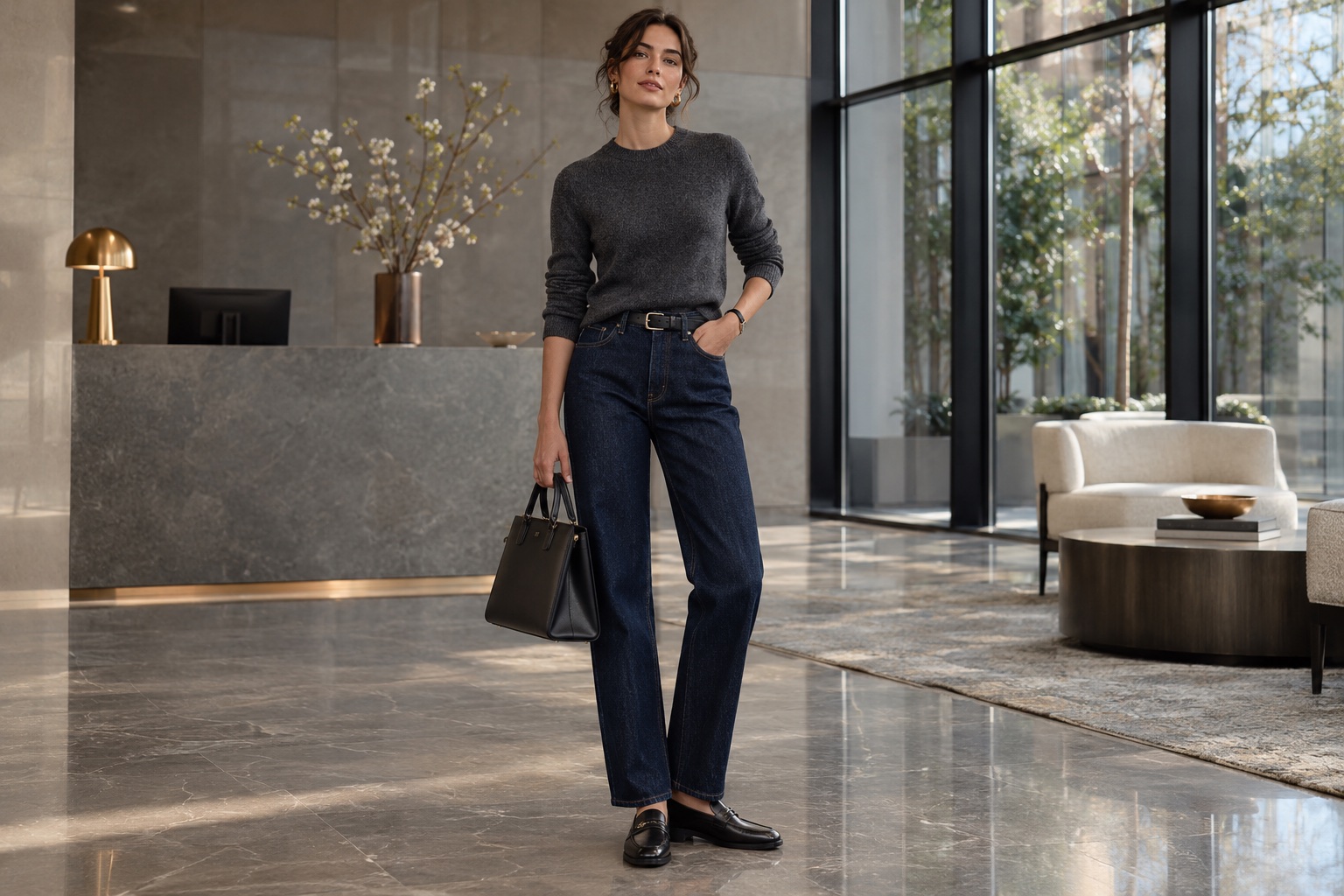
For the simplest version, choose straight deep indigo jeans with a graphite knit. Add black leather loafers, a plain dark belt, and a structured bag. The soft gray knit sits close without adding much weight. Black leather has a different finish from the denim. That little change makes the shoe visible while the colors stay near each other. Choose the bag you can set beside your seat.
Before you put on a coat, check the knit by itself. Its ribbed edge should sit quietly at the waist. If you tuck it in, make room to sit comfortably. A short knit can stay out and still meet a high waistband. Step back from the mirror. Our tone-on-tone dressing guide offers another way to bring similar dark shades together.
Consider a day at your desk. Look at the sleeve in particular. A thick cuff can catch on a keyboard. A fine one can lie closer to the wrist. Try the knit with your usual watch, if you wear one. Then take your bag off. You want the clothes to look settled once you sit down and start work.
A Crisp Shirt Changes Dark Denim Work Outfits
A pale blue collared shirt is a good second option. Wear it with deep indigo wide straight jeans, chestnut loafers, and a brown tote. Choose a clean hem. A cotton shirt with a firm collar picks up the light, while the darker leg stays quiet. The shoe introduces a little warmth below the blue. Let the shirt settle front and back before deciding whether to tuck it.
Try folding the cuffs at home. Use one even fold. Check that both ends stay close to the wrist. If the shirt has a longer back, a full tuck will show the shape of the waistband. Otherwise, leave the shirt out and make sure it clears the widest part of the pocket. That helps it hang without bunching against the denim.
The shirt outfit can work for a short meeting when your office allows jeans. Set your bag down to judge the full silhouette. Then turn slightly to the side. The contrast between pale cotton and dark denim already separates the upper and lower parts. Take care with a second strong line at the belt. It can add a break you may not need with these two colors.

Read the care label on a freshly dyed pair. If it warns of transfer, give the denim a darker bag on its first wear. Consider a darker coat lining too. The color of the accessory matters here for a practical reason as well as a visual one.
A Collarless Jacket for a More Formal Room
Try a sand collarless jacket over an ivory tee. Pair it with dark straight jeans, flat pointed black shoes, and a small navy bag. The jacket has a firm edge at the neckline. The tee gives it a light center. Choose a jacket you can close comfortably, even if you expect to leave it open. The shape should feel steady when you raise your arms.
A short collarless jacket introduces structure without taking up the space of wide lapels. Check where its hem sits. It can meet the waistband or fall just below it. If both the jacket and the tee are long, one hem may rise in front and catch on a pocket. Choose the shape you prefer while seated. That is where the relationship between layers will matter most.
Try a pointed flat beneath the straight leg. Try it on with the actual hem. It should still feel comfortable when your toes bend. You may prefer a rounded loafer. Check where the denim falls in either shoe. Our outfit proportions guide makes this easier to see when two different lengths work together.

A work outfit comes together when the clothes can still do their job after the coat comes off.
Plan for later in the day as well. Take off the jacket. Look at the tee and jeans together. A pale top can still look tidy when its collar lies flat. If the shape looks unfinished without the jacket, change the top first. This gives the outfit a second useful version.
Buy for the Fit You Can Use Again
Bring your work shoes when you try jeans. Check how the fabric feels behind the knee and at the waist. Then sit for a little while. The seat should have enough room for your ordinary posture. A firmer denim can hold a crease after you stand. A softer pair may fall differently. Choose according to how the whole outfit looks once you move.
If you already have jeans that feel right, start with the hem or a better fit at the waist. A tailor can tell you what is practical. Ask how shortening the leg changes the opening. Then try the proposed length with two shoes you own. A change that works with only one pair may be a special choice. That is useful to know before you make it.
Look for a knit or a short jacket that can also work with your usual work trousers. Use the garments you wear most to judge the sleeve. Its fabric should slide across an undershirt without gripping. A smooth finish inside a jacket feels different from exposed seams. Try closing it with your bag on. You can often learn more from that motion than from its size tag.
- Start with your workplace rules.
- Try each outfit with the shoes you will wear.
- Choose a partner for the denim that also works with your usual trousers.
Decide Which Piece You Would Wear Tomorrow
Lay out the jeans with a fine knit, the pale shirt, or a jacket you already use. Check how the colors read near a window. Then choose the version suited to the day you actually have. The smallest detail may settle the decision for you. A softer cuff can make an ordinary morning more comfortable. A straighter hem can make the same shoes look at ease. Dark denim work outfits earn their place through those small choices and through the permission of the room. You can plan around both without buying a whole new work wardrobe. Once the pieces sit well together, take the combination as far as you need it to go. On your next jeans day, would you reach for the knit, the shirt, or the collarless jacket?