One frustrated phone call. One unavailable receptionist. One entrepreneur’s lightbulb moment. That’s all it took for Lopo Champalimaud to spark the digital revolution that would eliminate Britain’s most annoying beauty ritual: the dreaded salon booking call.
The Treatwell beauty booking platform didn’t just digitize salon appointments—it fundamentally reimagined how millions access beauty services across Europe. What began as Wahanda in 2008 has evolved into the continent’s dominant beauty marketplace, processing millions of appointments monthly and transforming how salons operate in the digital age.
Today, while competitors scramble for market share, Treatwell maintains its position as Europe’s largest beauty booking ecosystem, connecting over 40,000 venues with beauty-hungry consumers who demand instant gratification. The platform’s promise? Book your perfect treatment in under 45 seconds, anytime, anywhere, without awkward phone conversations.
The Frustrated Founder’s Vision
Lopo Champalimaud brought formidable credentials to Treatwell’s founding. His previous role as Managing Director of Lifestyle at lastminute.com taught him how online booking could transform fragmented industries. Co-founding an online market research company sharpened his understanding of consumer behavior patterns.
But personal frustration catalyzed action. Trying to book spa appointments for his wife exposed systematic inefficiencies plaguing the beauty industry. Salons operated like medieval guilds—phone-only booking, limited hours, inconsistent information, zero price transparency. Only 2% offered online booking when Wahanda launched in 2008.
The initial concept addressed multiple pain points simultaneously. Consumers needed centralized platforms to discover salons, compare prices, read authentic reviews, and book instantly. Salons needed technology to fill empty chairs, reduce no-shows, and compete effectively without expensive marketing budgets.
The Pivot That Changed Everything
Early Wahanda followed the Groupon-inspired daily deals model that dominated 2010-2012. Flash sales attracted bargain hunters, but this customer base prioritized discounts over loyalty. Salons saw one-time visitors who never returned at full price, creating unsustainable economics.
The 2012 strategic pivot proved transformative yet terrifying. Abandoning daily deals triggered immediate 75% revenue collapse. Investors panicked. Staff questioned leadership. But Champalimaud recognized that long-term viability required genuine appointment booking infrastructure rather than discount marketplace dependency.
| Year | Milestone |
|---|---|
| 2008 | Wahanda founded in London by Lopo Champalimaud |
| 2010 | 10,000 venues listed globally; daily deals model launches |
| 2012 | Strategic pivot to appointment booking platform |
| 2014 | Mobile-first strategy; Salonmeister acquisition in Germany |
| 2015 | Recruit Holdings invests €292M; Treatwell acquisition for €34M |
| 2016 | Rebranding from Wahanda to Treatwell across Europe |
The Mobile-First Masterstroke
By 2014, Treatwell recognized mobile’s transformative potential before most competitors. The beauty booking platform restructured entirely around smartphone experiences, betting that convenience-seeking consumers would abandon desktop booking.
The gamble paid spectacularly. Mobile bookings exploded to over 50% of total transactions. Conversion rates on the mobile app reached 7X higher than desktop, validating the strategic focus. Users could literally book treatments while commuting, shopping, or watching television—whenever inspiration struck.
The app’s design philosophy prioritized speed above all else. Industry-standard booking flows required 5-7 minutes navigating multiple screens. Treatwell’s team obsessively optimized until achieving the now-famous 45-second booking promise.
Features That Actually Matter
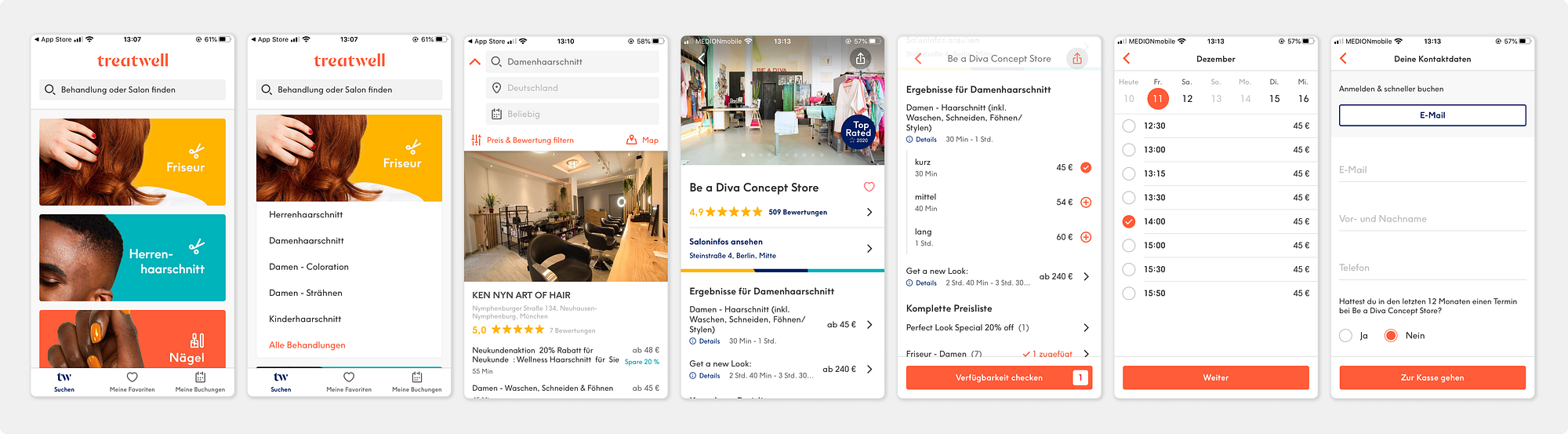
Intelligent Search Filtering: Location-based discovery finds salons within walking distance. Treatment categories span hair, nails, massage, waxing, facials, and specialized services. Price range filters help budget-conscious consumers find appropriate options.
Authentic Review System: Millions of verified customer reviews provide genuine insights into salon quality, staff expertise, and atmosphere. Unlike anonymous internet reviews, Treatwell only allows feedback from confirmed appointment holders.
Visual Discovery: High-quality photos showcase salon interiors, staff, and treatment results. This visual transparency reduces booking anxiety, particularly for new venue trials.
Calendar Integration: Confirmed appointments sync automatically with device calendars. Push notifications provide timely reminders, reducing no-show rates that plague the industry.
Flexible Management: Rebook favorite treatments with saved salons. Reschedule or cancel appointments 24/7 without awkward phone conversations during emergencies.

European Conquest Through Acquisition
Treatwell’s expansion strategy combined organic growth with strategic acquisitions, rapidly establishing pan-European dominance. The October 2014 Salonmeister acquisition provided instant German market penetration and valuable salon management software IP.
The June 2015 Treatwell acquisition itself proved most significant. Purchasing the €34 million Dutch-based platform brought the name that would eventually replace Wahanda, along with established Benelux market presence and thousands of venue relationships.
By 2015, Recruit Holdings Corporation—Japan’s employment and lifestyle services giant—recognized Treatwell’s potential, injecting over €292 million for majority ownership. This massive investment provided resources to dominate European beauty booking while maintaining operational independence.
The 2016 rebrand unified disparate acquisitions under single Treatwell identity. Operating under five different names across ten countries created marketing nightmares and confused consumers. Consolidating to Treatwell simplified messaging while building recognizable pan-European brand.
“The beauty industry was stuck in the dark ages. We’re not just building booking software—we’re creating the infrastructure that will define beauty commerce for the next generation.”
— Lopo Champalimaud, Treatwell CEO
How the Platform Actually Works
Understanding the Treatwell beauty booking platform requires examining both consumer and salon perspectives. The dual-sided marketplace only succeeds when delivering value to both constituencies.
Consumer Journey: Users download the app or visit the website, searching by location, treatment type, or specific salon names. Results display with photos, pricing, availability, and review ratings. Selecting a time slot initiates simple checkout—either prepaid through the platform or pay-at-venue upon arrival.
Salon Integration: Venues receive comprehensive management software handling appointment scheduling, client databases, automated reminders, and payment processing. Real-time calendar updates prevent double-booking nightmares that plagued paper-based systems.
Revenue Model: Treatwell charges salons monthly subscription fees plus commission on bookings sourced through the marketplace. New customer acquisitions typically incur 20-35% commissions, while return bookings generate lower fees. This performance-based model aligns incentives—salons only pay when generating actual business.
The Pricing Advantage
Off-peak discounts represent Treatwell’s killer feature for budget-conscious consumers. Salons offer reduced rates during slow periods—weekday afternoons, early mornings, typically quiet times. Smart shoppers save 30-60% booking strategically timed appointments.
Prepayment options provide additional convenience and certainty. Paying through the app eliminates awkward payment conversations and ensures pricing transparency. Walk in, receive your treatment, walk out—no wallet required.
Points and loyalty programs reward frequent users. Accumulated points convert to discounts on future bookings, encouraging platform loyalty over direct salon contact.
Treatwell vs The Competition
The beauty booking space has grown increasingly crowded. Understanding how Treatwell compares to alternatives helps consumers and salons make informed decisions.
Fresha positions as Treatwell’s primary competitor, offering free salon software funded through payment processing fees rather than subscriptions. Their 20% marketplace commission undercuts Treatwell’s 35% new-customer rate. However, Fresha’s geographic reach remains weaker in established European markets where Treatwell dominates.
Booksy targets the barbershop and nail salon segments specifically, with strong Polish and Eastern European presence. Their interface feels less polished than Treatwell, but lower commission structures appeal to cost-conscious independent operators.
Vagaro and StyleSeat dominate American markets but maintain limited UK presence. Their feature sets target specific niches—Vagaro emphasizes fitness integration while StyleSeat focuses on independent beauty professionals.
Treatwell’s competitive advantages center on established network effects. More venues attract more consumers; more consumers attract more venues. This virtuous cycle proves difficult for later entrants to disrupt.
Why Treatwell Dominates European Beauty Booking
✓ 40,000+ verified venues across Europe
✓ Millions of authentic customer reviews
✓ 45-second booking promise
✓ Off-peak discounts up to 60%
✓ 24/7 appointment management
The Salon Owner Perspective
For venue owners, the Treatwell beauty booking platform represents both opportunity and challenge. Understanding the business case requires examining benefits against costs and limitations.
Discovery and Acquisition: New customer acquisition remains Treatwell’s primary value proposition for salons. Venue partners gain exposure to millions of potential clients actively searching for beauty services. This visibility particularly benefits newer establishments lacking organic foot traffic and word-of-mouth reputation.
Operational Efficiency: Automated appointment management reduces reception staff workload. Digital client profiles retain treatment preferences, allergies, and visit history. Automated reminders decrease no-show rates that devastate small business profitability.
Marketing Tools: Built-in promotional capabilities let salons advertise specials, seasonal offers, and new services directly to Treatwell’s user base. This targeted marketing costs far less than traditional advertising while reaching qualified, high-intent audiences.
The Commission Controversy
Salon owners frequently debate whether Treatwell’s commission structure justifies the cost. First-time customer commissions ranging 20-35% reduce per-appointment profitability significantly.
However, proponents argue these should be viewed as customer acquisition costs rather than pure commissions. Compared to traditional advertising—print ads, flyers, radio spots—the performance-based model ensures payment only for actual bookings.
The key becomes converting Treatwell-sourced customers into direct-booking regulars. Savvy salon owners encourage app users to book directly for subsequent visits, preserving full revenue on repeat appointments while maintaining Treatwell presence for continuous new customer flow.
User Experience Deep Dive
The Treatwell beauty booking platform succeeds through relentless focus on user experience optimization. Every interface element serves the 45-second booking goal.
Intuitive Navigation: Opening the app immediately presents location-based recommendations. “Near me” functionality uses GPS to surface nearby salons without requiring address input. Alternatively, manual location entry accommodates advance planning for travel destinations.
Treatment Discovery: Comprehensive categorization helps users explore beyond habitual services. Someone booking haircuts might discover brow threading or scalp treatments they hadn’t considered. This serendipitous discovery benefits both consumers and salons.
Visual Confidence: High-resolution photos showcase salon atmospheres, reducing anxiety about trying unfamiliar venues. Before-and-after treatment galleries demonstrate stylist capabilities.
Smart Filtering: Advanced filters narrow results by price range, availability, specific treatments, ratings, and distance. Users seeking last-minute appointments can filter for immediate availability, while planners can browse weeks ahead.
Seamless Checkout: Payment information saves securely for one-tap future transactions. Both prepaid and pay-at-venue options accommodate different preference and payment method availability.
Common User Complaints
Despite overall positive reception, Treatwell faces recurring criticism. Some venues fail to maintain accurate real-time availability, leading to confirmed bookings that salons can’t actually honor. This frustrates users who selected specific times only to receive cancellation notifications.
Limited direct communication between consumers and salons prior to appointments sometimes creates misunderstandings about specific treatment details or special requirements.
Occasional technical glitches—app crashes, slow loading, syncing errors—interrupt the otherwise smooth experience, particularly frustrating when racing to book sought-after time slots.
Maximizing Your Treatwell Experience: Insider Tips
- Book Off-Peak: Weekday afternoons offer the deepest discounts—sometimes 60% off weekend rates.
- Read Recent Reviews: Focus on reviews from the past 3 months for current accuracy about staff and quality.
- Save Favorites: Bookmark great salons immediately to simplify future rebooking.
- Enable Notifications: Push alerts notify you about exclusive deals and remind you of upcoming appointments.
- Try New Treatments: Lower off-peak pricing makes experimenting with unfamiliar services less risky.
The 2025 Feature Evolution
Recent updates demonstrate how the Treatwell beauty booking platform continues innovating beyond basic appointment scheduling.
AI-Powered Recommendations: Machine learning analyzes booking history, browsing behavior, and preferences to suggest treatments and salons aligned with individual tastes. These personalized recommendations improve discovery while helping users find services they genuinely want.
Virtual Consultations: Select salons now offer video consultations before major treatments—particularly for color services, extensions, or complex styling. This pre-appointment communication reduces miscommunication and ensures realistic expectations.
Enhanced Salon Profiles: Venue pages now include video tours, detailed service descriptions, stylist bios with specializations, and expanded photo galleries. This richer information helps consumers make confident booking decisions.
Loyalty Integration: Points systems now integrate with individual salon loyalty programs, allowing customers to accumulate both Treatwell platform points and venue-specific rewards simultaneously.
Sustainability Badges: Salons meeting environmental criteria—eco-friendly products, sustainable practices, waste reduction—receive special badges, helping conscious consumers identify aligned venues.
Technology Trends Shaping Beauty Booking
The broader salon technology landscape influences Treatwell’s development roadmap. Understanding industry trends provides insight into likely future directions.
Contactless Everything: Post-pandemic preferences for minimal physical interaction persist. Contactless check-in, digital consultation forms, and touchless payment processing appeal to health-conscious consumers.
Data-Driven Personalization: Advanced analytics enable increasingly tailored experiences. Treatwell can predict when users might need rebooking reminders based on typical service intervals.
Social Proof Amplification: Integration with social media platforms allows users to share treatments, tag salons, and discover services through friend recommendations.
Dynamic Pricing Algorithms: Sophisticated yield management systems help salons optimize pricing based on real-time demand, maximizing revenue while filling empty chairs.
The Economic Impact on Beauty Industry
Treatwell’s dominance extends beyond mere convenience—it fundamentally restructured beauty industry economics.
Democratized Access: Smaller, independent salons now compete effectively against established chains. Quality work and positive reviews matter more than marketing budgets or prime locations. This levels the playing field, rewarding genuine skill over deep pockets.
Price Transparency: Historical opacity around salon pricing created consumer anxiety and comparison difficulties. Treatwell’s standardized pricing display forced industry-wide transparency, empowering consumers while pressuring venues to justify premium rates.
Professionalization Pressure: Public reviews create accountability that informal word-of-mouth couldn’t match. Salons must maintain consistent quality or face immediate reputational consequences visible to thousands of potential customers.
Capacity Optimization: Data visibility helps owners understand demand patterns, staffing needs, and peak booking times. This intelligence enables more efficient operations that benefit both profitability and customer service.
Market Statistics and Growth
The numbers tell Treatwell’s success story compellingly. The platform processes millions of appointments annually across 40,000+ venues spanning 13 European countries.
Mobile bookings continue accelerating, now representing over 70% of total transactions. This mobile dominance validates the 2014 strategic bet on smartphone-first development.
User-generated content scales exponentially—millions of reviews, photos, and ratings create comprehensive salon quality databases that would be impossible to compile through traditional media.
Getting Started with Treatwell
Whether you’re a beauty consumer seeking convenient booking or salon owner exploring digital transformation, understanding how to maximize the Treatwell beauty booking platform proves essential.
For Consumers: Download the free app from iOS App Store or Google Play. Create an account using email or social media login. Grant location permissions for nearby salon discovery. Browse treatments and venues, reading reviews to inform decisions. Select preferred time slot and complete booking—either prepaid or pay-at-venue. Arrive at your appointment and enjoy your treatment.
For Salon Owners: Visit Treatwell’s business portal to begin partnership application. Provide venue details, service menus, pricing, and availability. Complete profile setup with high-quality photos and compelling descriptions. Integrate Treatwell’s booking system with existing operations. Monitor reviews and respond professionally to feedback. Optimize pricing and availability based on booking data insights.
Success stories from established Treatwell partners demonstrate platform potential. New venues often see 20-30% capacity increases within first three months, primarily filling previously empty off-peak slots.
Strategic Booking Tips
For Time Flexibility: Check availability across multiple days and times. Sliding appointment windows by even one hour can unlock significantly better pricing or preferred stylists.
For Quality Assurance: Filter by rating (4+ stars recommended) and read recent reviews carefully. Focus on feedback mentioning specific concerns relevant to your needs—curly hair expertise, color correction skills, gentle waxing technique.
For Budget Optimization: Book several weeks in advance for best selection, or leverage last-minute deals for spontaneous pampering. Both strategies yield savings compared to peak-time, short-notice bookings.
For Building Relationships: Once you find a great salon through Treatwell, establish rapport with specific stylists. Many venues allow requesting particular staff members for future appointments, ensuring consistency.
The Future of Beauty Booking
Digital transformation of beauty services continues accelerating. Treatwell’s platform evolution provides glimpses into industry’s likely trajectory.
Predictive Booking: AI algorithms will anticipate when users need rebooking based on typical service intervals, proactively suggesting appointments before customers even think about scheduling.
Virtual Try-Before-You-Buy: Augmented reality integration could let customers preview hair colors, styles, or makeup looks before booking, reducing appointment anxiety and miscommunication.
Holistic Wellness Integration: Beauty booking may merge with broader wellness services—fitness classes, meditation sessions, nutrition consultations—creating comprehensive self-care platforms.
Subscription Models: All-inclusive beauty subscriptions covering regular haircuts, nails, and treatments at flat monthly rates could disrupt traditional pay-per-service models.
Sustainability Tracking: Carbon footprint calculations for salon visits, eco-product preferences, and waste reduction metrics may influence booking decisions for environmentally conscious consumers.
Why Treatwell Still Matters
Seventeen years after Lopo Champalimaud’s founding vision, the Treatwell beauty booking platform remains essential to European beauty commerce. Despite emerging competitors and evolving technology, Treatwell’s fundamental value proposition—making salon booking effortless—resonates as strongly today as in 2008.
The platform succeeded by solving genuine friction rather than creating artificial needs. Nobody wanted more complexity in their beauty routine. Everyone wanted less phone tag, more transparency, better discovery, easier scheduling.
Network effects provide durable competitive advantages. Each new salon makes Treatwell more valuable for consumers. Each new consumer makes Treatwell more attractive for salons. This virtuous cycle, once established, proves extraordinarily difficult for competitors to disrupt.
As beauty services continue digitalizing, Treatwell’s first-mover advantage and established relationships position the platform to lead industry evolution. The 45-second booking promise that seemed ambitious in 2014 now represents baseline expectations that future innovations must exceed.
Whether seeking your next perfect haircut or managing a bustling salon, understanding how to leverage the Treatwell beauty booking platform maximizes value for everyone involved. The digital beauty revolution isn’t coming—it arrived years ago, and Treatwell led the charge.