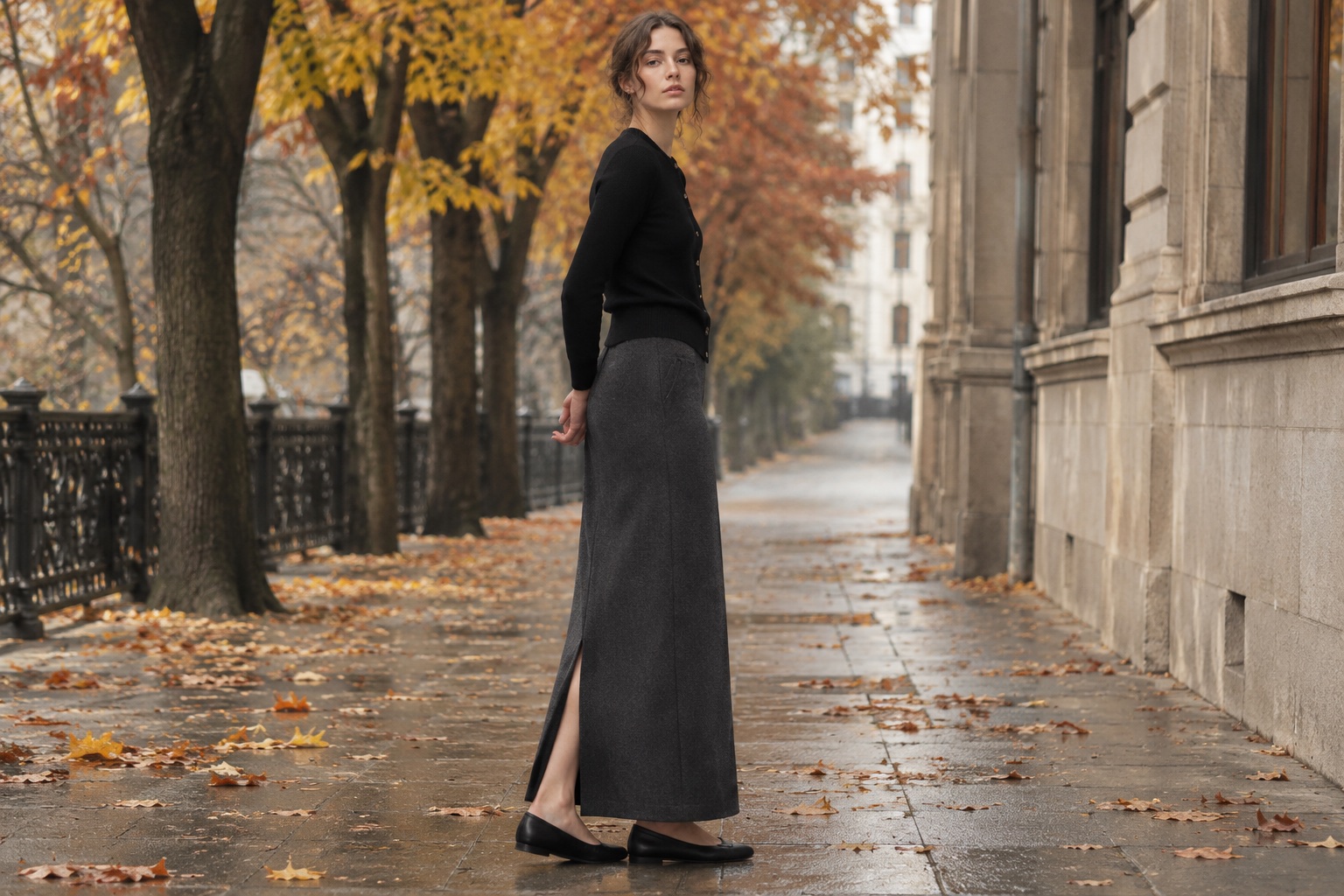
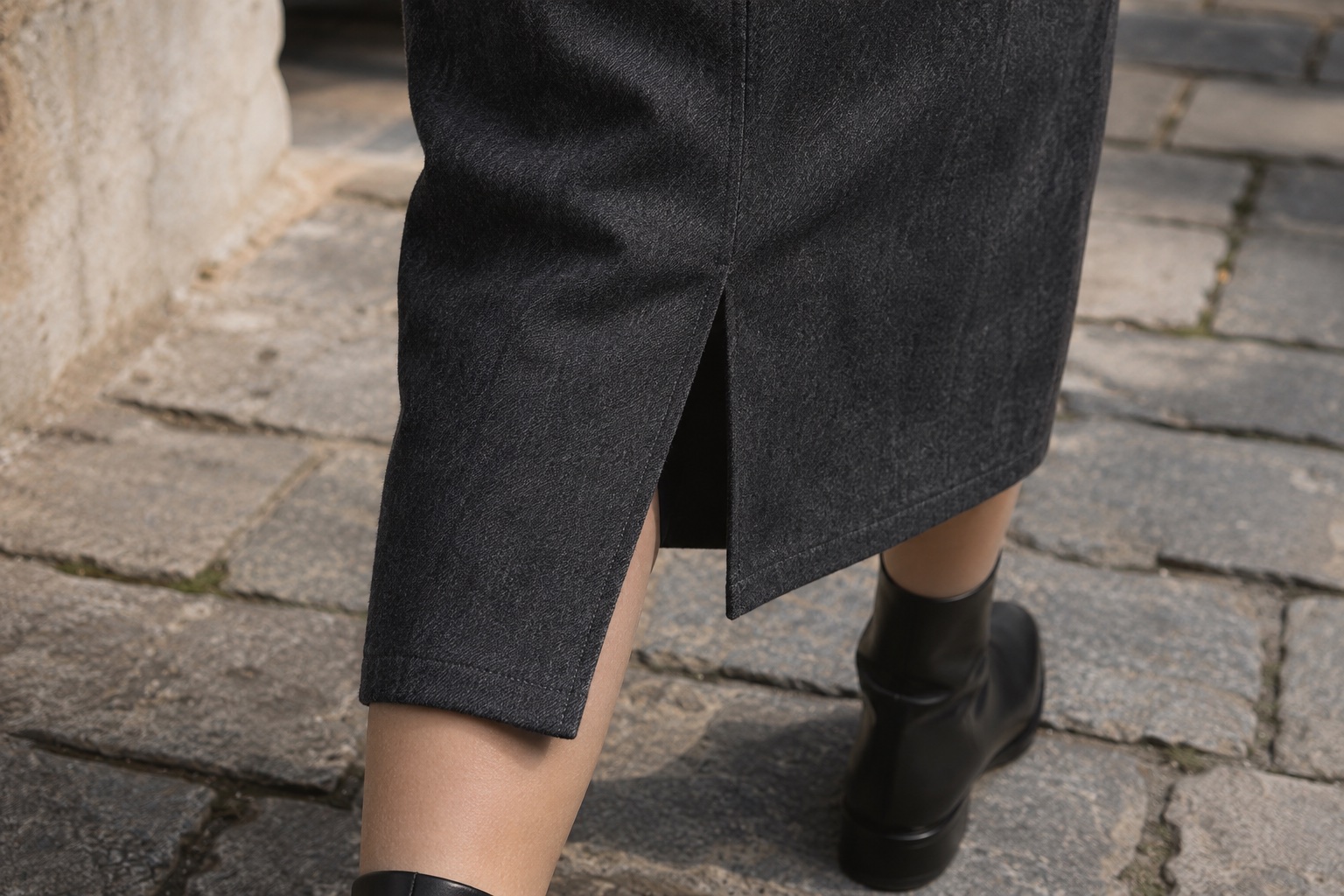
The hem of a charcoal skirt moves just enough for its wearer to step off a curb. Behind the knee, a small opening becomes visible. Then the skirt settles again. A long straight skirt can look restrained while keeping a useful measure of movement inside its cut. Fall collections offer several versions of this idea. Prada has a pencil skirt in Re-Nylon. Dior offers a straight skirt in navy bouclé. Chanel brings a black wool tweed into a midi length. Together the designs make a better case for looking at the cut and cloth before choosing the most formal version.
The Long Straight Skirt Centres a Fall Outfit
A narrow skirt gives a fall look a clear vertical surface. The eye can follow it from hip to hem. A soft knit or an open jacket can then sit beside that shape. The lower half stays relatively quiet. However, the amount of movement can change from one skirt to the next. The outside line alone does not tell you how the fabric will behave after a few steps.
Look at the surface in daylight. Wool bouclé can break a dark color into small shadows. A smooth technical cloth has a quieter grain. Tweed can make a short distance of hem look dense, even with a simple finish. If you like a straight skirt because it goes with many tops, consider which cloth you would use most. Each surface gives an otherwise plain outfit a different centre.
The form also changes where you notice footwear. A hem below the knee leaves a smaller interval between skirt and shoe. In particular, a dark and narrow boot can make that interval feel continuous. A flat shoe can leave more of the ankle visible. Try those two impressions with a skirt you own. You can see what your fall wardrobe already offers before you shop.
Read the cut while walking. Read the cloth while standing by a window.
The Shape Works When the Hem Can Move
A vent can open when you go up a step. A front opening changes what you see from the side. A stretch fabric may move quietly without a clearly visible gap. None of these choices has the same effect on the outline. For example, a high opening can interrupt a continuous surface. A smaller one can feel subtle until you use it.
Check the fall at the hip before you look down. A straight seam can show the skirt’s intended line. A seam that pulls can tell you the waist and hips need a different fit. Then take a full step. Try sitting. If the skirt feels easier in one position, think about where you will wear it. Your longest stretch in the clothes is useful evidence.
This is where the skirt changes from a shape into an outfit. The texture can hold its own against a thicker knit. It can also sit under a light coat without fighting the neckline. The important question is where the cloth marks a boundary. For instance, a short top leaves more room for the skirt to set the line. Our outfit proportions guide gives more ways to see that relationship.
The cut is especially useful when it gives a busy fabric a simple boundary. A stripe can run along it without a deep fold. A dense color can look steadier beside a quiet jacket. Look at the side. Find the opening and the pockets. That is where a clean front can make room for ordinary life.
Three Ways the Collections Use the Long Straight Skirt
Prada lists a Re-Nylon pencil skirt in its Fall Winter 2026 selection. A pencil cut has familiar visual restraint. The material has a different grain from tailoring wool. Try the idea with a familiar crewneck. The difference between a matte knit and the skirt’s smooth surface will register without much color contrast.
Dior’s mid-length straight skirt uses a navy virgin wool and cotton bouclé. This example puts the interest into the cloth itself. The small loops catch the light. The straight shape leaves that texture in view. Therefore, a quieter top can leave the skirt as the part of the outfit you remember.
Chanel’s black wool tweed midi takes another route. The weight and grain of the fabric give the dark outline a sense of depth. Look at it next to the smooth Prada example. Both can read as narrow from a distance. Up close, the character differs. The difference matters when you dress with a small set of colors. A surface like this can do some of the work of an accessory.
A narrow silhouette leaves room for the material to make itself heard.
A detail you cannot see from the front can make a skirt easier to use. A pocket opening can lie flat under a top. A vent can stay inside the line. Look at where those details sit on your body before deciding whether the clean shape is worth keeping.
Put the Skirt Into an Outfit You Already Wear
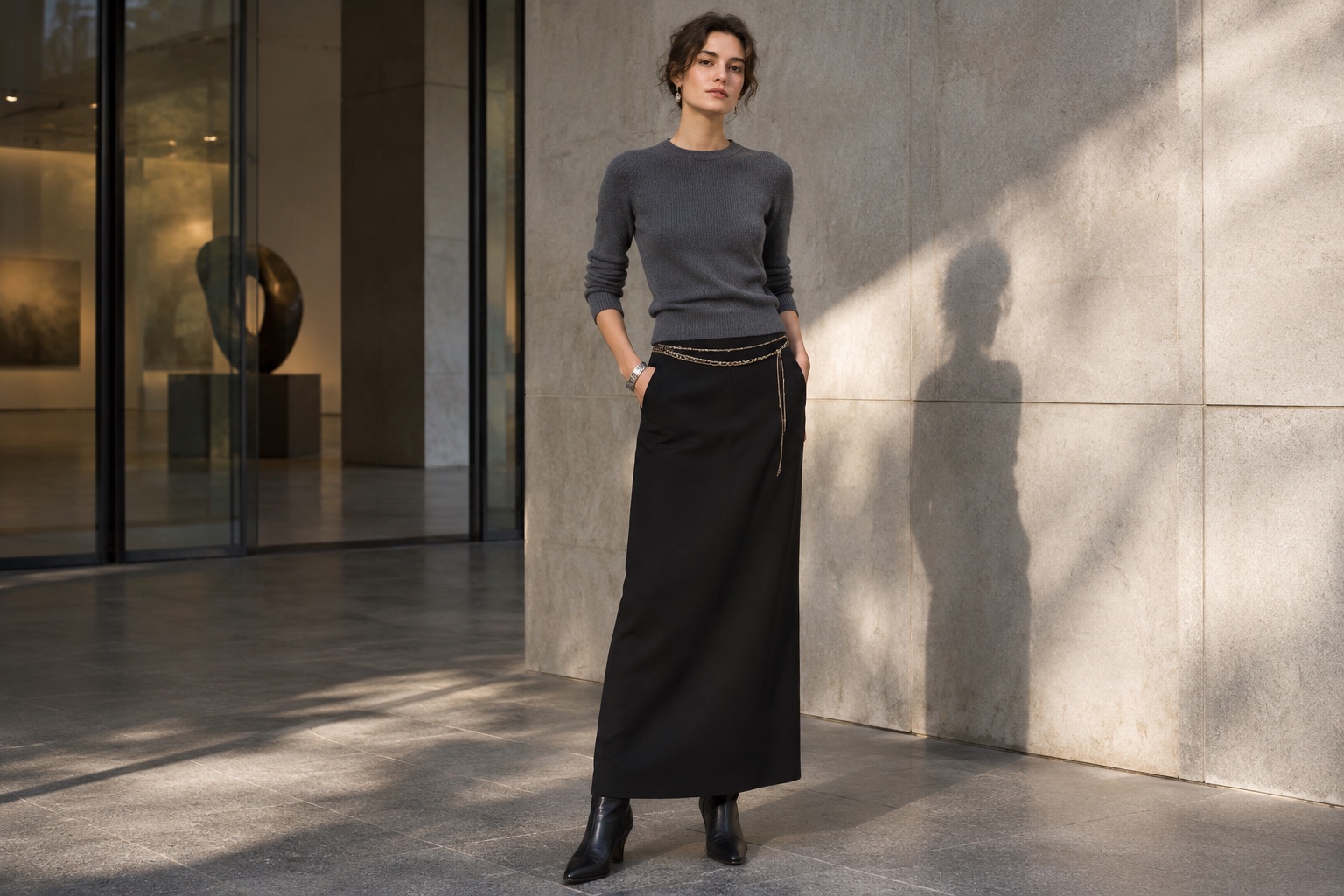
Try an existing black midi with a slate fitted crewneck and dark ankle boots. This gives the skirt a clear partner at the top. Check the space at the boot. It should look comfortable once you take a step. If it feels too continuous, show a little more ankle with a lower shoe. You can change that impression without changing the skirt.
A second route uses a petrol-blue skirt, pale oatmeal knit, and black loafers. Add a small crossbody bag. The pale upper surface makes the skirt color easier to see. The loafers introduce a separate dark edge. Keep the bag high enough to avoid the widest part of the hip. This can help the fabric stay steady while you walk.
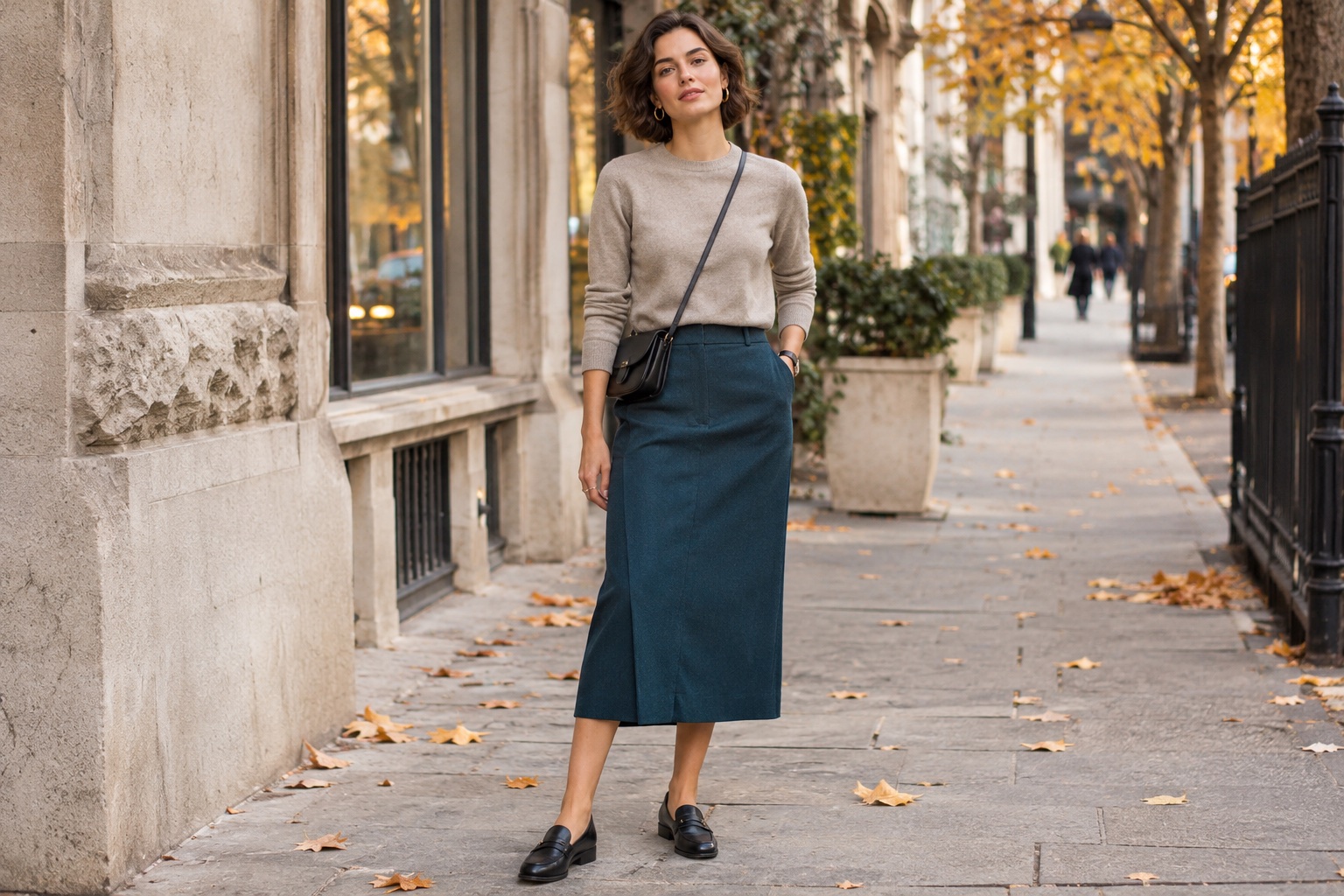
As you try each outfit, look at the top and bottom from a few steps away. Change the shoes before changing everything else. A skirt might feel formal with a glossy pump. A flat loafer can make it feel quieter. Similarly, an open cardigan can soften a straight line near the shoulder. Our guide to tonal dressing offers ways to keep the colors related.
What Makes a Narrow Skirt Useful After Fall
Choose the hem from your usual pace and route. A useful piece can follow those conditions into more than one season. It may sit easily with a light shirt now and a knit later. The material determines which of those feels reasonable. A denser tweed can feel substantial as the weather cools. A smoother cloth can also suit a lighter top when conditions change.
Be careful with the idea that you need a new version because several labels show a shape. The examples are useful because they reveal different choices. They do not tell you how much people buy. Use those examples as a way to compare texture, length, and movement. Then look at what you own. A skirt in the back of your closet can give you the same opportunity to see what works.
Sit with your bag beside you before deciding. Then check how the hem falls when you get up. If you want to change a length, take the right shoes to a tailor. Show the tailor how you walk. A small change to an existing skirt may tell you more than another season of looking at pictures.
- Check the opening in motion.
- Compare the texture with one familiar knit.
- Try the skirt with the shoes you already walk in.
The narrow skirt also gives you a more interesting choice about length. An ankle hem draws attention to the shoes. A shorter one can show more movement at the knee. Compare two lengths with the same top and flats. You will see how much of the outfit belongs to the skirt itself.
Take the Long Straight Skirt for a Short Walk
A long straight skirt gives an autumn outfit a clear line and lets the surface carry much of the interest. Stand near a window to see what the cloth is doing. Then walk away from it. The movement will tell you how much of the apparent shape you can actually use. Think about the last skirt you wore on a full day outside. What happened at a curb or on the stairs? Those are good clues for choosing the next length. The Prada, Dior, and Chanel examples show different answers to a similar visual problem. Your everyday clothes can answer it their own way. Keep the fit that lets you take a normal step. Which would you try first this fall, a textured midi or a smooth pencil skirt?