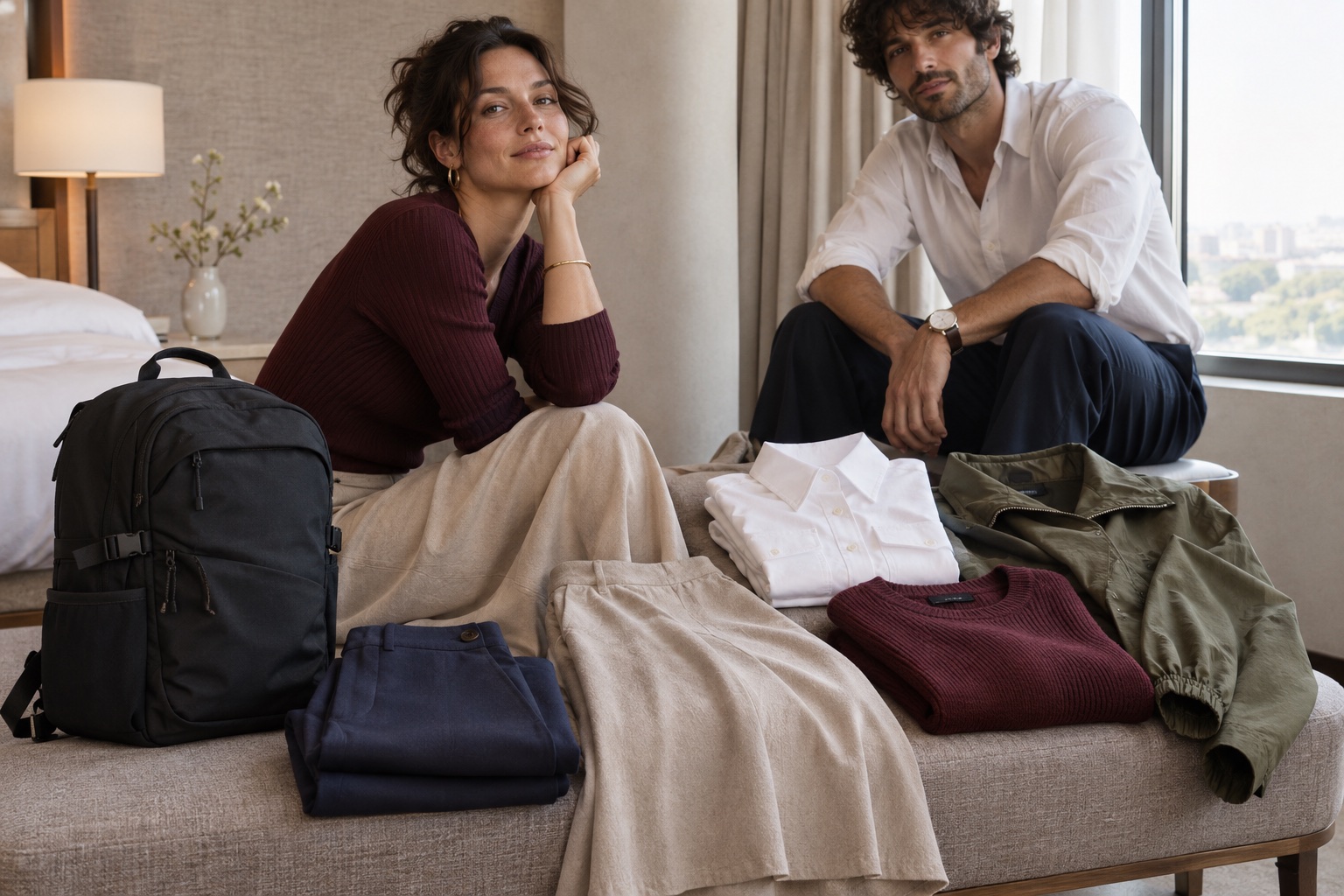
The bag is already open. The trip is still ahead of you. On one side lie two possible shoes. The other holds a skirt for one day. Personal item packing gets easier when you start with a few complete looks. Think about the longest walking day, the trip itself, and dinner out. Then see which pieces earn a place in more than one look. A small bag works best when the clothes inside have already settled those decisions. The plan here gives you three outfits without asking all of them to look alike.
Start Personal Item Packing With Three Real Plans
Picture the day before you choose its clothes. On a transit day, you may go from a warm sidewalk to a cool train. A walking day may end with lunch. Dinner might ask for a cleaner line and a lighter shoe. These are different enough to need some choice. They also give a useful test for each piece you are considering.
Put two bottoms beside the bag. Try dark ankle trousers and a stone cotton midi. Then add the tops you would wear with both. A soft white tee travels with the trousers. A white poplin shirt dresses the skirt. A burgundy knit gives the dark trousers a different mood for dinner. The point of repeating bottoms is to save space for pieces that change what the outfit does.
Plan for the size of the bag at the moment you board. Read the rules for the ticket you bought. A soft bag can grow quickly when you fill its front pockets. Check the depth while the bag is loaded. If you are flying through a US airport, read the TSA liquids guidance. It concerns screening and sits alongside your carrier’s bag rules.
Pack for the moments you can name. Let each piece earn its space in a complete outfit.
Try to keep an empty pocket by the top. A boarding pass or a room key can go there for a moment. The other pockets can stay closed. A bag with several small zips may feel organized, yet too many locations make things harder to find. Give the most useful opening a clear job.
The Travel Outfit You Wear to Save Space
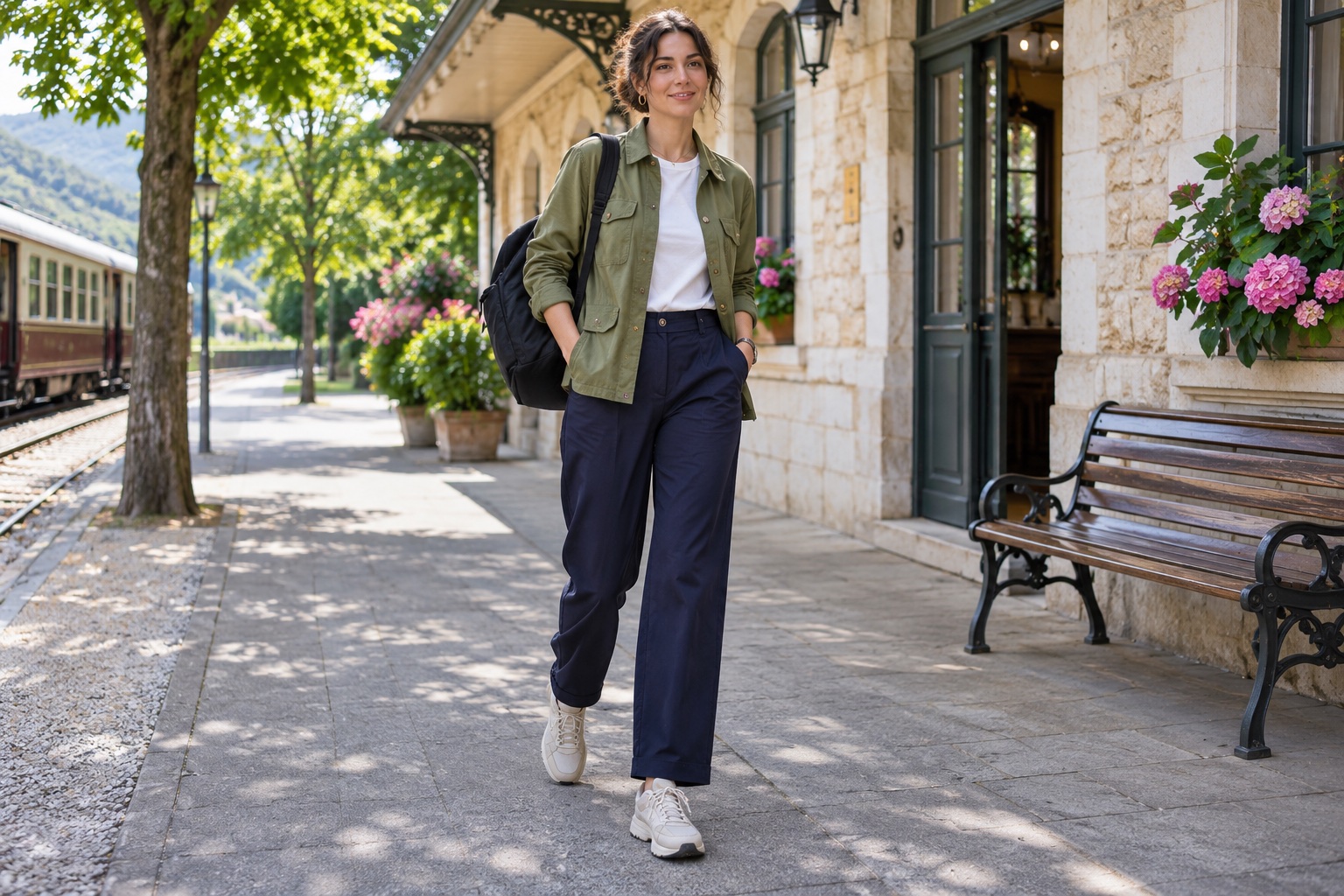
Wear navy ankle trousers with a white tee, olive chore jacket, and comfortable off-white walking sneakers. Use the soft backpack as your main bag. The trousers should feel easy across the knee. Find a waistband you can sit in. The jacket adds a simple pocket and takes up less room on your body than in the bag. Wear it open when you walk.
Before leaving, sit for a few minutes in the complete outfit. Put the backpack where it will go on the trip. Reach for your phone and ticket. You want to find both without emptying a pocket. If the jacket’s cuffs feel stiff, turn them back at home. A sleeve you can move makes a seating change easier, especially when other people are close.
The travel outfit should still work when you arrive early. Leave the jacket on and take a short walk. If you stop for lunch, put the bag beside the chair and see what the outfit looks like without it. Dark navy and olive both take on quieter tones indoors. A white neckline gives the two colors a point of separation. That small detail makes the outfit useful for several hours.
A Walking Day With a Different Shape
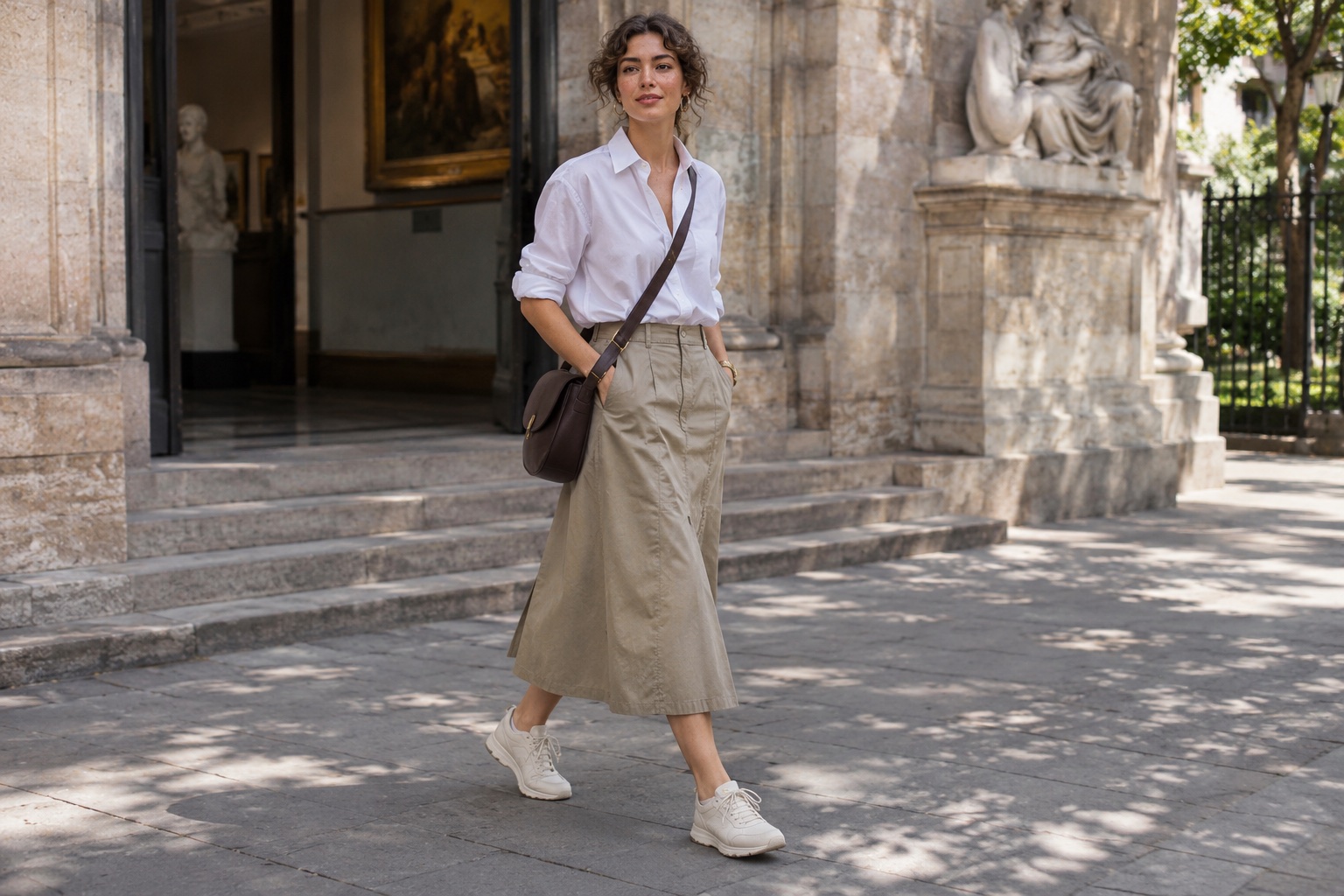
Change to the stone midi and the white poplin shirt. Roll the sleeves. Keep the walking sneakers and use a small dark crossbody. A structured poplin feels crisp near the collar, beside the matte cotton of the skirt. This look changes the line without changing the shoes. Check the hem on a staircase before you pack it. A slight swing is useful for a long day.
If the skirt has a crease from the bag, hang it while you get ready. Think about where its folds will land when you sit. A soft cotton can take on some creases naturally. You may prefer that texture to the look of fabric pulled tight. Tuck the shirt in loosely. Then adjust it only enough to keep the waist clear of the strap.
Build in a little room for the day outside. Put sunglasses and a thin layer where you can reach them. If your route has long indoor stops, wear the shirt as a light outer layer over the tee. Otherwise, leave it buttoned as the top. This is a small way to keep the pieces useful. Our capsule wardrobe guide explores that kind of overlap.
Dinner With One Small Change in Personal Item Packing
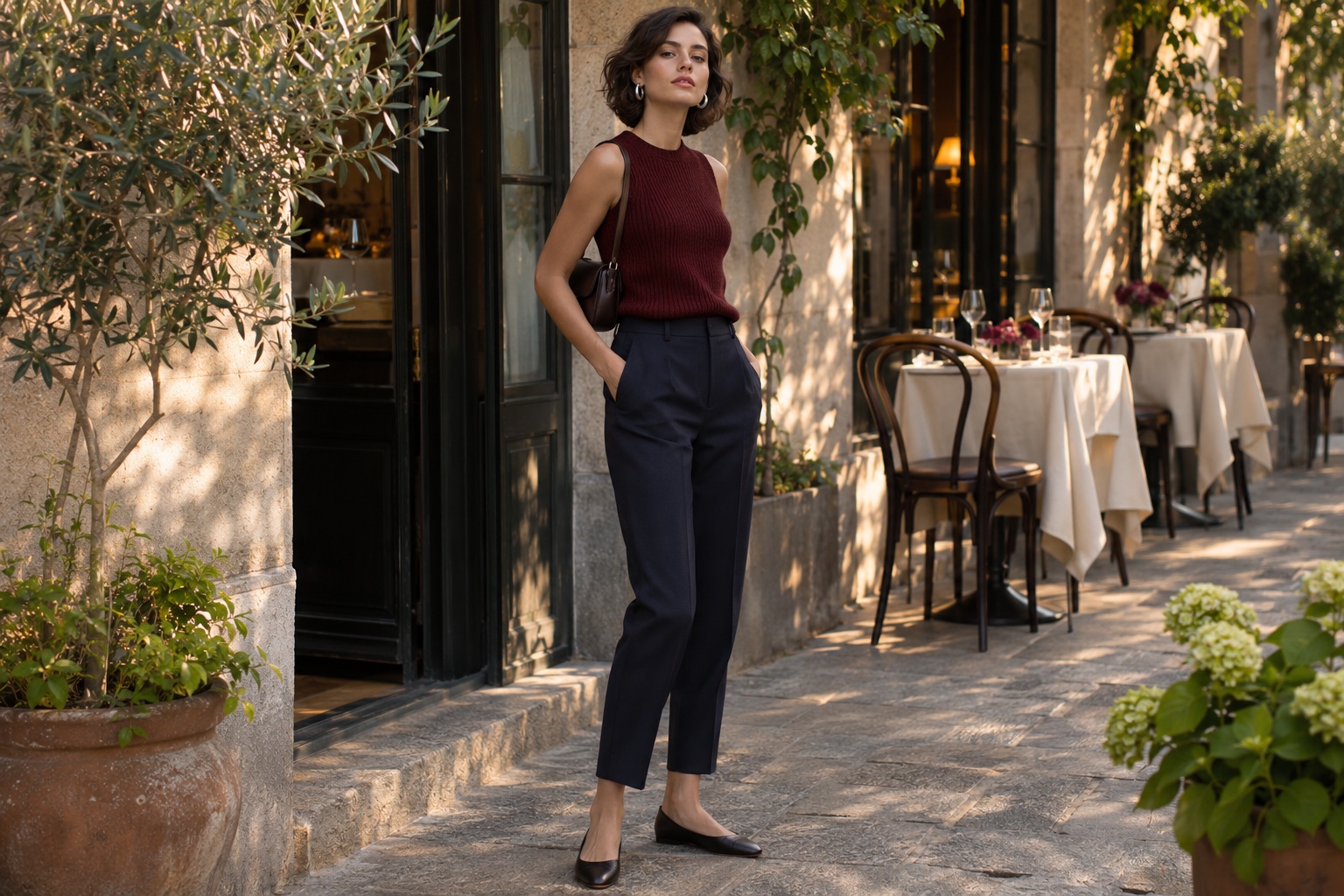
Put the navy ankle trousers back on. Add a sleeveless burgundy knit, black almond-toe flats, silver earrings, and the small dark bag. The ribbed knit has a deeper color in warm light. Leave out a belt if both pieces already sit comfortably at the waist. You can carry the olive jacket on the way out. Test how the knit looks with it on.
A lightweight flat earns its place if you will wear it more than once. Choose the one you have walked in before. If you travel with one pair, clean the walking sneakers. Wear them to dinner where the setting allows. Some restaurants have a specific dress expectation. Check it before you pack. A fresh dark top can do much of the work on a casual evening.
Pack the second pair of shoes near an edge. Slip each shoe into a simple cover. Nest clean socks beside them to fill gaps. The idea is to let the soft pieces fit around the firm ones. If the shoes make the bag hard to close, choose the smaller pair. A dinner outfit should be easy to assemble after a long afternoon.
The pieces that repeat quietly leave room for the choices that change the outfit.
Pack the dinner bag inside the larger one. Put in the earrings and a folded tote. Then use that bundle as you pack. That gives the bag a second job. When you go out, empty what you will leave behind and carry the rest.
The Fit Test Before You Buy a Bag or Another Top
Pack your current bag on a flat surface. Fill it as you would for the actual trip. Try closing it without pressing down hard. Then carry it for a few minutes. If the corners feel awkward, reorganize first. One hard shoe or an overfilled outer pocket can change the shape. You might solve the problem by moving a single item.
Look for easy access before buying more dividers. A soft drawstring sack can hold the shirt and knit together. Keep chargers in a small pouch close to an opening. Another bag can make sense if your usual one will not fit the ticket’s limit. Measure the depth as well as height and width. Check how the bag feels with the clothes and shoes inside.
If one look feels unfinished, change the top or shoes before packing a whole new outfit. Compare the fabrics in daylight. A cotton skirt catches light differently from dark trousers. One visible change is often enough. Our outfit proportions guide can help you read a new combination before it takes up space in the bag.
- Wear the bulky shoes in transit.
- Let the walking and dinner looks share pieces.
- Test the packed bag before your trip day.
Leave one soft pouch empty for the way back. It can hold a damp tee or the socks you changed after a long walk. Keep it apart from the pieces you still plan to wear. A light, washable pouch makes this easy without filling another compartment.
The Last Few Minutes at Home
Try the three looks before you close the bag. Walk across the room. Sit down in the travel trousers. Then put on the dinner top with the shoes you intend to bring. Pay attention to the pieces you keep reaching for. Those are usually the ones that will make personal item packing work on the trip. Leave a little space for your things on the way home. You may end up folding the clean shirt beside a book or carrying a change of socks from the day. The point of a smaller bag is to let you move easily between places. A few choices made before leaving can give you more time once you arrive. On your next city trip, which would you pack first, the walking shoes or the dinner outfit?