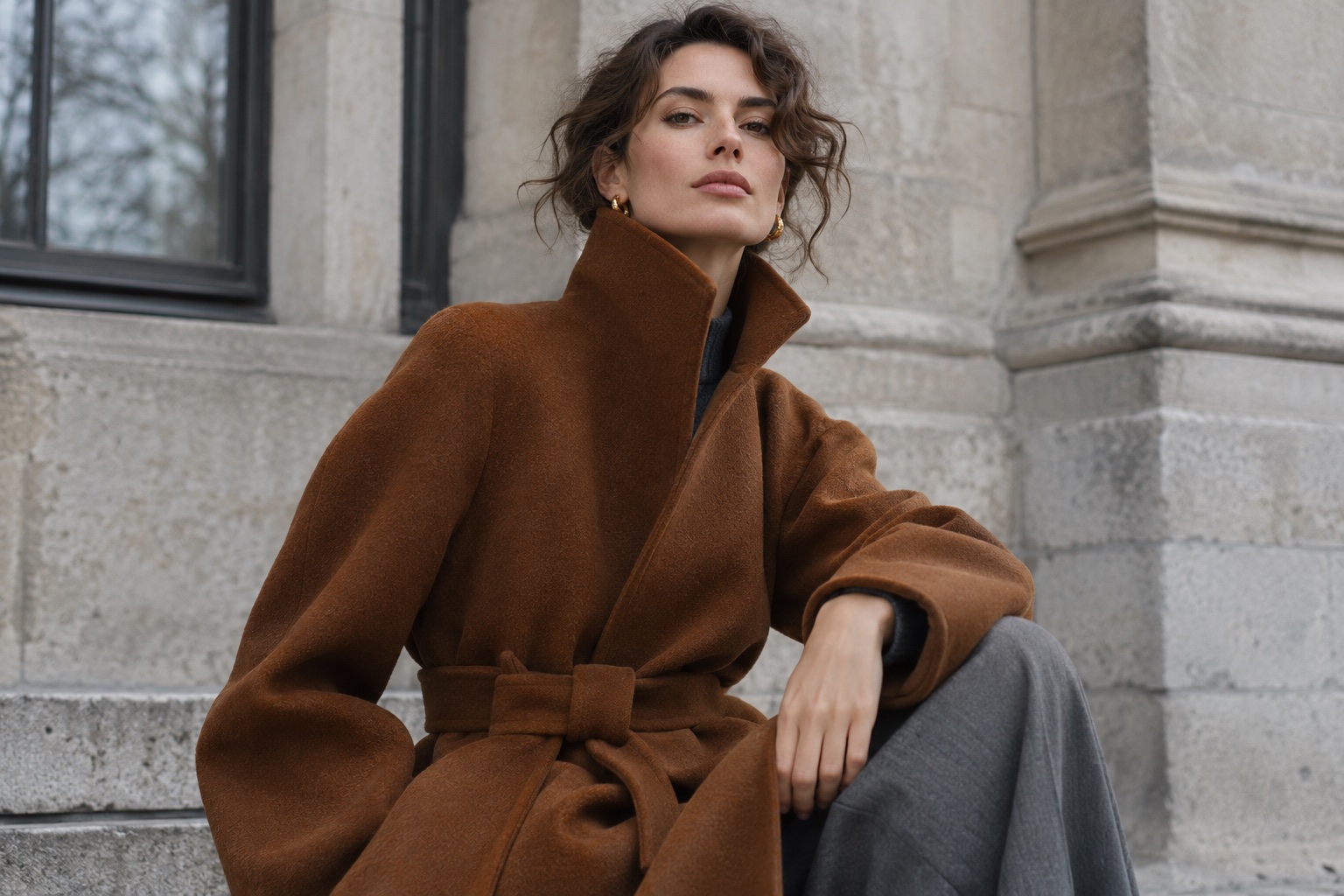
A woman raises the collar of a tobacco coat as she turns onto a windy street. The shape changes before she fastens a single button. Winter coat collars can do a surprising amount of work in an outfit. They put texture near the face and draw a line across the shoulders. They also decide how a scarf will sit. Burberry, Max Mara, and COS show three different ways to use that space. A ruffle, a wide lapel, and a funnel each change the view. Look at the neckline in use before you decide what else it needs.
Where Winter Coat Collars Change the Outfit
The shoulders may look quiet. The collar can feel much busier. The shape around the neck determines much of that shift. On a tall collar, a dark cloth may sit close to the lower part of the face. On an open lapel, the coat reveals a larger area of whatever is underneath. Both choices change how much the other pieces have to do.
Look at the edges from the front and side. Open a standing collar. Close it and watch the outline change. An open lapel can show a band of fabric near the shoulders. An expressive collar can make the rest of a simple coat easier to remember. That is why a photograph of a coat on a hanger can seem to miss the main detail.
A little light helps you see the difference. A soft pile can catch the light. A smooth cloth has a sharper edge. When the color is close to your knit, the texture will still register. This is one reason to try a collar beside socks, accessories, and familiar knits from your existing wardrobe.
Judge the shape first with the coat closed, then check what you want to show when it is open.
Notice where the collar sits next to your hair. A long edge can partly disappear under it. A dark coat may then register as a simpler shape. Try wearing your hair the usual way before judging the detail. A surface that looks prominent on a rail can become quieter in the outfit you actually wear.
A Soft Ruffle Puts More Surface Near the Face
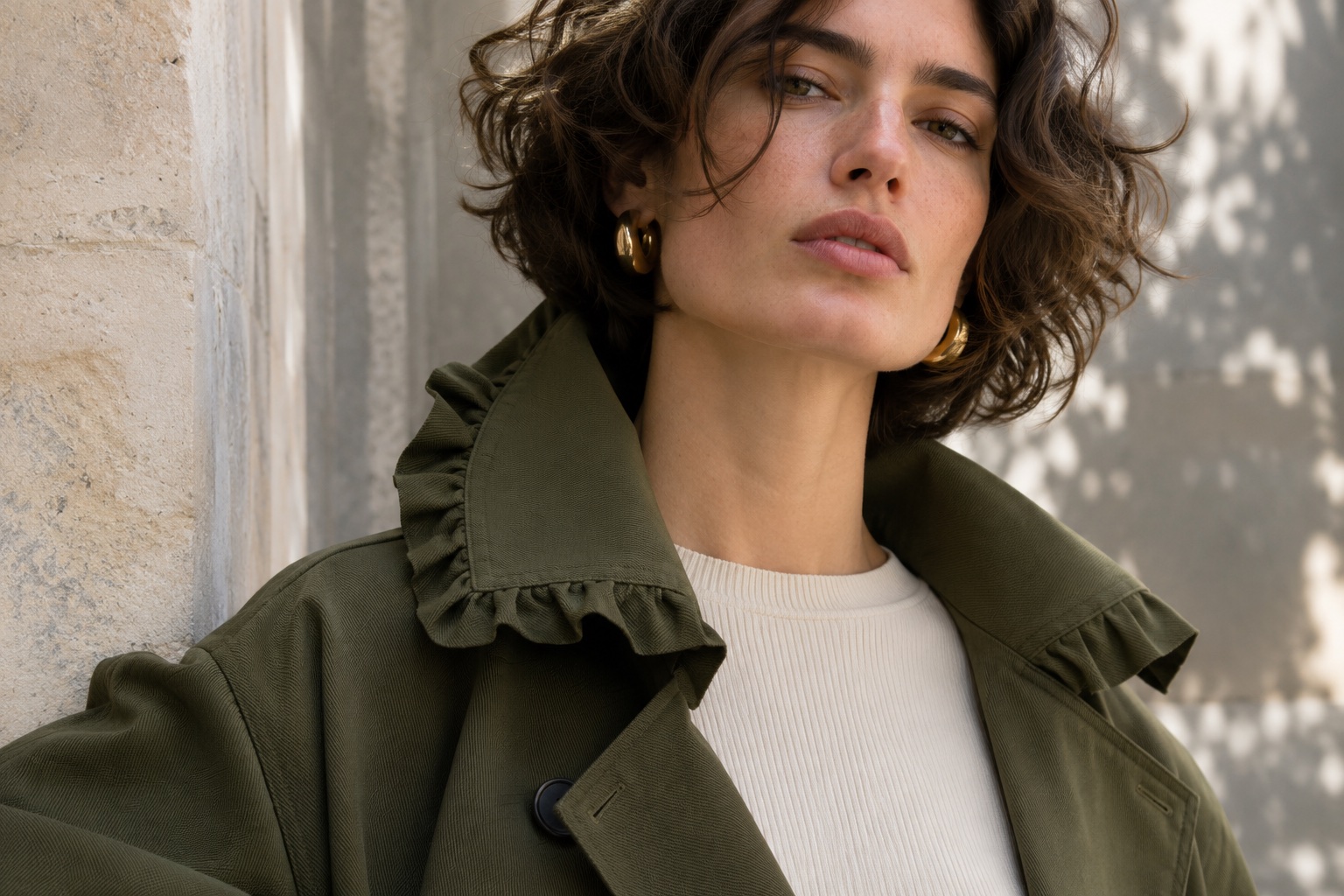
Burberry’s Winter 2026 runway collection describes its Clare trench in faille with a ruffled collar. The collar gives the trench a change of rhythm near the face. A curve may catch the light where a flat collar would make a quieter line. The rest of the coat can remain easy to read. The detail belongs to one place.
The ruffle is a good example of how a collar can act almost like part of the accessories. It changes where your eye goes when you face someone. Add a heavy scarf and the two may take up the same area. A smaller knit collar can leave space for the folds. For instance, the edge of a finely ribbed top can show briefly without repeating the wave of the trench.
You can try the principle with a coat you own. Choose one with a strong collar. Put on a shirt with a flatter neckline. Then take away a thick scarf for a moment indoors and compare the two views. That test can help you think about what you see before you decide how to cover your neck outdoors. Choose the scarf for the actual weather.
A Wide Lapel Lets an Inner Color Show
Max Mara’s Manuela Icon Coat provides a different example. The wide lapel frames the front of the coat. A dark fabric can leave room for a raisin or rust knit to show inside it. Open the coat and compare the two materials. The soft surface keeps the sections from feeling like a hard patch of color.
A wide opening also changes how you see a bag strap. Wear one on the shoulder and it may move the lapel as you walk. Try the coat the ordinary way you carry it. Check the part that folds over. At the same time, pay attention to the button or belt you use. A coat can look one way while open and settle into another shape as soon as it closes.
Two close shades can be enough in this situation. Choose a knit slightly different from the inner color of the coat. Look at the two together near a window. A collar’s soft nap can keep them separate even when their colors are close. Our tonal dressing guide offers more ways to make that difference show.
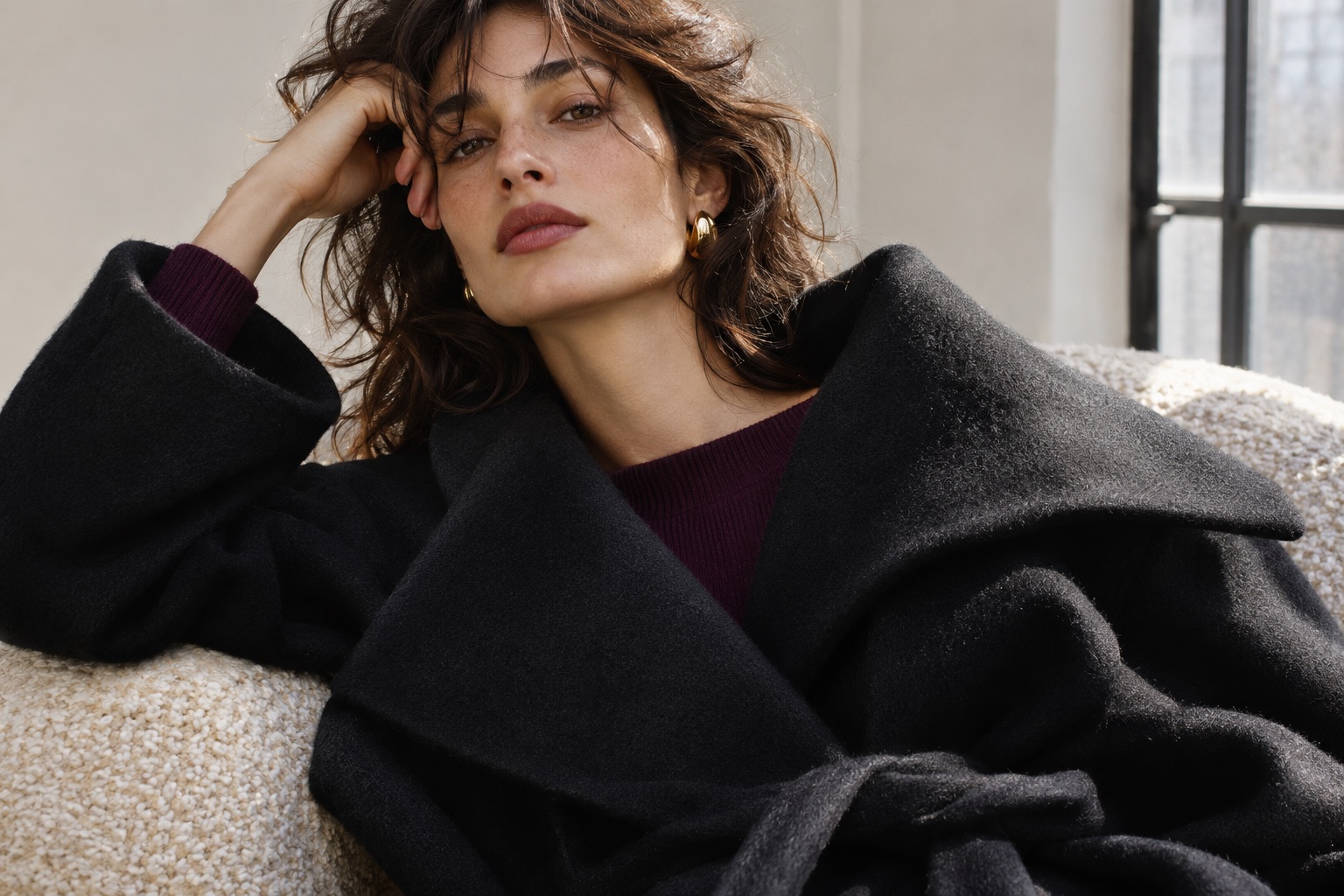
What you can see above the first fastened button may do most of the work.
Try the open lapel over a top you usually leave in the drawer. A color that seems too strong by itself may look subtle as a narrow strip. The width of the opening changes the amount you see. Then move under a different light. A dark red can become much less distinct when the coat is closed.
A Funnel Collar Gives the Neck Its Own Space
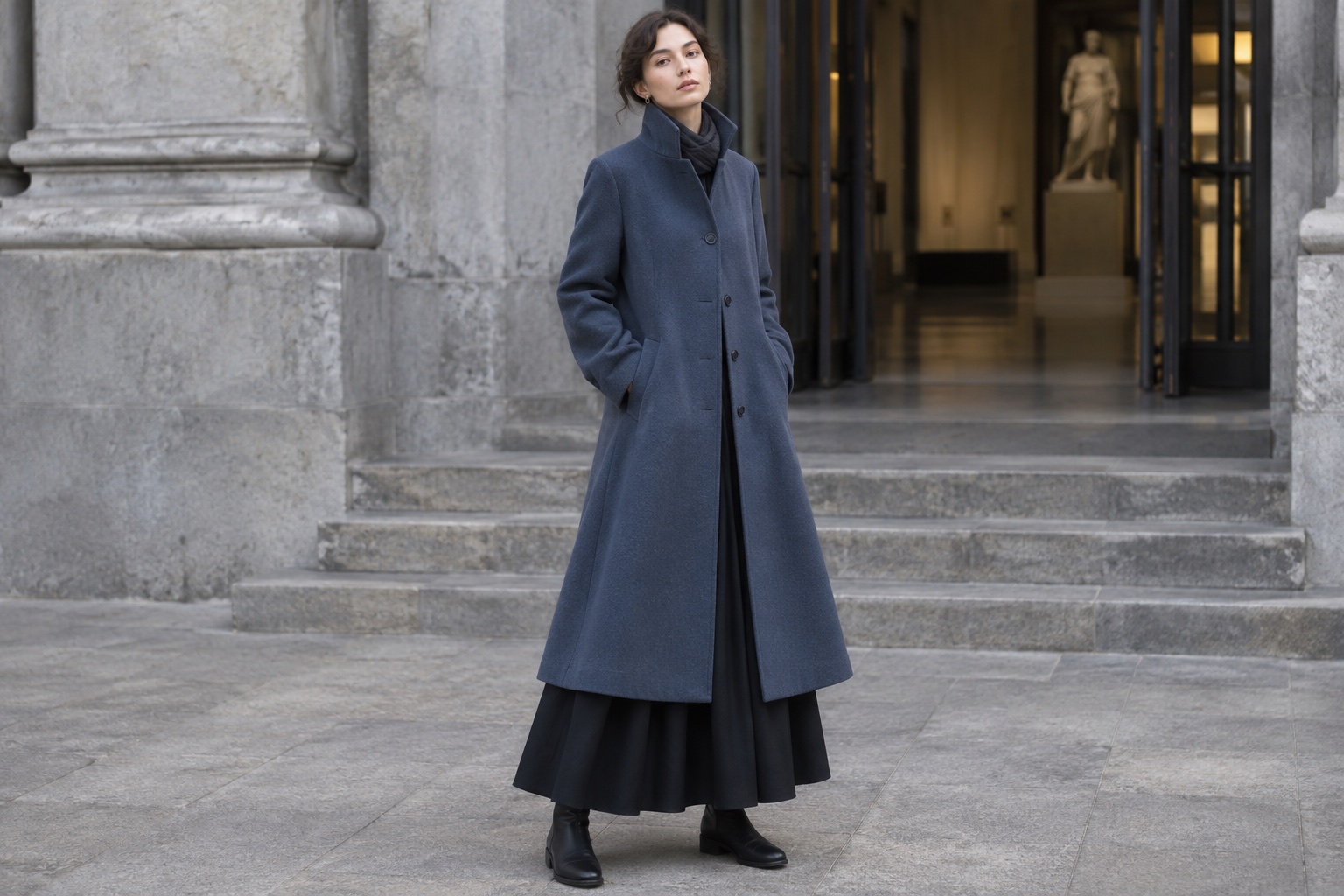
A black funnel-neck wool coat from COS shows another option. A funnel rises around the neck. Its outline stays close to the face. At a distance, it can give a quiet coat a clear top edge. Nearer the face, the wool surface becomes visible. The inner outfit has a smaller place to show itself when the collar is closed.
At home, compare how the collar feels when you turn your head. Make the same movement with a slim scarf tucked underneath. A thicker layer there may shift the way the top edge sits. Check what the closure asks of your hands. If you use gloves, try the same motion with them on. Comfort around the neck matters as much as the line you see in a mirror.
A long hem draws attention lower down. In particular, a full dark skirt can make the whole outfit feel composed without adding another detail near the face. Add dark shoes. Look at the shape from the side. Then compare it with trousers. The lower line can change how strongly you notice the collar above it.
What Gives a Collar a Life Beyond This Season
Choose a collar by where you wear a coat most. A formal walk from a taxi to a door is one kind of trip. A brisk walk with a bag that slips is another. If a collar needs attention every few minutes, that will matter in daily use. Test the jacket with a bag and a scarf before deciding. Move your arms and then turn.
Pay attention to the material touching your neck. A dry wool may feel quite different from a softer finish. A smooth lining can change how a scarf sits beside it. If the collar rubs, check the layer underneath and the edge of the coat. A useful alteration might involve a small change. Ask a tailor what the collar construction can support before attempting one.
Consider the options. They use the same space in several ways. You can choose one without making anything else new. A wide lapel and a funnel do different work, but both benefit from an inner layer that sits cleanly. Our guide to outfit proportions gives another way to see why one edge can change the whole shape.
- Compare the collar open and closed.
- Test it with the bag and scarf you actually use.
- Choose the surface and shape that work on your usual route.
If you shop for outerwear later, bring your usual knit with you. It will tell you how much space remains once the collar closes. A smoother layer can fit easily beside a felted edge. Try sitting too. The collar can feel different when the coat lifts at the shoulders.
Decide What You Want Close to Your Face
Take out the coat you wear most and look at its neckline in daylight. Start with the layer you usually put beneath it. Close the coat and turn your head. Then open it and see how much of the knit comes into view. The exercise gives winter coat collars a place in the rest of the outfit. A ruffle brings movement to the top. A wide lapel can offer space for color. A funnel may make the whole outline feel quieter. The Burberry, Max Mara, and COS examples show these choices in different ways. Keep the shape you would want to use on your most ordinary cold day. Which collar would you reach for then, a standing one or one that leaves more room for a scarf?