When Julian Dunkerton and James Holder opened their first Superdry store in London’s Covent Garden in 2004, they unleashed one of fashion’s greatest cultural illusions. The brand’s Japanese characters proclaiming “極度乾燥 (しなさい)” confused consumers worldwide. Was this a Japanese import? A German technical brand? The truth proved far more interesting than fiction.
Superdry represents pure British entrepreneurial audacity—a Cheltenham-born brand that appropriated Japanese aesthetics, vintage American varsity culture, and British tailoring into something entirely new. This wasn’t cultural appropriation as much as cultural synthesis, creating a brand identity so convincingly international that even Japanese tourists bought Superdry thinking they were supporting local design.
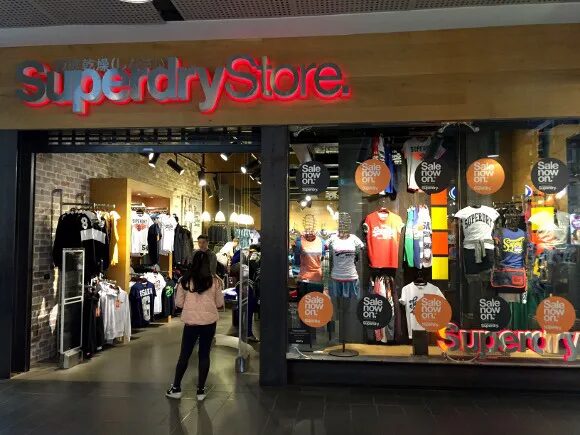
The Cheltenham Origins
Superdry’s story begins not in Tokyo or Berlin, but in the picturesque English spa town of Cheltenham. Julian Dunkerton, who founded Cult Clothing in 1985, spent nearly two decades building retail credibility before his fateful collaboration with designer James Holder changed everything.
Holder brought obsession with Japanese typography cultivated through childhood manga comics. Dunkerton contributed retail instinct and distribution networks. Their 2003 partnership created the formula for what would become one of Britain’s fastest-growing fashion phenomena.
The brand name emerged from packaging Holder collected during Tokyo visits. Multiple products featured names beginning with “Super”—a common Japanese branding convention suggesting excellence and premium quality. “Superdry” captured this linguistic quirk while suggesting functional benefits for British weather.
The Logo That Launched a Thousand Questions
Superdry’s signature logo deserves academic study. The Japanese characters “極度乾燥 (しなさい)” translate loosely as “extremely dry (do it)”—phrases that sound nonsensical in Japanese. Native speakers find the text baffling, like English speakers encountering “very water resistance (please)” on Japanese streetwear.
This linguistic ambiguity wasn’t accidental ignorance—it was strategic genius. The logo mimics how Japanese brands use meaningless English phrases for aesthetic appeal. Superdry reversed this dynamic, using Japanese characters to appear exotic and premium to Western consumers.
The Three-Culture Collision
Superdry’s aesthetic genius lies in its cultural triangulation. Vintage Americana provides the foundation—varsity jackets, distressed denims, and collegiate typography. Japanese elements add visual intrigue through kanji characters and Tokyo street style influences. British tailoring ensures quality and fit that elevated the brand beyond novelty status.
This fusion created something genuinely novel. American brands offered authentic varsity heritage but lacked contemporary edge. Japanese streetwear brands provided cutting-edge design but intimidated mainstream consumers. British fashion excelled at tailoring but often felt stuffy. Superdry combined all three elements into accessible, wearable style.
The approach tapped into European consumer psychology. Research shows European shoppers assign premium perceptions to Japanese-branded products, associating them with quality craftsmanship and innovative design. Superdry exploited these associations while maintaining British manufacturing standards.

The Beckham Moment
Every brand dreams of their cultural inflection point. Superdry’s arrived in 2010 when David Beckham wore their leather jacket to a LA Galaxy game. Photographers captured the moment, and suddenly Superdry transformed from niche British brand to global phenomenon.
The celebrity effect snowballed rapidly. Idris Elba, Leonardo DiCaprio, and Zac Efron all wore Superdry pieces publicly. Unlike paid endorsements, these appearances felt organic—celebrities genuinely liked the product. This authentic celebrity adoption proved more valuable than any advertising campaign.
The timing proved perfect. Social media amplified celebrity sightings instantly. Instagram transformed paparazzi photos into marketing gold. Superdry capitalized on this organic exposure without spending on traditional celebrity endorsements, letting product quality speak through high-profile adoption.
Rapid Expansion Phase
Between 2010 and 2014, Superdry experienced explosive growth. Store openings accelerated globally. Revenue soared from £100 million to over £500 million in just four years. The brand’s IPO in 2010 valued the company at £400 million, making founders instant millionaires.
This rapid expansion brought challenges. Quality control suffered as production scaled globally. Distribution partnerships diluted brand positioning in some markets. The brand that succeeded through careful cultural curation struggled when growth became the primary objective.
Superdry’s Journey Timeline
- 🔹 2003: Dunkerton and Holder partnership forms
- 🔹 2004: First Superdry store opens in Covent Garden
- 🔹 2010: David Beckham spotted wearing Superdry; IPO launch
- 🔹 2014: Peak revenue exceeds £500 million
- 🔹 2019: Founder returns amid declining sales
- 🔹 2024: Delisting from London Stock Exchange; restructuring
Design Philosophy and Product Innovation
Superdry’s design approach balances functionality with visual storytelling. Each garment incorporates multiple cultural references—Japanese kanji labels, American collegiate fonts, British regimental badges. This layered aesthetic creates visual interest that photographs exceptionally well for social media.
Technical innovation distinguishes Superdry from purely aesthetic competitors. Their windbreaker collections feature genuine waterproofing technology. Fleece-lined hoodies provide authentic warmth alongside bold graphics. This combination of style and substance justified premium pricing during peak popularity.
The brand’s signature pieces became cultural markers. The orange-logo hoodie achieved icon status among university students. Windcheater jackets appeared in music videos and television shows. These products transcended fashion to become recognizable cultural symbols.
The Fall and Restructuring
Success bred complacency. By 2017, Superdry faced mounting challenges. Fast fashion competitors copied their aesthetic at lower price points. The brand’s ubiquity diluted its once-exclusive appeal. Younger consumers viewed Superdry as their older siblings’ brand—uncool by association.
Financial troubles followed quickly. Profits declined sharply. Stock prices plummeted. Co-founder Julian Dunkerton, who had left the company, waged a public battle to return and rescue his creation. His 2019 comeback aimed to restore brand authenticity and financial stability.
The COVID-19 pandemic accelerated existing problems. Retail store closures devastated revenue. Online competition intensified. By 2024, Superdry delisted from the London Stock Exchange, pursuing private restructuring to survive rather than pursuing growth.
Sustainability as Salvation
Recent years brought renewed focus on sustainable fashion. Superdry committed to 100% organic cotton sourcing by 2030, with significant progress already achieved. Their 2024 sustainability report outlined ambitious environmental targets positioning the brand as responsible fashion leader.
Garment circularity programs allow customers to return worn items for recycling. Repair services extend product lifespans. These initiatives align with contemporary consumer values while reinforcing quality messaging—Superdry clothes worth repairing and recycling rather than discarding.
Current Collection and Styling
The latest Superdry collectionsdemonstrate evolved design sensibilities. The AW25 lineup emphasizes statement outerwear with refined graphics. Oversized silhouettes dominate, reflecting broader fashion trends while maintaining signature Superdry aesthetic codes.
Technical fabrics receive increased attention. Water-resistant coatings, insulated linings, and breathable membranes address genuine functional needs. This return to performance-focused design recalls Superdry’s early success combining style with substance.
Color palettes shift toward earthy tones and muted hues, departing from the vibrant oranges and electric blues that defined early collections. This evolution reflects maturing brand identity and changing consumer preferences toward understated luxury.
Styling Contemporary Superdry
Modern Superdry styling requires restraint. The bold graphics that once defined the brand now work best as statement pieces rather than head-to-toe looks. Pair a signature logo hoodie with neutral bottoms for balanced aesthetic impact.
Layering remains crucial to Superdry’s design DNA. Technical jackets over graphic tees create depth and visual interest. This approach showcases multiple brand elements while maintaining wearability for everyday contexts.
Mixing Superdry pieces with other brands prevents costume-like appearance. A Superdry windcheater over minimalist basics from other labels allows the statement piece to shine without overwhelming the overall look.

Cultural Impact and Legacy
Superdry’s greatest contribution to fashion lies in proving that brand identity can be deliberately constructed rather than organically developed. They demonstrated that carefully curated cultural references could create compelling brand narratives that consumers embrace despite—or because of—their manufactured nature.
The brand influenced how emerging labels approach identity construction. Post-Superdry, numerous brands adopted similar cultural mashup strategies, combining disparate aesthetic references into cohesive branded experiences. This approach became standard practice in contemporary fashion marketing.
Academic institutions study Superdry as case studies in branding strategy. Harvard Business Review published analysis titled “Superdry: A Japanese Brand From Cheltenham,” examining how a British company successfully adopted Japanese identity elements. This academic interest validates Superdry’s cultural significance beyond commercial success.
The Confusion Factor
Superdry’s international success created persistent geographic confusion. Many consumers still believe the brand originates from Japan, Germany, or the United States rather than Cheltenham. This confusion represents both branding triumph and potential liability.
The German misconception likely stems from “dry” suggesting technical Germanic engineering combined with functional outdoor aesthetics. The clean typography and performance-focused marketing reinforced these associations. Superdry never actively corrected these assumptions, allowing beneficial misperceptions to persist.
Japanese tourists visiting Britain often purchase Superdry products as souvenirs, believing they’re buying British interpretations of Japanese design rather than British designs pretending to be Japanese. This circular irony represents the ultimate success of Superdry’s cultural appropriation strategy.
Digital Transformation and E-Commerce
Superdry’s digital presence evolved significantly during restructuring. Enhanced e-commerce platforms now drive substantial revenue replacing declining physical retail. User experience improvements streamline purchasing while maintaining brand aesthetic across digital touchpoints.
Social media strategy shifted toward authentic community engagement rather than aspirational lifestyle marketing. User-generated content features real customers styling Superdry pieces in everyday contexts. This approach rebuilds brand authenticity after years of perceived over-commercialization.
Influencer partnerships now prioritize micro-influencers with engaged niche audiences over celebrity endorsements. These collaborations feel more genuine and cost-effective than traditional celebrity campaigns while reaching target demographics more precisely.
Manufacturing and Quality Standards
Superdry maintains manufacturing partnerships across Asia while gradually increasing European production. This balanced approach optimizes cost efficiency alongside quality control and reduced shipping emissions.
Quality standards received renewed emphasis during Dunkerton’s return. Product testing increased, materials upgraded, and construction details improved. These changes addressed consumer complaints about quality deterioration during rapid expansion years.
Transparency initiatives allow customers to track garment origins through QR codes. This visibility into supply chains addresses consumer demands for ethical manufacturing while differentiating Superdry from less transparent competitors.
Competitive Positioning Today
Today’s fashion landscape differs dramatically from 2010 when Superdry peaked. Fast fashion giants like Zara and H&M dominate affordable segments. Luxury streetwear from Off-White and Supreme captures premium markets. Superdry occupies increasingly contested middle ground.
Differentiation strategies emphasize heritage, sustainability, and British identity more explicitly than previously. Marketing narratives highlight Cheltenham origins and founder stories rather than maintaining cultural ambiguity. This transparency represents strategic pivot toward authenticity.
Price positioning remains competitive yet premium compared to fast fashion while significantly below luxury streetwear. This middle-market positioning requires exceptional execution—products must justify premium pricing through quality and design without luxury cachet.
Lessons from Superdry’s Journey
Superdry’s trajectory offers valuable lessons for aspiring brands. Cultural synthesis can create compelling identities when executed thoughtfully. However, rapid expansion risks diluting the careful curation that built initial success.
Authenticity matters, even when brand identity is deliberately constructed. Consumers forgave Superdry’s Japanese appropriation because product quality and design integrity felt genuine. When quality declined during expansion, goodwill evaporated quickly.
Founder vision proves crucial during crisis. Dunkerton’s return stabilized Superdry despite ongoing challenges. His intimate understanding of brand DNA enabled strategic refocusing that external management couldn’t achieve.
Key Takeaways from Superdry’s Story
- ✓ Cultural mashups create memorable brand identities
- ✓ Organic celebrity adoption beats paid endorsements
- ✓ Rapid expansion risks brand dilution
- ✓ Quality must match pricing to maintain credibility
- ✓ Sustainability aligns with contemporary values
The Road Ahead
Superdry’s future depends on executing refined strategies without major missteps. Private ownership provides flexibility to rebuild brand equity without quarterly earnings pressure. This breathing room allows long-term thinking previously impossible as public company.
Sustainability commitments position Superdry favorably for environmentally conscious consumers. Younger demographics prioritize ethical fashion, creating opportunities for brands demonstrating genuine commitment to responsible practices.
The challenge lies in maintaining relevance without chasing trends. Superdry must honor heritage while evolving aesthetically. This balance requires discipline—resisting temptations to abandon core identity during temporary trend cycles.
Cultural Synthesis as Strategy
Superdry proved that deliberate cultural construction could succeed spectacularly in globalized fashion markets. Their willingness to borrow freely from multiple traditions created something genuinely new rather than simply copying existing aesthetics.
This approach only worked because execution matched ambition. Quality construction, thoughtful design details, and strategic distribution transformed cultural appropriation from potential offense into celebrated innovation. The difference between appropriation and appreciation lies in execution quality and respect for source materials.
Future brands will continue adopting similar strategies, mixing cultural references to create distinctive identities. Superdry’s legacy extends beyond their own products to influence how emerging brands think about identity construction in multicultural markets.
The brand from Cheltenham that convinced the world it came from Tokyo represents fashion’s postmodern condition—identity as malleable construct rather than fixed heritage. In this sense, Superdry wasn’t pretending to be Japanese or German. It was creating entirely new identity that borrowed from multiple sources while remaining distinctly itself.
Whether shopping Superdry’s latest collections or reflecting on fashion history, remember: the most interesting brands often emerge from unexpected places, mixing influences in ways that create something entirely new. Superdry’s story reminds us that in fashion, as in culture, identity is always performance—and sometimes the performance becomes reality.