In the cutthroat world of luxury fashion, where brands live or die by quarterly earnings and cultural relevance, Prada is playing a different game entirely. The Italian powerhouse isn’t just surviving 2025’s challenging market—it’s thriving through a strategic trinity that would terrify most luxury executives: aggressive expansion, radical sustainability, and unapologetic cultural confrontation.
The numbers alone tell a remarkable story. While luxury giants hemorrhage sales, Prada’s retail revenue surged 13% in Q1 2025, reaching €1.34 billion. But behind these figures lies a more complex narrative of a brand simultaneously embracing its heritage while deliberately courting controversy, investing in sustainability while acquiring competitors, and maintaining craftsmanship standards while confronting cultural appropriation accusations.
The Miu Miu Phenomenon: Youth as Strategy
Miu Miu’s 60% sales explosion in Q1 2025 isn’t just impressive—it’s unprecedented. The brand’s younger sibling has become Prada’s secret weapon, capturing Gen Z and millennial consumers with an aesthetic that feels authentically rebellious rather than manufactured cool.
The success stems from a profound understanding of contemporary luxury consumption. Young consumers don’t just want products; they want cultural participation. Miu Miu provides this through collaborations with emerging artists, unexpected material combinations, and designs that photograph beautifully on social media.
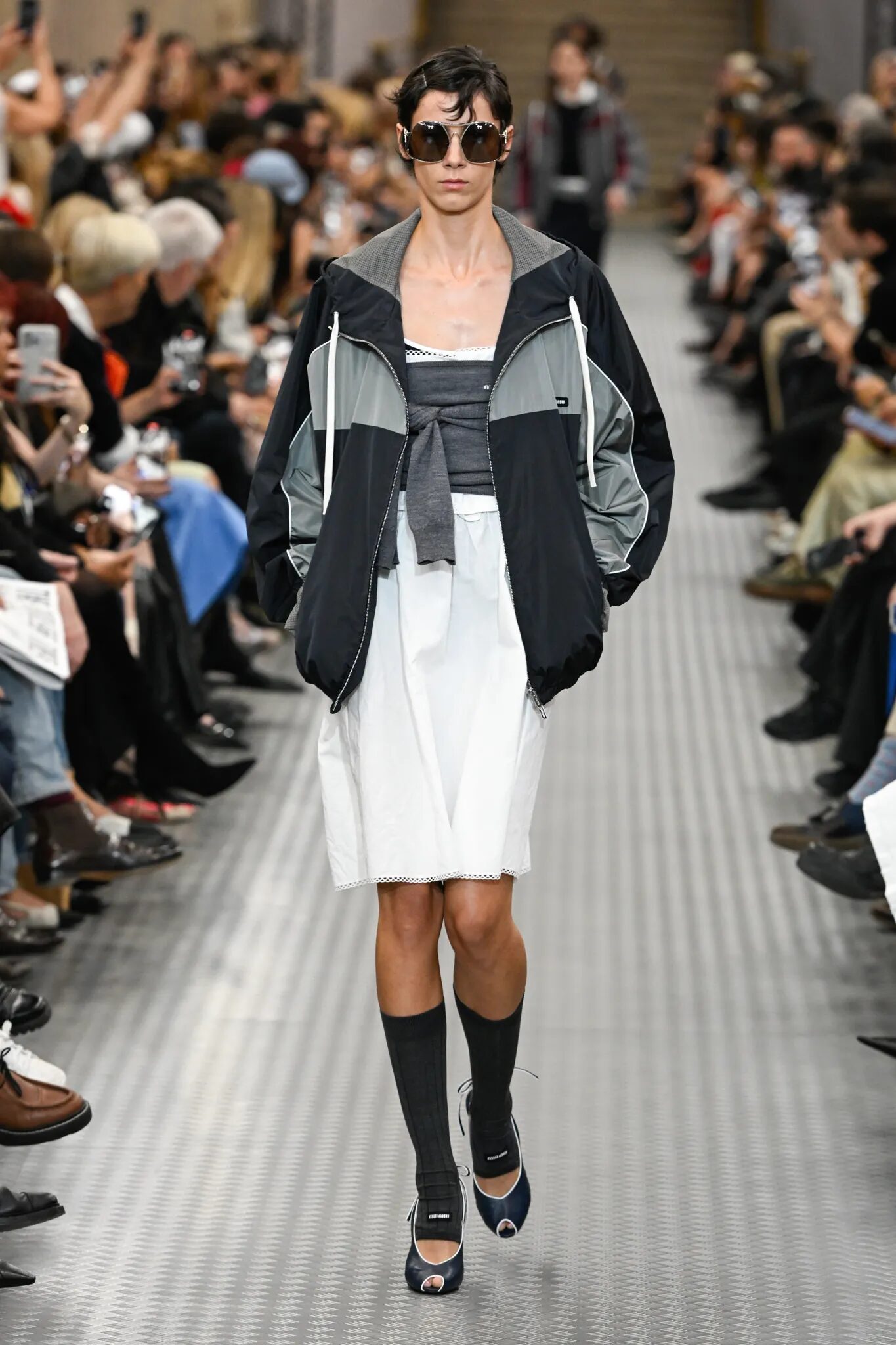
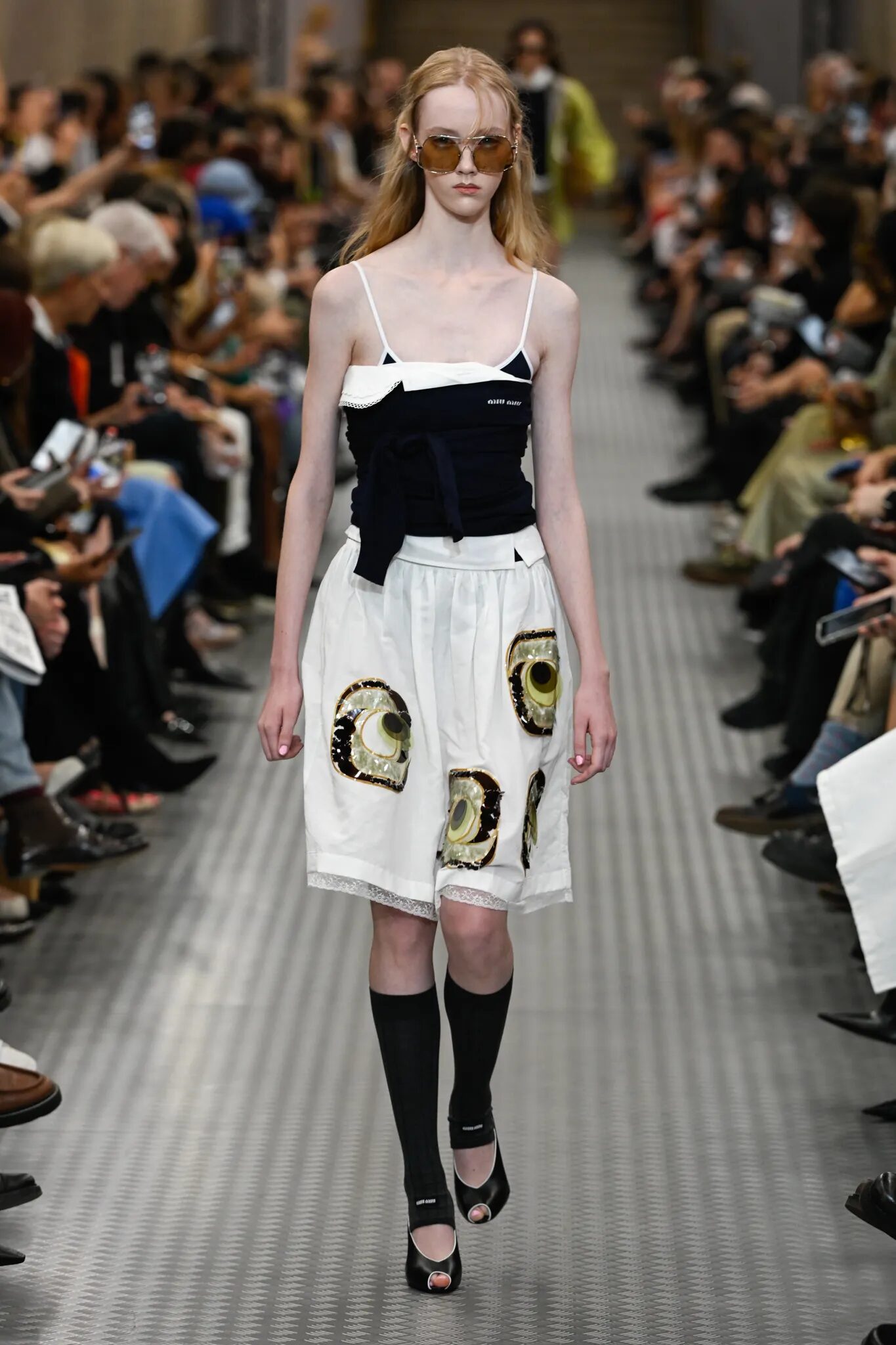
The strategic implications are enormous. Miu Miu’s success proves that luxury brands can capture younger demographics without compromising their premium positioning. The brand maintains high prices while creating products that feel accessible and relevant to digital natives.
Miu Miu’s Success Formula:
Revenue Growth: 60% increase in Q1 2025
Target Demographic: 18-35 year old luxury consumers
Social Media Engagement: 400% increase in mentions
Celebrity Adoption: Organic endorsements from 50+ A-listers
This youth-focused strategy extends beyond products to cultural positioning. Miu Miu’s campaigns feature diverse models, embrace imperfection, and celebrate individuality. The brand has become a cultural symbol for young women who want luxury without conformity.
The AI Rebellion: Creativity Against Algorithms
Prada’s Fall/Winter 2025 menswear collection represents perhaps the most intellectually ambitious fashion statement of the year. Titled “The First Season of Artificial Intelligence,” the collection is Miuccia Prada and Raf Simons’ direct response to technology’s homogenizing influence on fashion1.
“The world has become conservative,” Miuccia Prada declared backstage, articulating a concern that extends far beyond fashion. The collection deliberately embraces irregularity, asymmetry, and unexpected combinations—everything that algorithms would discourage.
This philosophical stance has profound business implications. By positioning Prada as the anti-algorithm brand, the designers are creating a unique market position that cannot be replicated by data-driven competitors. The collection celebrates human intuition, creative mistakes, and cultural rebellion.
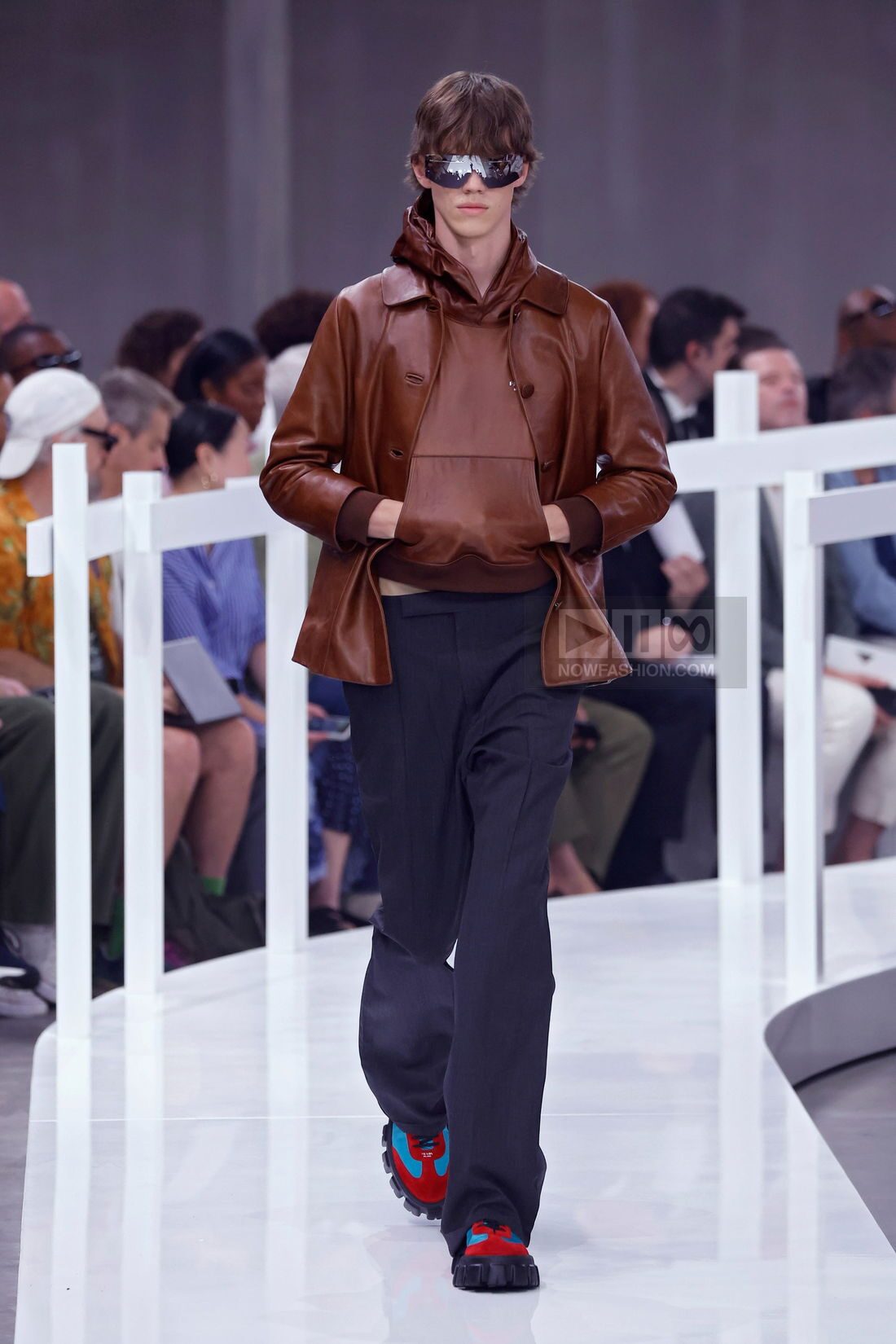
The strategy resonates with consumers fatigued by algorithmic recommendations and predictable trend cycles. Prada’s embrace of creative chaos offers an alternative to the sterile perfection that characterizes much contemporary fashion.
Sustainability as Luxury: The Re-Nylon Revolution
Prada’s 2025 Re-Nylon Collection, featuring Benedict Cumberbatch and created in partnership with National Geographic, represents more than environmental responsibility—it’s a fundamental reimagining of luxury materials.
The collection transforms ocean plastic waste into premium nylon, proving that sustainability and luxury can coexist. The 191-piece range maintains Prada’s aesthetic standards while addressing environmental concerns that increasingly influence luxury purchasing decisions.
The Re-Nylon initiative demonstrates strategic thinking that extends beyond marketing. By controlling the production of sustainable materials, Prada is building competitive advantages that cannot be easily replicated. The brand is positioning itself as the sustainability leader in luxury fashion.
🌱 Re-Nylon Collection Impact
Environmental Benefit: 90% reduction in CO2 emissions vs. virgin nylon
Ocean Cleanup: Partnership with marine conservation organizations
Product Range: 191 pieces maintaining luxury standards
Celebrity Endorsement: Organic support from environmental advocates
The initiative’s success proves that luxury consumers will pay premium prices for sustainable products—if they maintain aesthetic and quality standards. Prada’s approach offers a blueprint for luxury brands seeking to address environmental concerns without compromising their positioning.
The Cultural Appropriation Controversy: Crisis as Opportunity
Prada’s recent sandal controversy—where the brand was accused of copying traditional Indian Kolhapuri designs—could have been devastating. Instead, it’s become a case study in crisis management and cultural sensitivity.
The brand’s response was swift and comprehensive. Lorenzo Bertelli, Prada’s head of corporate social responsibility, publicly acknowledged the sandals’ Indian heritage and committed to dialogue with local artisans. This approach transformed potential disaster into an opportunity for cultural collaboration.
The controversy highlights the challenges facing luxury brands in a globalized world. Traditional design elements from various cultures have influenced fashion for centuries, but contemporary consumers expect acknowledgment and respect for cultural origins.
Prada’s handling of the situation demonstrates maturity and cultural awareness that sets standards for the industry. By embracing dialogue rather than defensiveness, the brand has shown how luxury companies can navigate cultural sensitivity while maintaining creative freedom.
The Versace Acquisition: Expanding the Empire
Prada’s €1.25 billion acquisition of Versace represents the most significant luxury industry consolidation of 20256. The deal creates a fashion conglomerate that spans from minimalist sophistication to maximalist glamour.
The strategic logic is compelling. Versace’s celebrity-driven maximalism complements Prada’s intellectual minimalism, creating cross-selling opportunities and broadening market appeal. The acquisition provides access to Versace’s strong presence in emerging markets while leveraging Prada’s operational efficiency.
The integration challenges are significant. Versace’s flamboyant aesthetic differs dramatically from Prada’s restrained elegance. Success will require maintaining both brands’ distinct identities while achieving operational synergies.
Prada-Versace Synergies:
- 💰 Revenue Potential: €400 million additional annual revenue by 2026
- 🌍 Market Expansion: Versace’s strength in emerging markets
- 👥 Demographic Reach: Versace’s Gen Z and millennial appeal
- 🎭 Brand Diversity: Minimalist and maximalist aesthetics
Early indicators suggest the acquisition will succeed. Versace’s strong celebrity relationships and social media presence complement Prada’s intellectual positioning. The combined entity offers something for every luxury consumer segment.
Leadership Transition: Stability Through Change
The departure of CEO Gianfranco D’Attis in June 2025 could have created uncertainty, but Prada’s leadership transition demonstrates remarkable stability. Interim CEO Andrea Guerra and Chairman Patrizio Bertelli have maintained strategic momentum while searching for permanent leadership.
Guerra’s focus on technological innovation and retail optimization has already yielded results. The implementation of AI-driven inventory management and customer analytics has improved operational efficiency while maintaining the personal touch that defines luxury retail.
The leadership stability allows Prada to pursue long-term strategies without disruption. The brand’s ability to maintain growth during leadership transitions demonstrates organizational maturity and strategic clarity.
The Future Formula: Balancing Act
Prada’s success in 2025 stems from its ability to balance seemingly contradictory elements: tradition and innovation, sustainability and luxury, global expansion and cultural sensitivity. This balancing act requires exceptional strategic thinking and execution.
The brand’s approach offers lessons for the entire luxury industry. Success requires more than product excellence—it demands cultural awareness, environmental responsibility, and strategic vision. Prada’s triple gamble is succeeding because each element reinforces the others.
The Prada Playbook for 2025:
Youth Strategy: Miu Miu’s success proves that luxury brands can capture younger demographics without compromising premium positioning.
Cultural Positioning: Anti-algorithm stance creates unique market position that cannot be replicated by data-driven competitors.
Sustainability Leadership: Re-Nylon initiative demonstrates that environmental responsibility can enhance rather than compromise luxury positioning.
Crisis Management: Cultural sensitivity controversy handled with maturity and respect, creating opportunities for meaningful collaboration.
The Verdict: Redefining Luxury Leadership
Prada’s performance in 2025 represents more than financial success—it’s a masterclass in strategic luxury brand management. The brand has successfully navigated expansion, sustainability, cultural sensitivity, and creative innovation while maintaining operational excellence.
The implications extend beyond Prada to the entire luxury industry. The brand’s success proves that consumers will reward companies that demonstrate cultural awareness, environmental responsibility, and creative authenticity. These values are becoming prerequisites for luxury brand success.
For fashion enthusiasts, Prada’s evolution offers hope that luxury brands can grow while maintaining their souls. The brand’s commitment to craftsmanship, cultural sensitivity, and environmental responsibility creates products that feel both luxurious and responsible.
Prada’s triple gamble isn’t just succeeding—it’s redefining what luxury can be in the 21st century. The brand has proven that expansion, sustainability, and cultural sensitivity aren’t constraints on luxury—they’re opportunities for deeper engagement with consumers who expect more from premium brands.
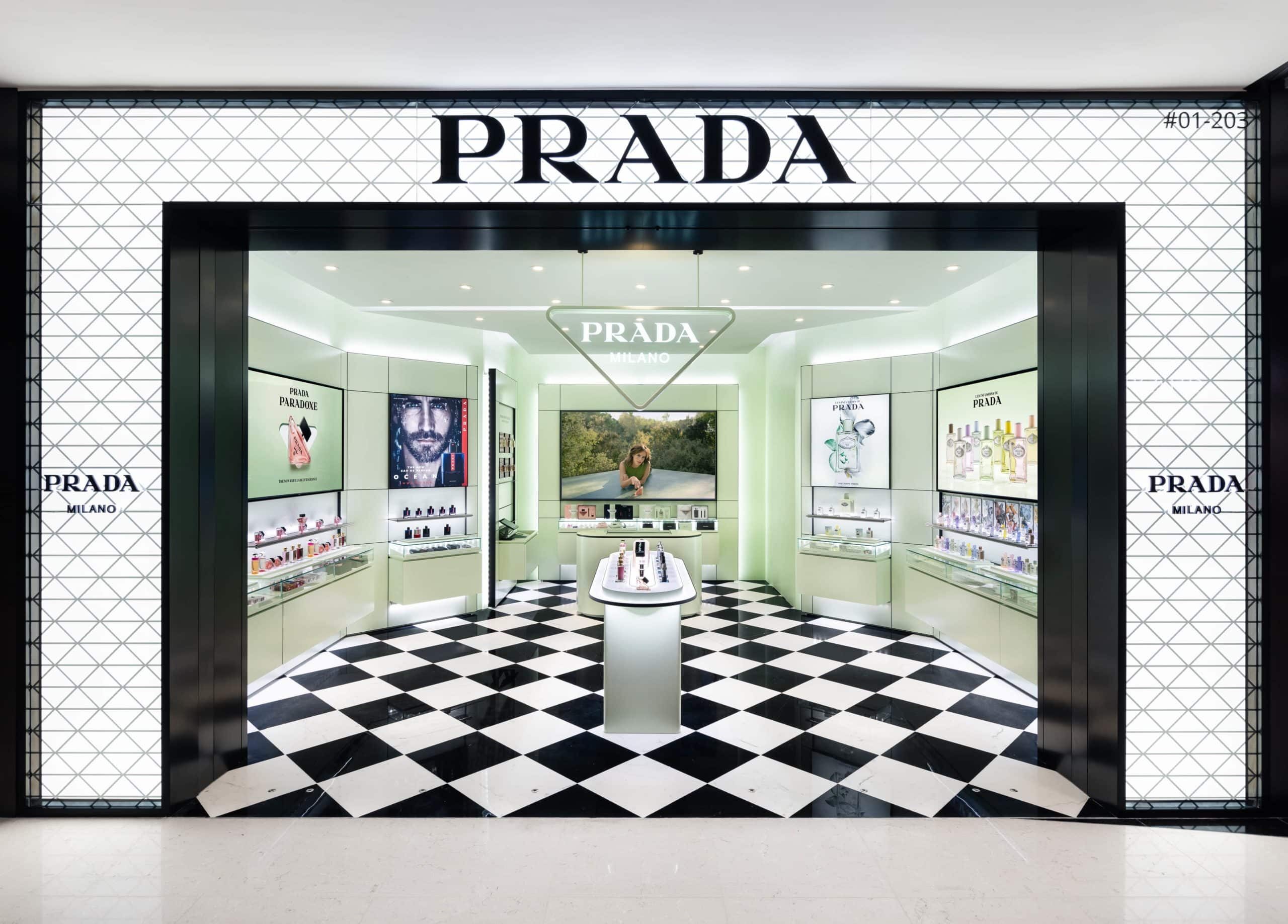
As 2025 progresses, Prada’s strategic approach will likely influence competitors and reshape luxury market expectations. The brand has demonstrated that luxury companies can be simultaneously profitable, responsible, and culturally relevant—a combination that may become the new standard for industry leadership.
The Italian house’s success story continues to unfold, but one thing is certain: Prada’s triple gamble has already changed how we think about luxury brand strategy. The question isn’t whether other brands will follow—it’s whether they can execute with the same strategic sophistication and cultural sensitivity that has made Prada’s approach so successful.