Google searches for “postbiotic skincare” grew 312% between January 2023 and December 2024. The global microbiome skincare market is projected to reach $1.8 billion by 2027. These aren’t vanity numbers. They reflect a genuine shift in how formulators and consumers understand skin health. Probiotics started this conversation. Prebiotics expanded it. Postbiotics are where the science gets precise — and where the results get measurable.
When the Numbers Confirmed the Hype
The microbiome beauty category built slowly after 2018. Early probiotic skincare was inconsistent. Live bacteria in topical formulas degraded quickly. Packaging couldn’t sustain them. Efficacy was unpredictable. Consumers tried products and saw nothing. The category stalled.
Postbiotics changed the equation entirely. They contain no live microorganisms. They are the stable byproducts of bacterial fermentation. Cell wall fragments. Metabolites. Short-chain fatty acids. Enzymes. These compounds don’t require refrigeration. They survive standard packaging. They interact with skin receptors in documented, repeatable ways.
The industry took note fast. Estée Lauder Companies filed seventeen microbiome-related patents between 2021 and 2024. L’Oréal’s research division published peer-reviewed work on lactobacillus ferment filtrate in 2023. Independent brands — Gallinée, Mother Dirt, Aurelia — built entire identities around postbiotic formulations years before the multinationals arrived.
If early probiotic products disappointed you, postbiotics are a structurally different category. The stability difference alone changes the results. Start fresh with that distinction in mind.
The Biology Your Skincare Was Missing
Your skin hosts roughly 1.8 trillion microorganisms. That figure includes bacteria, fungi, and viruses. Most of them are beneficial.
They compete against pathogens. They regulate inflammation. They support the skin’s acid mantle. They communicate with immune cells in the dermis below. Disruption of this ecosystem — through harsh cleansers, antibiotics, or environmental stress — has been linked to eczema, acne, rosacea, and accelerated barrier degradation.
Postbiotics don’t introduce new organisms. They supply the metabolic outputs that healthy microbiomes naturally produce. Lactobacillus ferment filtrate, for example, is a byproduct of fermenting lactobacillus bacteria. It contains lactic acid, bacteriocins, and exopolysaccharides. Each component serves a precise function. Lactic acid gently resurfaces. Bacteriocins inhibit harmful bacteria. Exopolysaccharides form a hydration-retaining film on the skin surface.
Bifida ferment lysate works differently. Research indicates it supports DNA repair in skin cells exposed to UV radiation. Multiple clinical studies show measurable improvement in elasticity and reduction in trans-epidermal water loss after 28 days of use. These mechanisms are specific. The compounds are identifiable. The effects are testable.
“Postbiotics give us the precision that live-culture skincare never could. We’re not hoping the bacteria survive and do something useful. We’re delivering the output directly, in a stable and targeted form.” — Dr. Marie Drago, founder, Gallinée

The Brands Getting It Right
Not every postbiotic product performs equally. Concentration matters. Delivery system matters. Formula compatibility matters.
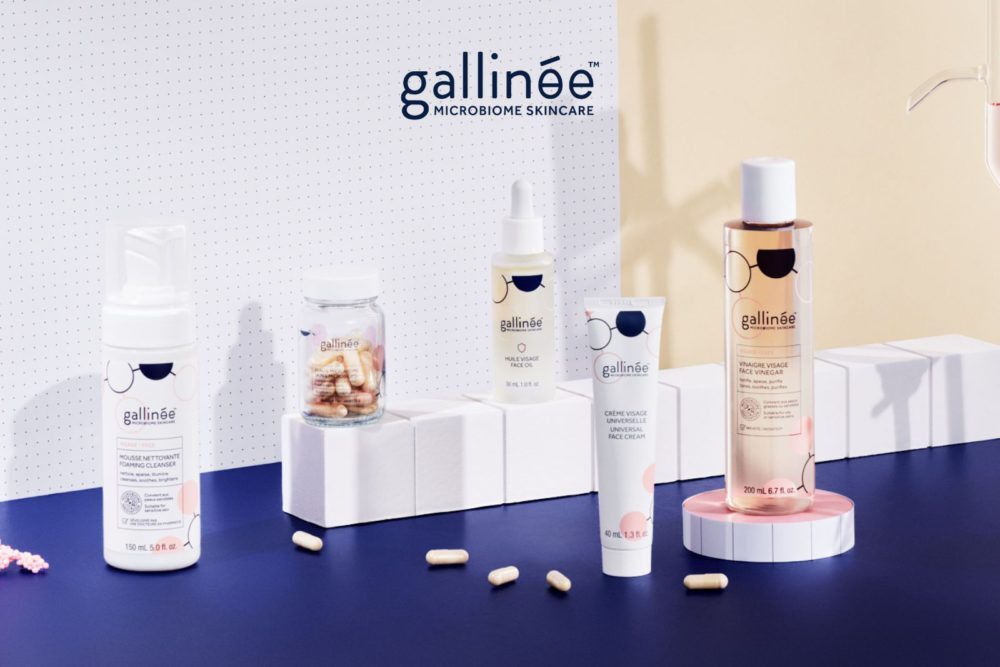
Gallinée is the clearest example of a brand built on postbiotic science from the ground up. Their Face Vinegar ($42) uses a prebiotic, probiotic, and postbiotic complex together. The lactic acid ferment gently resurfaces. It’s pH-balanced specifically for microbiome preservation. Their Cleansing Bar ($22) has maintained near-cult status because it cleanses without stripping — the fundamental challenge of microbiome skincare.
Estée Lauder’s Advanced Night Repair reformulated in 2022 to increase bifida ferment lysate concentration. It now appears earlier in the ingredient list. The market responded. ANR retained its position among the world’s top three selling serums in 2023 and 2024 consecutively.
Aurelia Probiotic Skincare sources postbiotic actives from fermented European probiotic strains. Their Cell Repair Night Oil ($130) combines fermented plant actives with postbiotic peptides. It targets barrier repair and overnight regeneration simultaneously. For sensitive or barrier-compromised skin, this format delivers results that typical retinol-forward products can’t match without irritation risk.
SK-II’s Pitera — the brand’s signature ingredient since 1980 — is technically a postbiotic. It’s a ferment filtrate derived from saccharomyces yeast. SK-II was practicing postbiotic science before the term existed. Their Facial Treatment Essence ($185 for 75ml) remains the benchmark for ferment-based skin clarity and tone.
For sensitive or reactive skin, begin with Gallinée or Aurelia before moving to higher-concentration actives. These brands formulate specifically for disrupted microbiomes — the skin type that responds most dramatically to postbiotic intervention.
Building Your Postbiotic Routine Step by Step
Sequence matters more in postbiotic skincare than in conventional routines. Each step either preserves or undermines the one that follows.
Step one: Rethink your cleanser. This is the most important step. Most standard cleansers run pH 6–8. Healthy skin sits at 4.5–5.5. That alkalinity disrupts the acid mantle every single time you cleanse. Choose a pH-balanced formula. Gallinée’s Cleansing Bar or a gentle micellar water maintains the environment your postbiotic products need to function.
Step two: Apply postbiotic treatment to damp skin. Residual moisture improves absorption of ferment filtrates. Press gently. Don’t rub. The compounds interact with surface receptors — physical friction disperses them before they bind. Give this step thirty seconds of deliberate attention.
Step three: Layer a humectant immediately after. Postbiotic exopolysaccharides create a surface film. Hyaluronic acid or a hydrating essence layered on top extends that film’s moisture-retention effect significantly. These two steps work together.
Step four: Seal with a barrier moisturizer. A ceramide-rich cream locks the routine in. Postbiotic benefits are cumulative. They require an intact barrier to accumulate over time. Don’t skip this step.
Step five: Morning SPF, nothing else. Postbiotic routines perform best in a clean formula environment. Every additional active introduces a variable. Let the microbiome science work before adding retinoids or concentrated acids.
Introduce postbiotic products one at a time. Replace one existing product per week. Changes in texture and tone take 21–28 days to become visible — that’s one full skin cell turnover cycle. Patience here is not passive. It’s part of the protocol.
The Mistakes That Erase the Benefits
Most postbiotic routines fail for the same preventable reasons.
Using foaming cleansers simultaneously. Sodium lauryl sulfate disrupts the microbiome directly. A postbiotic serum applied after a stripping cleanser fights its own foundation. Switch the cleanser first. Everything else depends on that decision.
Mixing with high-dose acids on the same day. AHA and BHA exfoliants temporarily alter skin pH. Some postbiotic compounds deactivate at lower pH levels. Reserve exfoliation for two to three sessions per week. Use postbiotic products on the days in between.
Expecting visible results before 21 days. Postbiotic changes operate at the microbiome level. The skin surface turns over every 28 days. Real results — reduced redness, improved texture, stronger barrier response — require a minimum of one full skin cycle. This category gets abandoned prematurely more than almost any other. That’s almost always a timeline problem, not a product problem.
Buying anything labeled “probiotic” without checking the ingredient list. Marketing language in this category is loose. Probiotic, prebiotic, and postbiotic are not interchangeable terms. Look for specific compound names: lactobacillus ferment filtrate, bifida ferment lysate, saccharomyces ferment filtrate. If none of these appear in the formula, the product is using category language without category science.
- Look for named ferment ingredients: lactobacillus ferment filtrate, bifida ferment lysate, or saccharomyces ferment filtrate in the INCI list
- Check your cleanser pH — anything above 6.0 undermines the entire routine before it starts
- Schedule postbiotic days separately from acid exfoliation days
- Commit to a minimum 28-day trial before evaluating results — one full skin cycle is non-negotiable
- Start with one product, not a full system — Gallinée Face Vinegar or ANR are the clearest entry points
Where the Science Is Heading
The next frontier is targeted postbiotic formulations. Not general microbiome support — specific strain outputs for specific conditions.
Research published in the International Journal of Cosmetic Science in late 2024 identified postbiotic compounds that selectively inhibit Cutibacterium acnes. They do this without affecting beneficial skin bacteria. Current acne treatments are non-selective. Benzoyl peroxide and salicylic acid disrupt the full microbiome. A strain-specific postbiotic approach changes the mechanism entirely. Clinical testing is ongoing. Commercial formulas are expected within 24 months.
Fermented adaptogens are entering the category. Ashwagandha ferment. Reishi mushroom ferment. These combine postbiotic stability with adaptogenic plant science. Early data suggests synergistic effects on cortisol-triggered skin inflammation — a mechanism that bridges psychodermatology with microbiome science. Grown Alchemist and Allies of Skin are already moving in this direction.
Postbiotic sun care is coming next. SPF formulas that protect barrier function while actively supporting microbiome diversity. Several European brands have early prototypes in development. This will be a significant category launch across 2026 and into 2027.
If you want to position your routine ahead of this curve, start building postbiotic habits now. Early adoption gives you baseline knowledge before the market saturates. Begin with Gallinée or Advanced Night Repair — both remain accessible and science-sound entry points.
Are you already using a fermented or microbiome-focused product in your routine — knowingly or not? And which concern draws you most to postbiotic skincare: barrier repair, redness, or texture improvement? Tell us in the comments.