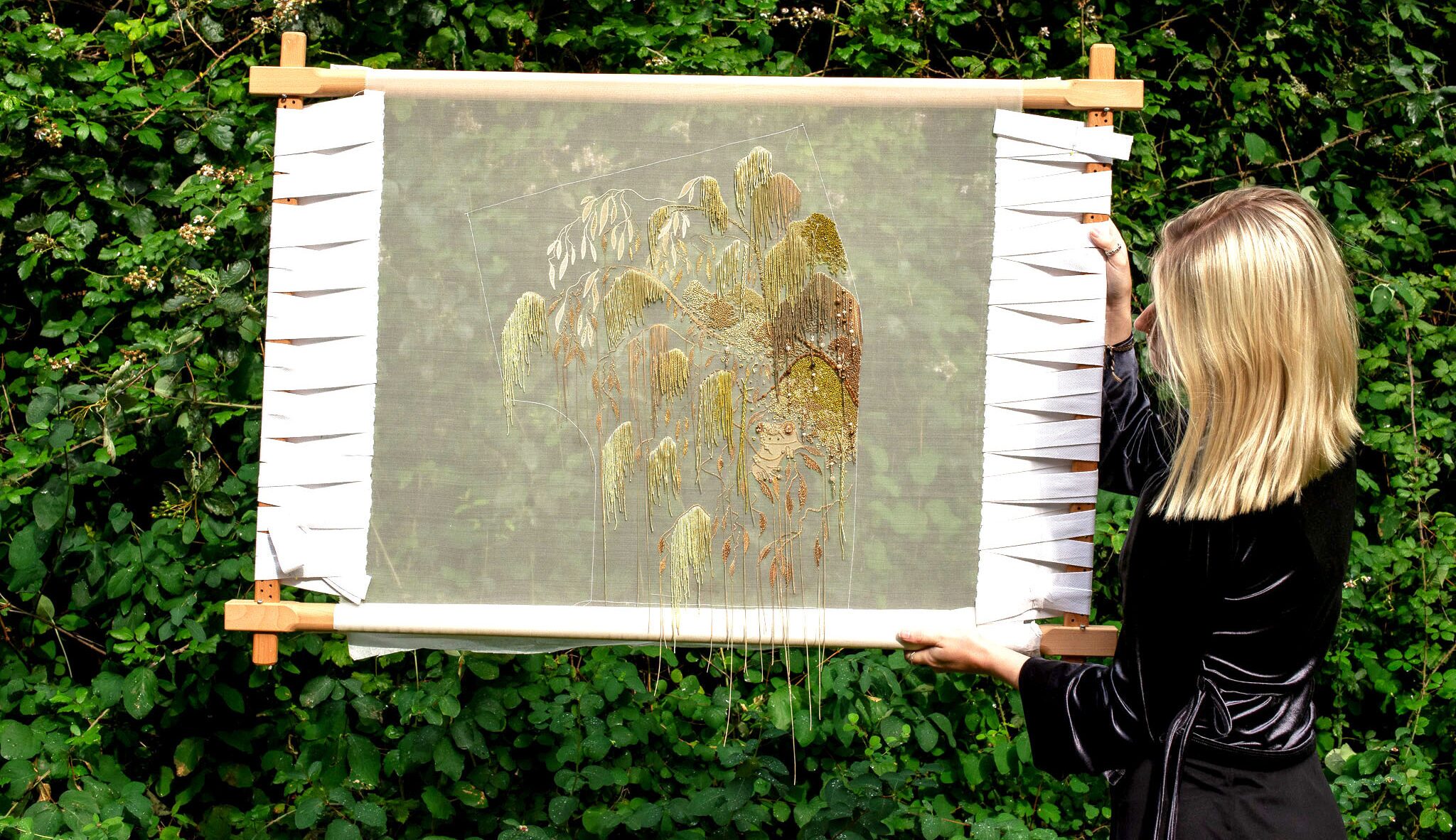
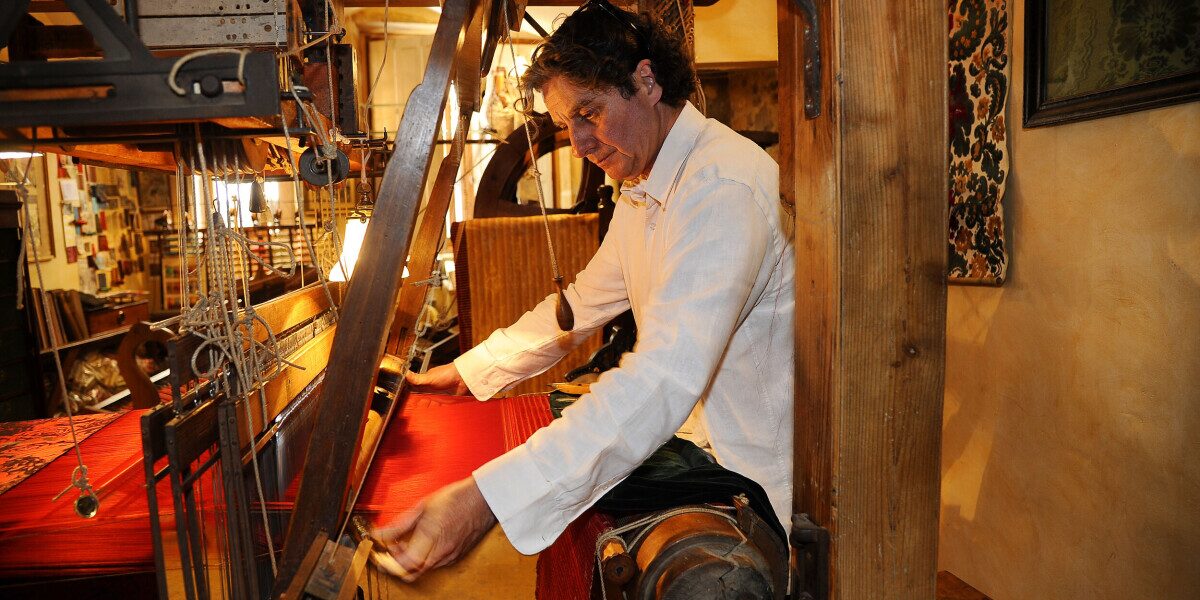
In 2022, Chanel acquired a Lyon silk weaver founded in 1890. The maison had woven fabric for Balenciaga, Dior, and Givenchy for over a century. At the time of acquisition, it employed eleven people. Their average age was 61. No apprentices were in training. When Chanel moved to acquire, the founder’s daughter had already begun preparing closure paperwork. She had found no buyers. She had found no successors. She had found, after three years of searching, nobody who wanted to learn.
This was not an isolated transaction. It was a rescue operation. And it was one of nineteen such rescues Chanel had conducted in the preceding two decades.
A Crisis Hidden Inside the Labels
The luxury fashion industry generated €352 billion in global revenue in 2023. The growth charts look healthy. The acquisition announcements come regularly. The runway shows fill the cultural calendar. From the outside, luxury fashion has never appeared more confident or more profitable.
The inside view is different.
The skills that built the industry are disappearing faster than they can be replaced. Plissé pleating — the technique behind Fortuny’s signature gowns and Issey Miyake’s Pleats Please — requires years of mastery. Fewer than 200 active practitioners remain worldwide. Punto in aria lacemaking, practiced since the sixteenth century in Venice, is maintained by a community of fewer than thirty working craftspeople. Mille-feuille embroidery, the layered technique behind the most complex Dior haute couture pieces, is carried by a single atelier in Paris — Lesage — which itself was acquired by Chanel in 2002 to prevent its closure.
These are not footnotes to luxury fashion. They are its foundation. When a Dior couture gown commands €80,000, a significant portion of that price reflects the embedded skill of human hands that took decades to develop. When those hands retire without successors, the price tag becomes a fiction. The garment can still be made. But it is made differently. And differently, in craft, almost always means lesser.
The industry has known about this trajectory for twenty years. The public conversation is just beginning.
The Atelier System and Its Golden Logic
To understand what’s being lost, you need to understand what existed.
The Paris couture system that crystallized in the mid-nineteenth century was built on a specific labor architecture. A couture house functioned as a creative director at the top and a network of specialized ateliers beneath. Each atelier mastered one technique. The flou atelier handled soft draping and jersey. The tailleur atelier cut and constructed tailored pieces. Embroidery, feather work, flower-making, millinery, glove construction — each occupied its own dedicated workshop, often a separate business entirely.
These specialist suppliers — known as petites mains, literally “small hands” — operated as independent craftspeople in symbiotic relationship with the great houses. A single Chanel couture jacket from the 1960s might pass through six different ateliers before completion. The boucle fabric from a dedicated weaver. The buttons from a passementerie specialist. The lining embroidered by Lesage. The finishing by the house’s own seamstresses. Each contribution was invisible to the client. Each was essential to the result.
This system produced two things simultaneously. It produced extraordinary garments. And it produced an unbroken transmission of skill from master to apprentice, generation to generation. The system was self-sustaining because the demand was consistent. Houses ordered regularly. Ateliers could train apprentices because there was guaranteed work to learn on.
The system began fracturing in the 1990s. Not because of any single decision. Because of a structural shift that nobody fully anticipated.
“We did not lose craft through neglect. We lost it through economics. The specialist ateliers couldn’t survive on couture orders alone once the couture client base contracted. And when they closed, the knowledge closed with them. You cannot reopen a human skill the way you reopen a factory.” — Hamish Bowles, Vogue International Editor-at-Large
The Economics That Broke the Chain
Haute couture reached its peak client base in the 1950s. An estimated 15,000 women worldwide were active couture customers. By 2023, that number had fallen to approximately 4,000 clients globally — a figure that includes occasional buyers alongside committed ones.
A contracted client base meant contracted orders. Contracted orders meant specialist ateliers could not sustain themselves on couture work alone. Many attempted to diversify into theatrical costume, interior textiles, or ready-to-wear partnerships. Some succeeded temporarily. Most didn’t. The economics of specialist craft require a steady volume of complex orders. Couture alone, post-1980, couldn’t provide it.
The apprenticeship pipeline responded logically. Young people entering the textile and garment trades saw diminishing career security in specialization. Generalist skills — pattern cutting, industrial sewing, CAD design — offered clearer employment paths. Specialized craft skills offered mastery. They did not reliably offer income. The rational choice and the culturally sustaining choice were no longer the same choice.
This created a demographic cliff. Master craftspeople who built their skills through the 1960s and 1970s have been retiring since the 2000s. The mid-generation — those who would now be transmitting skills to younger practitioners — is thin. The pipeline is not empty. But it is narrow in ways that compound over time.
The Houses Responding — And How
Three institutions have moved most decisively. Their approaches reveal different theories about how craft transmission survives.
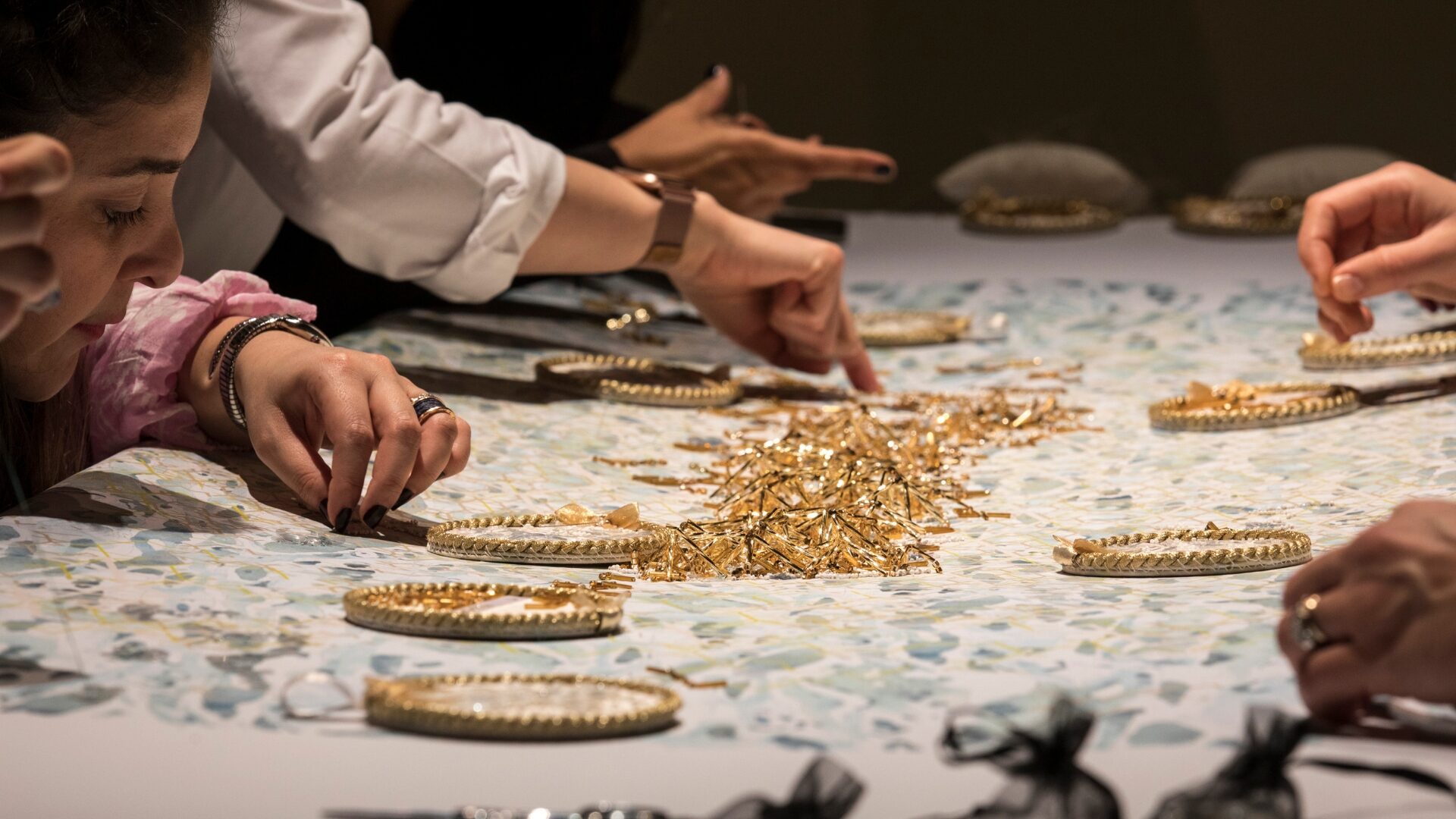
Chanel’s Métiers d’Art program is the most comprehensive response in luxury fashion. Beginning in 1985, Chanel systematically acquired specialist suppliers facing closure. Nineteen acquisitions later, the portfolio includes Lesage (embroidery), Lemarié (feathers and flowers), Massaro (shoes), Goossens (jewelry and goldwork), and Barrie (cashmere). Each operates as an independent atelier under Chanel’s ownership. Each is required to maintain a training program. Each accepts commissions from other houses. The Chanel annual Métiers d’Art runway show — staged in a different city each year — functions explicitly as a showcase for what these ateliers can do. It is marketing. It is also archiving.
Hermès operates differently. The house owns its own craft school — École Hermès des Savoir-Faire — which trains new leather workers in-house. A Hermès saddle-stitcher undergoes a two-year apprenticeship before touching a production bag. The house’s leather goods wait list is famously long. That scarcity is partly strategic. It is also genuinely structural. You cannot make more Birkin bags without trained hands. Training hands takes years. The wait list reflects the training timeline.
LVMH’s Institut des Métiers d’Excellence takes the broadest approach. Founded in 2014, it offers vocational programs in watchmaking, jewelry, leather goods, perfumery, and haute couture in partnership with professional schools across France, Italy, Japan, and Switzerland. Over 1,300 students have completed programs since launch. Graduates enter LVMH brands or partner ateliers directly. The program acknowledges something the industry resisted admitting for decades: craft transmission cannot be left to market forces. It requires institutional commitment.
These are meaningful responses. They are not sufficient responses. The scale of the problem exceeds the scale of the solutions currently deployed.
What Disappears When the Skill Does
The loss is not only aesthetic. It is epistemic.
Every specialist craft technique is also a body of knowledge about materials. A master feather worker understands how different bird feathers absorb dye at different rates. How they hold structure under heat. How they move differently at various weights and lengths. This knowledge was not written down in most cases. It was demonstrated and absorbed. It lives in trained hands and trained eyes.
When a plissé pleater retires, the garments she has made remain. The knowledge required to produce new ones at that quality level does not automatically remain with them. Documentation helps. Film archives of technique help. But documentation captures what is done. It cannot fully capture how it feels to do it correctly. The proprioceptive knowledge — the physical memory in the hands — transfers only through direct practice under experienced instruction.
This distinction matters for the creative future of the industry. Designers have always pushed against the limits of what is technically achievable. When Cristóbal Balenciaga experimented with standing-away-from-the-body silhouettes in the 1960s, his vision was made possible by the technical skill of his tailleur atelier. When Alexander McQueen built his bumster trouser or his anatomical corsetry, craftspeople translated concept into wearable object. Creative ambition requires technical capability as its floor.
As the floor lowers, the ceiling follows.
Whether Craft Can Survive What Fashion Has Become
The honest answer is: some of it will. Much of it won’t.
The crafts attached to the most commercially powerful luxury houses will survive because those houses can afford to subsidize them. Hermès saddle-stitching. Chanel couture embroidery. Cartier gem-setting. These techniques are financially protected because they are central to products with sustainable demand.
The crafts at the periphery are more vulnerable. Regional textile traditions without a luxury house patron. Specialized finishing techniques practiced by single-atelier businesses in second-tier fashion cities. Decorative craft traditions from non-European fashion cultures that the Western luxury system has not historically valued enough to acquire or protect.
The most productive intervention available to consumers is attention. Not nostalgia — attention. Understanding what a handmade garment costs in human time changes how you evaluate its price. A hand-embroidered Schiaparelli jacket represents approximately 800 hours of labor. At any reasonable hourly rate, the price becomes not extravagant but arithmetically honest. Consumers who understand craft economics buy less. They buy more deliberately. They keep what they buy significantly longer.
That shift in behavior — from volume to depth — is the single consumer-level response that puts meaningful pressure on the right part of the supply chain. It rewards the brands protecting craft skills. It withdraws financial oxygen from those simply borrowing the language of craftsmanship to justify margin.
If you want to apply this thinking practically: before your next luxury purchase, ask one question. Could you name the specific craft technique in this garment? If the answer is no — and if the brand’s own materials don’t help you answer it — that absence of information is itself information about where the craft actually sits in the production hierarchy.
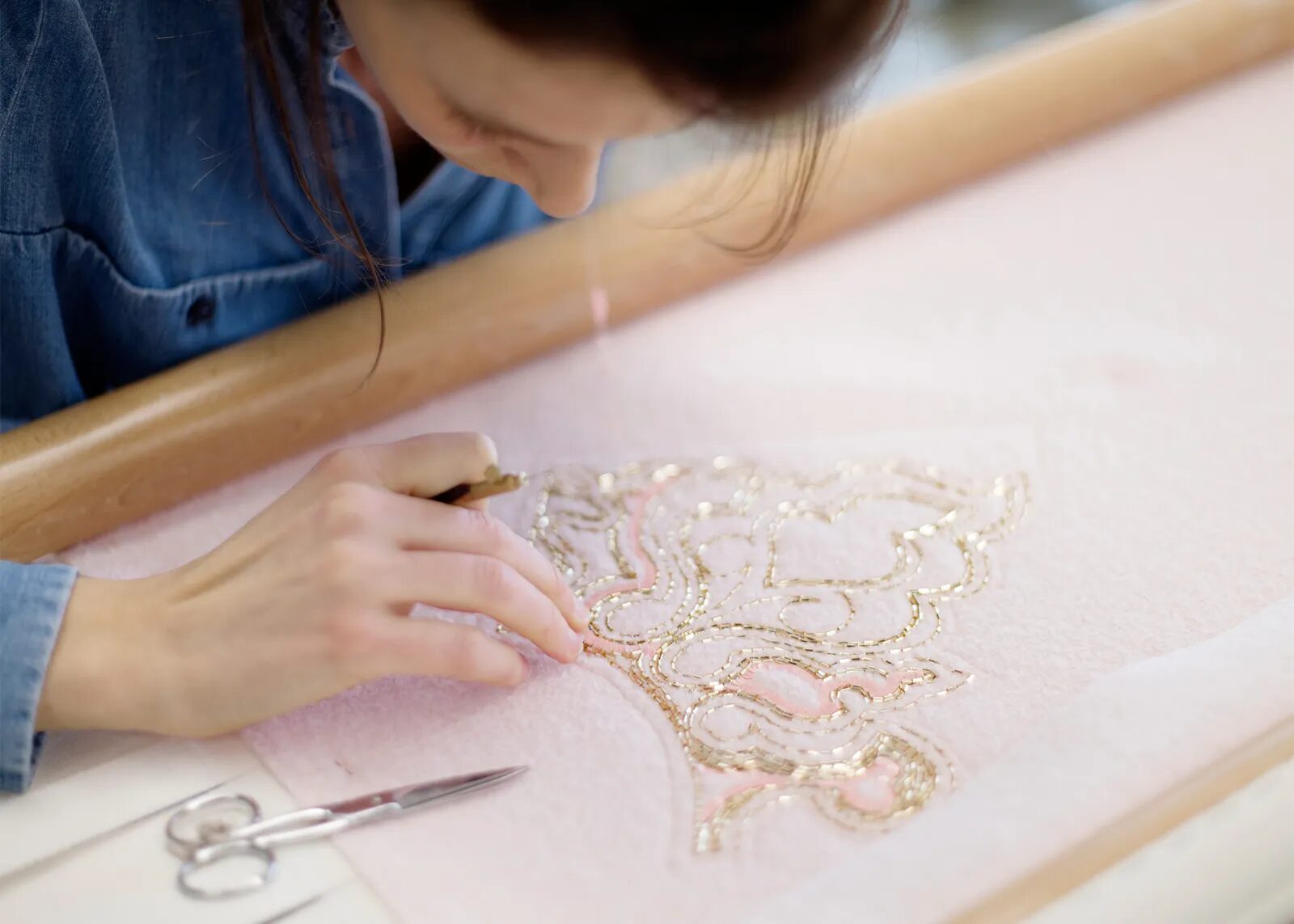
The hands that built the labels are aging. Some will find successors. Many won’t. The garments in museum archives will remain as evidence of what was technically possible. Whether future designers inherit a craft infrastructure capable of matching that possibility depends on decisions being made right now — in acquisition meetings, in vocational curriculum committees, in apprenticeship program budgets. The runway shows will continue regardless. The question is what they will actually be able to make.
Is there a specific craft tradition — embroidery, leather work, weaving, tailoring — that you feel deserves more visibility and protection? And when you buy a luxury piece, does knowledge of its construction history change how you relate to it? Tell us in the comments.