At Zara’s flagship on Corso Vittorio Emanuele II in Milan, a barrel-leg trouser disappeared from shelves in 72 hours in autumn 2023. Not because of runway momentum. Not because of a magazine editorial. Because a TikTok video reached 4.2 million views on a Tuesday morning. By Thursday, the item was out of stock across fourteen European markets. The style had existed in various forms for decades. The algorithm decided it was relevant now. And so, collectively, we agreed.
This is not a story about one pair of trousers. It is a story about who — or what — is making our aesthetic decisions.
A Mirror Held at Scale
Walk through any major city today. London. Seoul. São Paulo. Los Angeles.
The silhouettes repeat. The palette repeats. The specific combination of wide-leg denim, fitted ribbed tank, and minimalist mule — a look that could be called “no-look” — appears with statistical regularity across hemispheres. Instagram’s recommendation engine learned in 2019 that certain visual aesthetics generated higher engagement. TikTok’s algorithm accelerated the feedback loop dramatically. Pinterest’s trend data now predicts purchase behavior six months in advance with documented accuracy.
The result is something no fashion editor of the 1990s could have imagined. A single aesthetic can achieve global saturation in under a week. And it does. Regularly.
The term “microtrend” entered mainstream fashion vocabulary around 2021. It described trends with compressed lifecycles — weeks rather than seasons. But microtrends are not the disease. They are the symptom. The disease is recommendation architecture. Platforms surface content based on engagement probability, not aesthetic diversity. High-performing visuals are replicated. Replicated visuals out-perform novel ones because familiarity drives clicks. The feedback loop closes. Personal style gets crowded out.
This phenomenon has a name in behavioral economics. It’s called preference falsification — the public expression of preferences that differ from private ones, driven by perceived social consensus. People dress for the algorithm’s approval. They stop dressing for themselves.
How We Built the Cage
The architecture of algorithmic fashion was not invented overnight.
Fast fashion created the infrastructure first. Zara’s vertical integration model — concept to store in three weeks by the mid-2000s — proved that trend cycles could be compressed indefinitely. H&M, Topshop, and later SHEIN stretched the model further. By 2015, SHEIN was uploading between 2,000 and 10,000 new SKUs daily. The supply chain had become capable of responding to aesthetic signals faster than consumers could form opinions about them.
Social media provided the signal engine. When Instagram launched in 2010, it was a photography platform with aesthetic ambitions. Early fashion content was genuinely diverse. Street style photographers documented individual expression. Personal style blogs ran on personality and conviction. Susie Bubble wore what Susie Bubble wanted to wear. Bryanboy built a following on irreverence. These weren’t influencers. They were individuals.
The pivot to algorithmic content ranking changed everything. Engagement metrics replaced editorial judgment. Posts that performed well were promoted. Posts that performed poorly disappeared. Fashion content creators — trying to build audiences and income — learned quickly what the algorithm rewarded. Clean backgrounds. Aspirational neutrals. Specific proportions. The outfit-of-the-day format standardized. The diversity of visual expression contracted.
“We talk about personal style as though it’s still personal. But for most people, their wardrobe is a curated selection of things the algorithm confirmed were acceptable. That is not self-expression. That is social compliance dressed in linen.” — Harriet Walker, fashion writer and author of Less Is More
The Aesthetics That the Algorithm Built
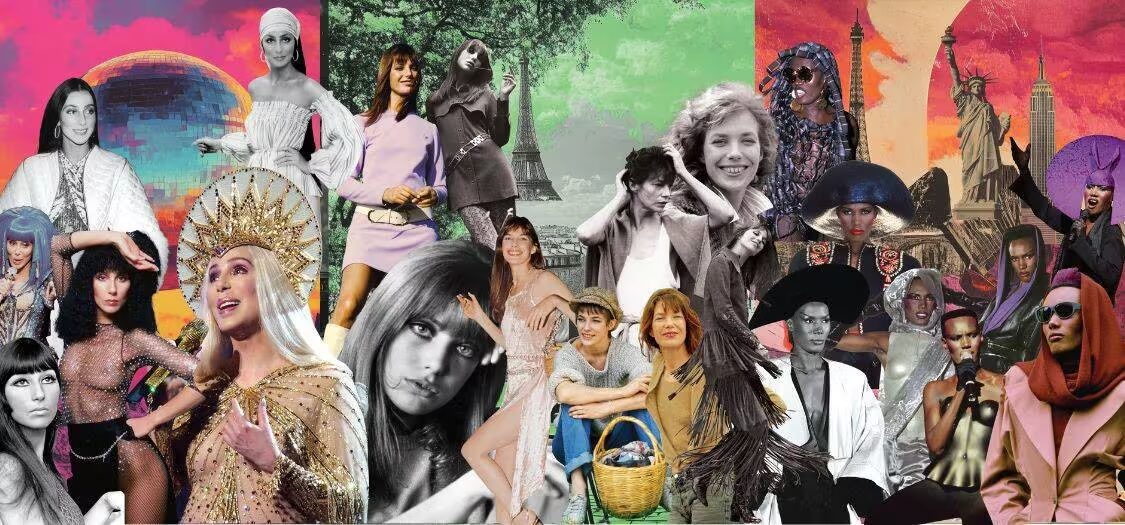
Named aesthetics proliferated after 2020. Cottagecore. Dark Academia. Coastal Grandmother. Clean Girl. Quiet Luxury. Mob Wife.
Each emerged organically from individual creators. Each was absorbed, codified, and distributed by recommendation engines within weeks. The codification process is worth examining closely. When an aesthetic receives a name, it receives searchability. Searchability creates content incentive. Content incentive floods the aesthetic with imitators. The original expression becomes a category. The category becomes a commodity. The commodity becomes invisible because everyone owns it.
Quiet Luxury is the clearest recent case. The aesthetic — expensive basics, neutral palette, no visible logos — had existed for decades among old-money dressing codes. It was not new. It was not invented by TikTok. Brunello Cucinelli has sold this aesthetic for forty years. What the algorithm did was extract it from its cultural context, name it, and distribute it globally at a speed that disconnected it from its meaning entirely.
When Quiet Luxury became a TikTok category in early 2023, fast fashion responded within two months. SHEIN listed “quiet luxury” as a searchable product category. Zara built a dedicated section. The aesthetic that had been defined by its resistance to mass consumption became — within one quarter — one of mass consumption’s bestselling frameworks.
The cultural irony borders on comedy. Except the consequences aren’t funny.
Who Loses When Everyone Looks the Same
The most immediate casualty is subculture.
Subcultural fashion has always been the industry’s most generative force. Punk deconstructed tailoring. Hip-hop redefined proportion and branding. Harajuku created layering languages that Paris eventually adopted. Goth introduced a relationship between clothing and emotional identity that persists in avant-garde collections today. Every major fashion movement of the past sixty years emerged from a subculture that operated outside mainstream visibility.
Subcultures require friction. They require time to develop outside commercial attention. The internet eliminated both. A new aesthetic emerging from a Brooklyn studio apartment in 2024 achieves 500,000 TikTok views before it has its own name. Brands monitor trend-detection platforms in real time. By the time a subculture builds its second season of internal language, the macro market has already produced cheaper versions.
The designers feel this acutely. Dries Van Noten, in his final interview before retiring in 2024, described the current creative environment as “a hall of mirrors.” Every reference reflects every other reference. Originality is not impossible. But the commercial reward system punishes it. Slow-burning aesthetic visions don’t perform on Instagram. They don’t generate the quarterly search volume that a named microtrend delivers.
Individual designers are resisting. And the resistance is instructive.
Bottega Veneta deleted its social media accounts in January 2021 under Daniel Lee’s creative direction. Revenue grew. The brand’s cultural conversation deepened. It became more visible by becoming less algorithmically present. That is not a coincidence. It is a demonstration.
Loewe under Jonathan Anderson built one of the most discussed creative identities in luxury fashion with minimal algorithmic compliance. Anderson makes things that look wrong before they look right. The algorithm doesn’t surface things that look wrong. He continues anyway. The result is a brand with genuine aesthetic authority in a landscape where most brands have outsourced that authority to engagement metrics.
These are not commercial strategies. They are acts of aesthetic conviction. They work because conviction is scarce now. Scarcity creates value.
The Countermovement Building at the Margins
Something is pushing back. It’s quiet. It’s gaining ground.
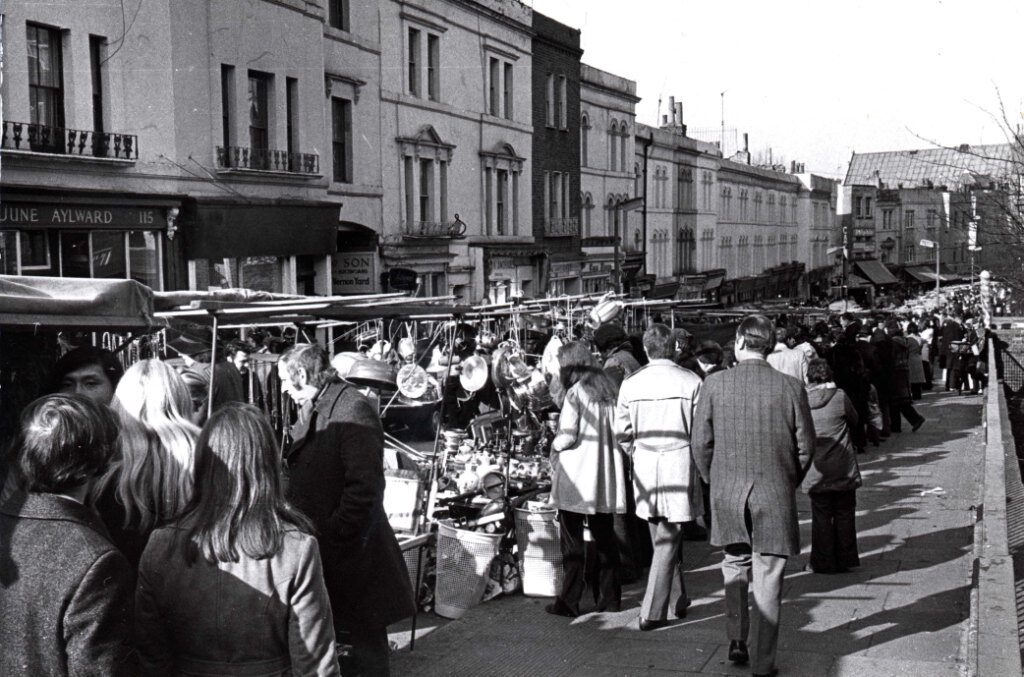
Vintage markets are growing at 15% year-over-year globally. Not resale platforms — physical vintage markets. Portobello Road. Brooklyn Flea. Marché aux Puces. Buyers at these markets are not shopping for items the algorithm surfaces. They are shopping for objects with specificity. A 1987 Comme des Garçons jacket. A 1970s Ossie Clark dress. These items resist replication. They carry history the algorithm cannot generate.
The “buy less, buy better” conversation — which the industry has circled for years without conviction — is developing economic teeth. McKinsey’s 2024 State of Fashion report noted a measurable shift among 25–35 year old consumers toward lower purchase frequency and higher per-item spend. The metric that accelerated this: cost-per-wear calculation. Consumers are beginning to evaluate purchases the way investors evaluate assets. Duration of use. Resale value. Versatility coefficient.
This is not idealism. This is arithmetic. And arithmetic is harder for the algorithm to override than aesthetics.
The most interesting development is happening in fashion education. Central Saint Martins, Parsons, and Royal College of Art have all introduced curriculum elements focused on designing outside algorithmic validation frameworks. Students are explicitly instructed to delay social media documentation of work in development. The rationale is precise: work shaped by anticipated engagement is not fully formed work. You cannot develop an aesthetic voice while the audience is watching. The voice forms in private. It presents in public. That sequence matters.
For readers building a personal wardrobe with genuine longevity: buy one item this season that you cannot explain algorithmically. Something that doesn’t belong to a named aesthetic. Something that requires you to articulate why it appeals to you in words rather than references. The practice of that articulation is how personal style survives algorithmic pressure.
What Comes After the Mirror Hall
The algorithm’s grip on fashion aesthetics will loosen. Not because platforms change their architecture — they won’t. But because the consumer psychology that feeds it is beginning to strain under its own weight.
Trend fatigue is real and documented. Vogue Business reported in Q3 2024 that 67% of surveyed consumers under 35 described themselves as “overwhelmed” by the pace of trend cycles. Overwhelmed consumers disengage. Disengagement breaks the feedback loop. When the loop breaks, the aesthetic signal becomes noise. Algorithms optimize for engagement. When fashion content stops generating engagement because the audience is fatigued, the algorithm moves on. Fashion has seen this before — with celebrity endorsement, with magazine authority, with reality television. Each channel loses potency. The channel that replaces it is not yet visible.
What is visible is the appetite for alternatives. The designers building slowly, outside engagement validation frameworks, are building audiences that stay. The brands resisting named aesthetics are developing genuine identity. The consumers choosing specificity over algorithm-surfaced novelty are finding that specificity compounds — each deliberate purchase clarifies the next one.
Personal style was never a fixed destination. It was always a developing argument — an ongoing conversation between who you are, what you value, and what you choose to put on your body. The algorithm interrupted that conversation. It substituted consensus for conviction. The conversation hasn’t ended. It’s just waiting for people to remember that they were the ones who started it.
Do you consciously resist algorithmic fashion recommendations when building your wardrobe — or do you find the curation useful? And which single piece in your closet would you describe as genuinely yours, independent of any trend cycle? Tell us in the comments.